Languages
Friday, November 13, 2026



News and Views from the Global South
Europe
WIKILEAKS: Africa Offers Easy Uranium
Wikileaks cables have revealed a disturbing development in the African uranium mining industry: abysmal safety and security standards in the mines, nuclear research centres, and border customs are enabling international companies to exploit the mines and smuggle dangerous radioactive material across continents.Obama Scores Win with New START Ratification
U.S. President Barack Obama scored key wins Wednesday in both foreign policy and domestic politics as more than the required two-thirds of the Senate - including 13 Republicans who defied their party's leadership - voted to ratify the New Strategic Arms Reduction Treaty (New START) with Russia.WIKILEAKS: Yours Obediently, Europe
Commenting on the state of trans-Atlantic relations in 2008, former U.S. president Jimmy Carter argued that European Union governments are "not our vassals" but "occupy an equal position with the U.S." Documents released over the past month appear to offer a different view.EUROPE: More of the Last Dictatorship
Belarus is set to remain Europe’s last dictatorship after Alexander Lukashenka was returned to the presidency last weekend in an election result which his critics say was never in doubt.Caribbean Lagging on EPA Deadlines with Europe
Two years after Europe signed an Economic Partnership Agreement (EPA) with the Caribbean Forum countries, concerns are being raised in the region about the timeline for future negotiations in a number of areas.
India-EU Deal Threatens Mom-and-Pop Retail
Retail giants pushing the European Union-India free trade deal promise consumers a "new and dynamic retail experience" but ignore the fate of India’s "mom-and-pop" stores and some 40 million people they employ.EUROPE: GM Debate Gets a Polish Twist
In the summer presidential campaign, fake posters of two leading candidates showed up on the streets of Polish cities. "United we stand, divided we fall", the slogan of now president Bronislaw Komorowski, became "United we stand, modified we fall". Equally bombastic "Poland is most important" by opposition leader Jaroslaw Kaczynski turned into "Poland without GMO is most important".Public Money May Fund European Arms
Arms traders are seeking to convince the European Union that publicly-funded scientific research grants should help develop weapons for future wars.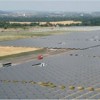
PORTUGAL: Economic Crisis Looms, But Clean Energy Shines On
While the shadow of a speculative assault looms over Portugal, similar to the economic crises that hit Greece and Ireland, this Iberian nation manages to hold up the beacon of renewable energy.
OP-ED: The EU Must Start Fishing Responsibly Now
The loss of marine biodiversity is hurtling forward at an unprecedented rate. At present, the FAO calculates that nearly 80 percent of the world's fishery resources are fully exploited, overexploited or depleted. Furthermore, marine scientists have suggested that if the current pace of exploitation continues, all fish stocks will have collapsed or disappeared by 2048.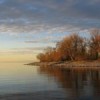
BIODIVERSITY: Dying Beneath the Calm Waters
At first glance, Lake Constance, trapped between Germany, Switzerland, and Austria, looks as peaceful as ever. But under the lake's apparently placid waters, a dramatic change is taking place - one that threatens to obliterate much of local biodiversity.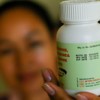
CAMBODIA: EU, India Trade Deal Could Hurt Access to Anti-Retrovirals
Every day, twice a day for the last seven years, Men Thol has swallowed a set of pills that gives him the strength to lead a normal life.TRADE: Time for Fairer Trade, Indonesia Tells EU
Business people and officials are demanding more fair trade from the European Union, arguing that its policies, including those that come in the guise of climate change concerns, make it difficult for the country’s products to compete in EU market.GREECE: The Centre Is Falling Apart
The experience of walking through Omonia Square in downtown Athens can send shivers down the spine of even the calmest of visitors. In recent months, increased incidents of street crime, drug trafficking, and prostitution have turned the square into a site many citizens go to lengths to avoid.EUROPE: Legally, and Dangerously High
Eastern European youths have been getting high on "plant feed" or "bath salt" for over two years, catching up fast with Western European trends in drug abuse. Governments in the region are now scrambling to control use.Kazakhstan Escapes Censure Over Rights
As Kazakhstan’s chairmanship of the Organisation for Security and Cooperation in Europe (OSCE) comes to an end, its authoritarian leadership has been accused of ignoring pledges to improve human rights and instead stifling opposition and cracking down on freedom of expression.Walking Precariously on Uncertain Water
Around a billion people already face scarcity of fresh water, and the problem is expected to grow in the future, with pollution, over-population and climate change affecting water supply, experts say.CHINA: Dubious Confucian Answer to ‘Clowns’
The Chinese boycott of the Nobel Peace Prize, which this year was awarded to a jailed Chinese dissident, has evoked unflattering associations with brutal regimes that imprisoned political opponents and refused to acknowledge their popular sway.
Developing Countries Must ‘Double’ Food Production
Food production will have to increase by 70 percent to feed the expected world population of 9 billion by 2050, says a report released Monday by the International Fund for Agricultural Development (IFAD). Agricultural output in developing countries will have to double, the report says.
Preparing for a Chinese Eton
Zhou Hongxia thought the King’s Scholars classroom was cold and damp and rather dark, the wooden benches carved and stained with the ink of hundreds of students that have filed through it over the centuries.EUROPE: Talking Green, ‘Lending Unclean’
The European Bank for Reconstruction and Development is reneging on pledges to support low-carbon economic models in Eastern Europe, and is instead ramping up its lending for fossil-fuel energy projects, critics say.« Previous Page — Next Page »


The Week with IPS

NEXT STOP - SDGs
Tracking global progress towards a sustainable world
Tracking global progress towards a sustainable world
