Languages
Sunday, November 15, 2026



News and Views from the Global South
Global

Future of Education Is Here
There are moments when the world has no choice but to come together. Those moments become historic turning points. This is one of them. We are now faced with the greatest education emergency of our time. Over one billion children are out of school. The COVID-19 pandemic has created an unprecedented crisis of such magnitude and depth that the next generation might neither have the capacity and tools, nor the will, to rebuild - let alone build back better.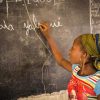
Call for Urgent Action by 275 World Leaders on Global Education Emergency In Face of Covid19
We write to call for urgent action to address the global education emergency triggered by COVID-19. With over 1 billion children still out of school because of the lockdown, there is now a real and present danger that the public health crisis will create a COVID generation who lose out on schooling and whose opportunities are permanently damaged. While the more fortunate have had access to alternatives, the world’s poorest children have been locked out of learning, denied internet access, and with the loss of free school meals - once a lifeline for 300 million boys and girls - hunger has grown.
ISDS Enables Making More Money from Losses
With the Covid-19 contagion from late 2019 spreading internationally this year, governments have responded, often in desperation. Meanwhile, predatory international law firms are encouraging multimillion-dollar investor-state dispute settlement (ISDS) lawsuits citing Covid-19 containment, relief and recovery measures.
The Battle over Barriers for People with Disabilities
According to the World Health Organization (WHO) at-least 15% of the population globally has some form or other of a disability- considered the world’s largest minority population and one that any of us can join at any point in our lives. It therefore makes so much sense for each one of us to invest towards inclusion, so everyone has the right to live their life to their full potential and contribute meaningfully to society. This article seeks to highlight the updates from the disability world in the past four months, particularly the last month, both globally and in India.
Brain Scientists Haven’t Been Able to Find Major Differences Between Women’s and Men’s Brains, Despite Over a Century of Searching
People have searched for sex differences in human brains since at least the 19th century, when scientist Samuel George Morton poured seeds and lead shot into human skulls to measure their volumes. Gustave Le Bon found men’s brains are usually larger than women’s, which prompted Alexander Bains and George Romanes to argue this size difference makes men smarter. But John Stuart Mill pointed out, by this criterion, elephants and whales should be smarter than people.
If Trump Delivers His Last Hurrah to an Empty United Nations, Will it Still Make a Sound?
There is no love lost between the United Nations and US President Donald Trump. When he addressed the high-level segment of the UN General Assembly in September 2018, Trump falsely told delegates that "in less than two years, my administration has accomplished more than almost any administration in the history of our country"
No More Lost Generations: Global Fund Provides Education for Children in Crisis
15-year-old Humaira* sits on the mud floor of her hut in Ukhiya camp, Cox's Bazar, listening as the rain beats down on the tarpaulin roof.
Keeping Education within the Grasp of Refugee Children
“Not being able to go to school is not something I’d wish on any child in this world,” said 21-year-old Nujeen Mustafa, a young advocate for refugees who fled the Syrian war with her sister. Mustafa, who now lives in Germany, is also the United Nations Human Rights Council (UNHCR) high profile supporter.
Debt Hawks Detract from Urgently Needed Fiscal Recovery Efforts
Developing country debt has continued to grow rapidly since the 2008-2009 global financial crisis (GFC). Warnings against debt have been reiterated by familiar prophets of debt doom such as new World Bank chief economist, Carmen Reinhart, once dubbed the ‘godmother of austerity’.
Crisis Management 101: Treating the Climate Crisis Like a Pandemic
On 23 February 2020, the South Korean government raised the national Crisis Alert Level to the highest tier in response to the Covid-19 pandemic. Since then, we have witnessed what our society is capable of when faced with a crisis.
Reform of the United Nations Organization
The US detains essential keys to the political and economic stability of the planet. The last four years have been challenging for Americans, their allies, and the rest of the world.
CPTPP Trade Liberalization Charade Continues
The Trans-Pacific Partnership (TPP) Agreement should be dead and buried after President Trump announced US withdrawal immediately after his inauguration in January 2017. After all, most major US presidential candidates in the last election, including Hillary Clinton, had opposed the TPP.
COVID Crisis Challenges in People with Disabilities and Hansen’s Disease
Even during the best of times, unfortunately members of the global community who have special needs are marginalized and often treated as social outcasts. The COVID crisis which has been raging for over the better part of the year 2020 has posed additional barriers and challenges for these already disenfranchised individuals.
Where Do We Come From? What Are We? Where Are We Going?
COVID-19 has become a scourge affecting all levels of human society – morals, behaviour, human interaction, economy and politics. The pandemic has wrecked havoc on our way of being and its impact will remain huge and all-encompassing. It is not only affecting our globally shared existence, it is also changing what has been called ”the little life”, i.e. our own way of thinking and being, our personal life situation and the one of those close to us; people we love and depend upon – our friends and family.
Building Resilience in Pacific Education
School as we all know it hasn’t changed that much in over a century. However, in the face of new threats to health and wellbeing, the future of those familiar structures that bring teachers and students together is starting to be questioned.
Warming Temperatures & Decades of Oil Spills Cause Irreversible Damage to the Persian Gulf
The Persian Gulf is one of the most strategic waterways in the world and is also one of the most polluted. According to estimates by experts, pollution levels in the Persian Gulf are 47 times higher than the world’s average and are steadily increasing.
28 Organizations Promoting Indigenous Food Sovereignty
These 28 organizations are preserving Indigenous food systems and promoting Indigenous food sovereignty through the rematriation of Indigenous land, seeds, food and histories.
COVID-19 – Some 23.8 Million More Children Will Drop out of School
Countries with low human development are facing the brunt of school lockdowns, with more than 85 percent of their students effectively out of school by the second quarter of 2020, according to a United Nations policy brief on the impact of COVID-19 on education.
Multilateral Bank Intermediation Must Help Developing Countries’ Recovery
International Monetary Fund (IMF) Managing Director Kristalina Georgieva has warned that developing countries would need more than the earlier estimated US$2.5 trillion to provide relief to affected families and businesses and expedite economic recovery.
Empowering Women in a Digitally Equipped, yet Challenging World: A Story of Engagement
A girl has many roles. She can be a daughter, a mother, a friend, a wife or a sister. But her first and foremost introduction is a person, a human and a voice. No matter what remote or accessible part she may belong to, her story is unique and belongs only to her own. And if a thought-provoking, positive platform echo her voice, it can achieve wonders.
Will There Also Be a Post-Journalism?
Every era brings its own buzzwords or catchphrases along with it. The term du jour is ‘pandemic’, namely ‘coronavirus’ and ‘COVID-19’; but alongside these words, speculation and forecasts over the post-pandemic world are flourishing. There is a proliferation of pieces and commentary on what our daily lives or the economy will be like once the epidemic is under control, that is, how we will live in the aftermath of the pandemic.« Previous Page — Next Page »


The Week with IPS

NEXT STOP - SDGs
Tracking global progress towards a sustainable world
Tracking global progress towards a sustainable world
