Languages
Sunday, November 22, 2026



News and Views from the Global South
Global
Family Planning Summit Offers New Hope
The Summit on Family Planning that is taking place in London on Wednesday is a bid to get governments around the world to commit more resources to safeguarding women’s reproductive rights, according to the executive director of the United Nations Population Fund (UNFPA).
New Afghanistan Aid Policy Turns Away from U.S. Model
For the first time, international donors gathered in Tokyo over the weekend explicitly tied ongoing financial aid for Afghanistan to progress made in the country’s economy and governance.
OP-ED: World’s Ailing Oceans Find a New Dawn at Expo 2012
Gazing over the ocean somehow puts a human being at peace with the world. To build a home with a view of the sea is the dream of many. The expanse of water, the beach, and tide magically draw us to them.
Coral Triangle Fights to Save Reefs from Extinction
The planet's richest region of coral and marine life, which feeds 130 million people, is in trouble.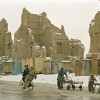
Anxiety as Donors Chart Aid for Afghanistan Beyond 2014
A key United Nations official on Friday urged the international community to match security funding for Afghanistan with economic and development funding after 2014, when most international – particularly U.S. – forces will leave the country.
After Rio+ 20, the Path Ahead
 Two weeks after the United Nations conference on sustainable development in Rio de Janeiro has left many lukewarm, activists, government representatives and U.N. officials are looking forward to setting new goals for the future.

“No Future We Want Without the Ocean We Need”
When South Korea, one of Asia's rising economic powerhouses, decided to host the international exhibition Expo 2012 in the coastal town of Yeosu, it picked a theme high on the agenda of the just-concluded Rio+20 summit on sustainable development: the living ocean.
China Battles Desertification
As scientists increasingly label desertification as one of the most burning challenges facing the world today, a small village in China’s semi-arid Northeastern region of Inner Mongolia is fighting back.U.N. Report Links Rwanda to Congolese Violence
After weeks of delay, the United Nations released Monday its full annex by the U.N. Security Council condemning the Rwandan government for its support of Congolese rebels.New World Bank Chief Backs Defunding Bangladesh Bridge Project
On Monday, his first day in office, new World Bank President Jim Yong Kim said he sees the institution's recent decision to pull out of a massive bridge project in Bangladesh as "appropriate".
Q&A: Sustainable Development Key to Reducing Drug Use
"Drugs and crime threaten one of our most important goals - to ensure sustainable development around the world," United Nations Secretary-General Ban Ki-moon stated on Jun. 26, during a General Assembly debate on drugs and crime as a threat to development.
Kim Assumes World Bank Presidency Amidst Uncertainty
Incoming World Bank President Jim Yong Kim reported to work on Monday for the first time, telling those gathered at the bank's headquarters here in Washington that he was "humbled and inspired to take over today as president".
Governments Challenged to Rein in Arms Flow
Talks to develop greater control of the arms trade have cast a glaring spotlight on the role of diverse countries in fuelling conflicts worldwide, offering governments a historic opportunity to rein in the flow of weapons.
Water and Slums Bright Spots in MDGs
An annual report card on the ambitious U.N.-led initiative known as the Millennium Development Goals (MDGs) says that in three areas - poverty, slums and water – the goals have been met ahead of the 2015 deadline, but persistent gaps remain, notably in the critical area of maternal health.Youth-Friendly Apps Visualise Carbon Footprint
Following what many regard as a disappointment at the recent Rio+20 Earth Summit, the World Bank and several groups have begun implementing new initiatives to "personalise" climate change, in hopes of revitalising the issue among the younger generation.
OP-ED: Expanding Oil Production Poses Environmental Risks
With oil prices on the rise again and geopolitical upheaval in some major oil producing regions, many countries are turning to new and often environmentally damaging sources of oil, including oil sands, deepwater offshore oil, and heavy oil.
Explanations Demanded on U.S. Inaction on Conflict Minerals
A U.S. government agency is being questioned on why it is dragging its feet on 2010 legislation that would increase transparency in extractive industries around the world, one aim of which would be to cut down on the global trade in "conflict minerals".
Q&A: Children Killed with Impunity in Syria
Radhika Coomaraswamy has been the United Nations Special Representative for Children and Armed Conflict since April 2006.
New Initiative to Combat Toxic Threats
Reducing the risks associated with chemical, biological, radiological and nuclear (CBRN) threats is the goal of a new multi-country initiative known as the Centres of Excellence (CoE). No Strategy for Civilisation in Crisis
The Second United Nations Conference on Human Settlements (Habitat II) in Istanbul in 1996 was one of the international meetings most open to civil society participation.Atomic Energy Agency Dangerously Weak, Warns Report
The International Atomic Energy Agency (IAEA) is "significantly underfunded", warns a new report released here on Monday.« Previous Page — Next Page »


The Week with IPS

NEXT STOP - SDGs
Tracking global progress towards a sustainable world
Tracking global progress towards a sustainable world
