Languages
Tuesday, October 6, 2026



News and Views from the Global South
Global
Social Media in the Global South Needs More Protections
In the western world, numerous studies over the past two decades have shown that the rise of social media in popularity has been linked to negative mental health symptoms, especially among young people. Platforms such as Instagram, Facebook, X (formerly known as Twitter), and TikTok have been criticized for fostering competitive and toxic environments, which contribute to higher rates of anxiety, cyber-bullying, depression, disordered eating, and low self-esteem. While the use of social media in the Global South has skyrocketed in the late 2010s, the ramifications on people in those regions has received much less coverage in mainstream media.
Trump’s War on Global Governance: Lessons from the Past on How to Fight Back
US president Donald Trump’s recent actions seem designed to reassert American power and demonstrate that it is still the dominant global power and is capable of bullying weaker nations into following America’s lead.
Only Political Will Can End World Hunger: Food Isn’t Scarce, but Many People Can’t Access It
History has shown us again and again that, so long as inequality goes unchecked, no amount of technology can ensure people are well fed.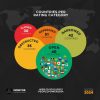
A Global Retreat from Solidarity
The world is witnessing a dangerous retreat from international solidarity by Global Minority countries. From Washington to Brussels, governments are slashing funds that sustain human rights, democracy, and humanitarian initiatives.
Why a Global Tech Fund for the Poorest Countries is a Smart Investment
The 4th International Conference on Financing for Development could catalyse coordinated action to close the financing gap and set the stage for a STI-driven transformation in the world’s poorest countries.
Development Effectiveness & the Quality of Financing: Towards a More Holistic Approach at Seville
When world leaders gather in Seville for the 4th International Conference on Financing for Development (FfD4) in June, they will be meeting at a pivotal moment: one defined by mounting systemic risks, a multiplication of crises, and proliferation and fragmentation of development co-operation actors and funds.
US Pullout Gives Upper Hand to Human Rights Abusers Worldwide
When some of the world’s “authoritarian and repressive regimes” were elected as members of the UN Human Rights Council (HRC) --including Cuba, China, Russia, Kazakhstan and the Democratic Republic of Congo (DRC) -- a US Congressman Dana Rohrabacher infamously remarked: “The inmates have taken over the asylum, I don’t plan to give the lunatics any more American tax dollars to play with.”
From Recovery to Resilience: Transforming Tourism for a Sustainable Future
Tourism is back – and stronger than ever. With 1.4 billion international tourist arrivals recorded globally in 2024, the sector has bounced back to pre-pandemic levels, signalling a recovery from its worst crisis.
Shutting Down USAID Threatens to Endanger World’s Poorer Nations
The Trump administration’s decision to dismantle the US Agency for International Development (USAID), the US government’s primary channel for humanitarian aid and disaster relief, is expected to have a devastating impact on the world’s developing nations. The 2025 Budget Request, under the former Biden administration, amounted to a staggering $58.8 billion in US foreign aid for this year.
Race Against Time as Hunger, Poverty Rise Amid Growing Global Uncertainties
Nearly one in 11 people in the world and one in five people in Africa go hungry every day, a crisis primarily driven by chronic inequality, climate change, conflict and economic instability. At the current pace, hunger and extreme poverty rates show little sign of drastically receding by 2030.
Gender Inequality in Science Limits Progress Towards Solving Complex Global Challenges
Today is the International Day of Women and Girls in Science and a time to take stock of progress, successes, and setbacks towards open and gender-inclusive science. Gender equality remains elusive in science, as only one in three scientists is a woman. Not only do these inequalities hold women back, but they also limit scientific progress.
Shaping Conditions for Fair, Equitable and Enduring Climate Finance
The global commitment to fair climate finance is at a crossroads. COP29 concluded with a disappointing New Collective Quantified Goal on Climate Finance (NCQG), leaving developing nations at risk of being left behind. With the U.S. withdrawing from the Paris Agreement and slashing development aid, prospects for more ambitious fair climate finance are getting out of sight.
Imperialism (Still) Rules
Many in the West, of the political right and left, now deny imperialism. For Josef Schumpeter, empires were pre-capitalist atavisms that would not survive the spread of capitalism. But even the conservative Economist notes President Trump’s revival of this US legacy.
WFP, FAO Warn of the Severity of the Climate Crisis and Food Insecurity
Over the past few years, climate shocks have become more frequent and have devastated economies and agriculture systems, exacerbating widespread malnutrition and hunger. It has become increasingly apparent that the utilization of sustainable agriculture practices and disaster risk management systems are crucial to fulfill growing needs as natural resources continue to dwindle.
The Challenge of the “Carbon Aristocracy”
For centuries, innumerable countries were ruled by an entrenched, typically inherited, political class: the “aristocracy.” The term comes from the Ancient Greek words “aristos”, meaning best, and “kratia,” meaning power. As a result of long and hard-fought democratic struggles, these aristocracies have largely dwindled worldwide (albeit, not everywhere).
Ending FGM Requires Strengthening Partnerships and Advocacy Efforts
February 6 is the International Day of Zero Tolerance for Female Genital Mutilation (FGM). A practice deemed a gross violation of human rights, tragically the practice persists across multiple countries in Africa, the Middle East, and Asia. Over 230 million women and girls alive today have been subjected to this gruesome practice, and experts warn that at least 27 million more could endure this by 2030.
Tax the Super-Rich. We have a World to Win
Why can’t there be education for every child? Why can’t there be healthcare for everyone who needs it? Why can’t everyone be freed from hunger and deprivation? Though these are promised to all as rights, people are repeatedly told that there is no money.
Trump’s Confrontational Domestic and Foreign Policy Defy his “America First” Agenda
In less than two weeks in office, Trump issued scores of reckless executive orders that ironically will gravely undermine rather than enhance his “America First” agenda and America’s global leadership.
A Potential New Battle: UN vs US over Greenland and the Panama Canal
US President Donald Trump’s ominous threat to take over the Panama Canal and Greenland sets the stage for a new political battle with the United Nations. But judging by UN’s track record of failures—including the US invasion of Iraq in 2003, and the 2022 Russian invasion of Ukraine --- the world body may lose again while battling a veto-wielding superpower.
Explainer: Why Glaciers Are Alive, Life-Giving and Worth Preserving
The United Nations declared 2025 as the International Year of Glaciers’ Preservation to promote awareness about the role of glaciers, snow and ice. The climate system and global hydrological cycle are dependent on accumulated water in solid form as glaciers, snow and ice. Because of the global temperature rise and its impact on the Earth’s cryosphere, socio-economic and environmental effects are being observed.
The Road to and from Wuhan: Is Trump a Threat to Global Health?
On his first day in office, President Donald Trump signed an executive order withdrawing the U.S. from the World Health Organization (WHO) – a move experts say makes the U.S. and other countries less safe from infectious diseases and other public-health threats. It might thus be opportune to return to the global COVID 19 pandemic. Has the threat really gone away? Can something similar not erupt again?« Previous Page — Next Page »





The Week with IPS

NEXT STOP - SDGs
Tracking global progress towards a sustainable world
Tracking global progress towards a sustainable world
