Languages
Wednesday, October 7, 2026



News and Views from the Global South
Global

The Reckless and Dangerous Misogyny of Zuckerberg and Musk
In anticipation of Donald Trump’s inauguration his gold-studded Florida estate, Mar-a-Lago, is at the heart of political power games, where influential businessmen like Mark Zuckerberg and Elon Musk are positioning themselves as key players in his orbit. Apparently unfazed by legal controversies and scandals, Trump is preparing for his return in collusion with already powerful men, who in their pursuit of personal gain and political influence reflect a disturbing trend of billionaire oligarchy merging with politics. A worrying development that might have significant consequences for the future of free speech and women’s rights.
Ghana a Contender for BRICS+ Alliance
With heightening geopolitical interest in building a new Global South architecture, Ghana's administration is considering joining the 'partner states category' of BRICS+, an association of five major emerging economies (Brazil, Russia, India, China and South Africa).
UN Claims to Strengthen Battle Against Racism in Workplace—Amid Reservations
As the United Nations plans to commemorate its 80th anniversary later this year, it is “reflecting on the steps taken to advance implementation of the Secretary-General’s Strategic Action Plan for addressing racism in the UN Secretariat. The UN’s Anti-Racism Office, which was created in 2023, has hosted several online events that reached over 13,500 participants and generated 2,000 comments, and welcomed 2,700 visitors to its iSeek page (accessible only by staffers)—possibly a reflection of the rising complaints and concerns of UN staffers.
The Davos Disconnect
"It was the best of times; it was the worst of times." Charles Dickens is more relevant today than ever. The wealthy and powerful are meeting again this year in glamorous Davos, at an invitation-only event. They arrive in chartered aircraft and private jets to speak about our warming climate, among other global concerns.
Armed Drone Attacks on Humanitarian Aid Efforts Put Future at Risk
Humanitarian aid operations in some places may become impossible in the future, experts have warned, as a new report shows a dramatic rise in the use of armed drones in conflict zones.
Laureates Call For Moonshot Innovation Effort to Avert Hunger Catastrophe
Neglected indigenous crops, rich in nutrition and resilient to climate change, are key to tackling global hunger only if governments invest in research and development (R&D) to tap the potential of such innovations. More than 150 Nobel and World Food Prize Laureates are calling for investment in moonshot technologies to realize the potential of innovative solutions such as these hardy crops, warning that without swift action, there is a "food insecure, unstable world.”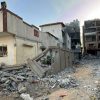
How US Media Hide Truths About the Gaza War
A few days before the end of 2024, the independent magazine +972 reported that “Israeli army forces stormed the Kamal Adwan Hospital compound in Beit Lahiya, culminating a nearly week-long siege of the last functioning hospital in northern Gaza.”
The Year 2024: Hopes & Despairs
Thank God, we have survived another year of genocide, war, destruction and climate crisis. The passing year of 2024 has been a mixture of hope and despair. It began with some hope as the International Court of Justice (ICJ) ruled in favour of South Africa’s case against Israel for committing genocide and ordered Israel to take all measures within its power to prevent the commission of all acts within the scope of Article II of the Genocide Convention, and to take immediate and effective measures to enable the provision of urgently needed basic services and humanitarian assistance to address the adverse conditions of life faced by Palestinians in the Gaza Strip.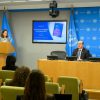
Geopolitical Uncertainties Cloud World Economic Prospects, UN Report Says
In the past few years, the world economy has made significant strides in mitigating inflation, unemployment, and poverty. Despite this, global growth has yet to regain its pace from before the pandemic.
Our Health is at Stake: The Solutions SIDS Need to Fight Climate Change
Climate change is one of the most serious global threats to the future of the world’s population. Its impact extends far and wide, from the economy to governance to the very health and well-being of society.
Financing for Development Priorities Today
The forthcoming fourth United Nations Financing for Development conference must address developing countries’ major financial challenges. Recent setbacks to sustainable development and climate action make FfD4 all the more critical.
Carter’s Virtue Trumps Mendacity
The fireplace in the State Dining Room of the White House that says, “May none but honest and wise men ever rule under this roof.” President John Adams wrote that in a letter to his wife Abigail in 1800.
A Renewed Vision for Prosperity for Landlocked Developing Countries
Over 570 million people live in the world’s 32 Landlocked Developing Countries (LLDCs), spanning across Africa, Asia, Europe, and Latin America. These nations face unique and complex development challenges. Their lack of direct access to the sea, geographical isolation, limited infrastructure, and difficulty integrating into global trade and value chains hinder sustainable development and progress.
Remembering Jimmy Carter: a UN Perspective
Former American President Jimmy Carter was a man of peace and principles. He presided over a tumultuous period in American history from 1977 to 1981, working hard to restore trust in government after the Watergate scandal and the divisive era of the Vietnam War. He brokered a landmark peace deal between Israel and Egypt and negotiated a historic treaty to hand over the Panama Canal to Panama.
This Year’s Three UN Summits Set the Stage for COP30 to Transform Food Systems
This year has been a landmark one for climate and environment policy. Starting with the UN’s COP16 biodiversity talks in October, followed by the COP29 climate talks in November, and closing with the desertification COP16 in December, few years have offered such critical moments back-to-back.
Civil Society Trends for 2025: Nine Global Challenges, One Reason for Hope
It's been a tumultuous year, and a tough one for struggles for human rights. Civil society’s work to seek social justice and hold the powerful to account has been tested at every turn. Civil society has kept holding the line, resisting power grabs and regressive legislation, calling out injustice and claiming some victories, often at great cost. And things aren’t about to get any easier, as key challenges identified in 2024 are likely to intensify in 2025.
U.S. Wins Controversial Ruling in GM Corn Dispute with Mexico
A tribunal of trade arbitrators has ruled in favor of the United States in its complaint that Mexico’s restrictions on genetically modified corn violate the terms of the U.S.-Mexico-Canada trade agreement (USMCA). The long-awaited ruling in the 16-month trade dispute is unlikely to settle the questions raised by Mexico about the safety of consuming GM corn and its associated herbicide.
Trapped on a Runaway Train: Looking Back on 2024
Do you sometimes feel like a hamster on its wheel, or perhaps stuck on a runaway train hurtling towards the abyss? Whatever metaphor one might choose for our world looking back on 2024, rainbows don’t easily spring to mind.
US & Western Allies Provide a Hefty 260 Billion Dollars in Military Aid to Ukraine
The United States and Western allies have jointly provided a staggering $260 billion in aid, mostly weapons and military assistance, to Ukraine as the long-drawn-out conflict continues following Russia’s invasion in February 2022. Speaking to reporters at NATO headquarters in Brussels early December, US Secretary of State Antony Blinken said: “All told, the United States has provided $102 billion in assistance to Ukraine, and our allies and partners, $158 billion”.
2024 Is The Hottest Year Ever Recorded
The World Meteorological Organization (WMO) warns that 2024 is on track to be the hottest year in recorded history, surpassing 2023. This can be attributed to heightened reliance on fossil fuels and the reluctance of industries worldwide to pivot to green energy practices. The rapid acceleration of global temperatures has alarmed scientists, with many expressing concern over the environmental, economic, and social implications of the worsening climate crisis.
We Can and Must Do Our Best
As 2024 comes to a close, I dare to say that this has been an especially gruesome year for millions upon millions of young children, their parents and their teachers. The world has witnessed one horrific crisis of cruelty, dispossession and human suffering after another.« Previous Page — Next Page »





The Week with IPS

NEXT STOP - SDGs
Tracking global progress towards a sustainable world
Tracking global progress towards a sustainable world
