Languages
Thursday, October 8, 2026



News and Views from the Global South
Global
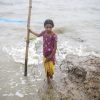
2024 Is The Hottest Year Ever Recorded
The World Meteorological Organization (WMO) warns that 2024 is on track to be the hottest year in recorded history, surpassing 2023. This can be attributed to heightened reliance on fossil fuels and the reluctance of industries worldwide to pivot to green energy practices. The rapid acceleration of global temperatures has alarmed scientists, with many expressing concern over the environmental, economic, and social implications of the worsening climate crisis.
We Can and Must Do Our Best
As 2024 comes to a close, I dare to say that this has been an especially gruesome year for millions upon millions of young children, their parents and their teachers. The world has witnessed one horrific crisis of cruelty, dispossession and human suffering after another.
These Billion Humans Simply Do Not Exist
Perhaps demographers would consider designing a new classification system to separate from their estimates of the world’s total population –eight billion plus– the billion humans who live without legal identity and, thus, are deprived from the most basic rights.
The Land of Immigrants to Deport Thousands of Refugees & Asylum Seekers
The United States, long described as a country built largely by immigrants, is planning to clamp down on migrants, refugees and asylum seekers entering the country—which averaged about 2.4 million in 2022-2023, according to the US Congressional Budget Office. The incoming Trump administration is calling for “mass deportations” of mostly illegal aliens and undocumented workers.
Is the Time Ripe for an End to the Ukraine War?
Donald Trump, president-elect of the USA, wants to end the Ukraine war within a day, as he has emphasized several times, but without saying how. Despite the brutal clashes on the ground in Ukraine, do negotiations now have a chance? Are we near to a "ripe moment" for negotiations?
Transformative Change Will Save a Planet in Peril—IPBES
Nature is at a tipping point. With human activity having pushed up to 1 million plant and animal species close to extinction, securing sustainable development and halting global biodiversity collapse is no longer just an option but a requisite for human wellbeing.
Why Funders Must Step Up Financing for Development in 2025
As the global community races to close the staggering $4.2 trillion financing gap needed to achieve the Sustainable Development Goals (SDGs), the Fourth International Conference on Financing for Development (FfD4) emerges as a crucial juncture.
The Climate Crisis as a Diplomatic Battlefield
The climate crisis, a defining challenge of the 21st century, is not just an environmental issue; it is increasingly a critical arena for international diplomacy. From intense negotiations at COP summits to the politics of energy transitions and resource control, climate change is shaping the geopolitical landscape.
A Most Heinous -Yet Unprosecuted- Crime: Inequality
Planet Earth is drying up, relentlessly. Over three-quarters of all lands have become permanently drier in the last three decades. This is not jut a statistic but a stark scientific fact. But while such an ‘existential crisis’ affects nearly every region, guess where -and who- are the most hit?
Interlinked Solutions Key to Tackling Biodiversity, Water, Food, Health and Climate Change, says IPBES
Biological diversity is on the decline worldwide, and current approaches to address its loss have been piecemeal and ineffective in tackling the crisis facing nature—this is despite estimates that over half of global GDP (USD 58 trillion of economic activity in 2023) is generated in sectors that are moderately to highly dependent on nature, a new report by the Intergovernmental Platform on Biodiversity and Ecosystem Services (IPBES) finds.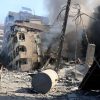
In Times of War: Tough Ethical Questions and Inner Turmoil
Sixty-four days of unrelenting war machine by Israel against Lebanon put my entire beliefs and ethos to a painful test: my sincerity in promoting social justice, human rights, integrity, patriotism, spirituality and, philosophically speaking, universal human values of love, peace and non-violence.
America’s Climate Carousel
The rhythmic swing of American climate policy has taken another dramatic turn. With Donald Trump’s return to the US presidency in mid-January next year, the international climate community will find itself bracing for what many fear will be another American exodus from the Paris Agreement.
UNCCD COP16 Spotlights Drought But Fails to Agree on a Legally Binding Protocol
The 16th meeting of the Conference of the Parties to the UN Convention to Combat Desertification (UNCCD COP 16) concluded early hours of Saturday with a renewed focus on building drought resilience globally. However, the COP also failed to agree on bringing a legally binding drought protocol. Like the biodiversity and climate change COPs held earlier in the year, COP16 also failed to finish in time and ended by postponing several key decisions to COP17 scheduled to be held in 2026.
New Geopolitics Worse for Global South
The new geopolitics after the first Cold War undermines peace, sustainability, and human development. Hegemonic priorities continue to threaten humanity’s well-being and prospects for progress.
Small Island States Put Faith in International Court’s ‘Wayfinding’ Advisory Opinion
The “crazy, weird and at some point (what seemed like) insurmountable” plan to ask the International Court of Justice for an advisory opinion on the obligations of UN member states regarding climate change was a success, Vishal Prasad, a representative for the. Pacific Islands Students Fighting Climate Change (PISFCC) said at a post-hearing press conference today (December 13).
Standing Up for Science with Science Communication
New research shows that AI-generated summaries of scientific writing made the information more approachable and easier to understand, and thus created more public engagement with the information. This is notable because most scientists aren’t trained in science communication tactics and so their jargon affects many people’s ability to understand and trust scientific papers and findings.
‘We Will Not Go Quietly Into the Rising Sea,’ Tuvalu Tells International Court of Justice
Rising sea level caused by greenhouse gas emission-fueled climate change is threatening existence in coastal communities and island nations. At the International Court of Justice (ICJ), on Thursday, December 12, 2024, small island states, including Tuvalu and a Pacific-based fisheries agency detailed their ongoing existential threats caused by the climate change-induced sea level rise and impacts on fishery-based livelihood.
COP29: Advancing work for Climate Finance and for Climate-Adapted Agri-Food Systems
Frustrations over the pace of climate action and the size of the finance target agreed in Baku are valid from the perspective of low-income countries, especially Small-Island Developing States (SIDS). It is also important to recognize that there has been real progress in some countries at the agri-food-nutrition-climate-water-nature-livelihoods intersection, and this seems to be particularly the case in some countries in the Alliance of Champions for Food Systems Transformation (ACF).
When Ousted Leaders Seek Safe Havens to Escape Jail Time & Hangman’s Noose..
When some of the leaders in the Middle East and Asia are dethroned and driven into exile, the cynics jokingly ask: Is he politically dead or is he dead and buried? The distinction between the two seems significant because the fluctuating political fortunes of some leaders-- and their will to survive against heavy odds-- have always defied Western logic.
It’s the Greed, Stupid!
The available data is self-explanatory: business-prompted human activities have already altered over 70% of the Earth’s lands, with 24 billion tonnes of fertile soil lost due to industrial agriculture, the excessive use of chemicals, overgrazing, deforestation, pollution and other major threats.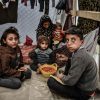
FAO Renews Its Commitment to Right to Food Guidelines
The Food and Agriculture Organization (FAO) launched its newest report on the Right to Food Guidelines on December 10, which focuses on that focused on the urgency of food security as well as the measures that will be taken by the organization to eradicate hunger and malnutrition in the coming decade.« Previous Page — Next Page »





The Week with IPS

NEXT STOP - SDGs
Tracking global progress towards a sustainable world
Tracking global progress towards a sustainable world
