Languages
Thursday, October 29, 2026



News and Views from the Global South
Global

‘Hate Speech Loads the Gun, Misinformation Pulls the Trigger’ – And It Is Profitable
In this world of wars, massive weapons production, sales and use; of sharpening inequalities and deadly climate emergencies, hate speech and its inhumane impact, is being amplified at ‘unprecedented scale’ by new technologies.
Taking a Stance on Feminists’ Prejudice Against Religious Minority Women
Since researching the experiences of gender discrimination against women in poverty who belong to religious minorities, many fellow feminists have turned their back on me.
ECW High-Level Financing Conference Raises More than 826 Million USD to Keep Crisis-Impacted Children in School
As an unparalleled, unprecedented global education crisis unfolds, an estimated 222 million crisis-impacted children are desperate to learn. As barriers to accessing education increase, darkness beckons, and education is their last hope.
World Leaders, Private Sector Urged to Establish an International Green Bank to Win Climate Change Battle
As the effects of climate change escalate and natural disasters such as earthquakes, floods, and droughts become more frequent and severe, threatening lives and livelihoods, humanity is losing the climate battle.
China and Russia Fail to Defund UN Human Rights Work
United Nations member states agreed to fully fund UN human rights mechanisms that China, Russia, and their allies had sought to defund in the 2023 budget. This should set a precedent for UN human rights funding in the future.
Outlook for 2023: Children in ‘Polycrisis’
The year 2022 was incredibly difficult for people around the world. We were confronted by a series of major crises, including a continuing pandemic, a major war in Europe, an energy crisis, rising inflation and food insecurity.
Let’s Eat Plastics!
With one in ten people in the world going hungry, food prices hitting record highs, and the worsening conditions of the environment and climate, it’s time for the world’s population of 8 billion to eat something that is available, abundant and inexpensive: plastics.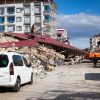
Humanitarian Aid to Earthquake Victims Hindered by Politics– & Limited Access
As the toll in last week’s earthquakes in Turkey and Syria exceeds a staggering 28,000 people dead and more than 78,000 injured--and counting-- the United Nations is in an emergency-footing struggling to provide humanitarian aid, along with several international humanitarian organizations.
Food Industry Exposes Five Billion People to Toxic Chemicals that Kill
The food industry continues to intensively use toxic chemicals in their products, some of them provoking heart diseases and death. Trans fat is just one of them, adding to contaminating fertilisers, pesticides, microplastics and a long etcetera.
The Opioid Addiction Crisis & U.S. National Security
The opioid addiction crisis in the United States is an acute public health emergency and a profound threat to national security – which is caused by the over-prescription, misuse, illegal production, and criminal trafficking and sale of opioid pharmaceutical drugs to Americans. It is estimated that over 130 people die every day from opioid overdoses in the U.S.
Rigidity and Tolerance within the Vatican
When the Pope Emeritus Benedict XIV/Ratzinger died on the last day of 2022 it did not cause much of a stir in the global newsfeed. Maybe a sign that religion has ceased to play a decisive role in modern society Nevertheless, religious hierarchies are still highly influential, not least for the world’s 1, 4 billion baptized Catholics, and a pope’s policies have a bearing not only on morals, but also on political and economic issues. By contrast, there are more Muslims in the world, 1.9 billion, though adherents are not so centrally controlled and supervised as Catholics and hierarchies do not have a comparable influence on global affairs.
NGOs Campaign for a Torture-Free UN Trade Treaty
Hinting at “Western hypocrisy”, a senior UN official once told a group of reporters, perhaps half-jokingly: “When you go on one of those sight-seeing tours in Europe, they will show you their palaces and castles-- but never their medieval prisons or torture chambers.”
Australia Leads Against Large Multinational Corporations’ Tax Dodging
Australia is set to become the first country or jurisdiction to require large multinational corporations (MNCs), with a global consolidated income of at least AU$1 billion, to publicly report country-by-country (CbC) tax information. The new Labor Government announced on 25 October, 2022 in its budget paper that MNC’s public CbC tax reporting will begin from 1 July, 2023. Australia’s public CbC reporting rules will apply to all companies headquartered in Australia and companies headquartered elsewhere with sufficient nexus in the country.
Race to Prosperity as Least Developed Countries Top Agenda at UN Conference
It is a race against time to form a new global partnership to secure a better future for the world’s poorest and most vulnerable nations by 2030 in line with the UN’s SDGs. All 46 countries classified as Least Developed Countries (LDCs) are pressed for time in a bid to deliver critical development goals.
Global Leaders Urge Participation in High-Level Financing Conference to Fund Education for 222 Million Crisis-Impacted Children
The world is in the throng of a monumental, damaging, and unprecedented global education crisis. Wars, protracted conflict, extreme climate changes, hunger, COVID-19, and economic uncertainties are pushing children out of the education system.
It’s Time to Move Away from Public-Private Partnerships & Build a Future That is Public
Last month, we joined more than 1000 representatives from all sectors of civil society who came together in Santiago de Chile to debate the future of – and threats to - public services the world over.
US Policies Slowing World Economy
Few policymakers ever claim credit for causing stagnation and recessions. Yet, they do so all the time, justifying their actions by some supposedly higher purpose.
Who are Humanitarian Journalists?
In a new book, entitled Humanitarian Journalists: Covering Crises from a Boundary Zone, we document the unique reporting practices of a small but influential group of journalists who defy conventional approaches to covering humanitarian crises.
Overcoming the Currency Mismatch to Finance Clean Energy in Developing Countries
Meeting our climate change goals will require massive investments in clean energy projects, in both advanced economies and across the Global South. But financing projects in the latter group of countries requires an increase in foreign capital inflows that will be constrained by currency exchange rate risk. Creating an innovative Exchange Rate Coverage Facility can help to overcome this constraint.
ASEAN Parliamentarians Cannot Escape ‘Lawfare’ or Violations of their Human Rights
Parliamentarians worldwide face increasing human rights violations and a greater risk of reprisal simply for exercising their mandate or expressing their ideas and opinions.
The Value of Insects: Why We Must Act Now to Protect Them
Recently, the United States Department of Agriculture granted a conditional license for the first-ever honeybee vaccine. This is an exciting step that will protect bees from American foulbrood disease and ultimately help to stop the alarming decline in their numbers.« Previous Page — Next Page »





The Week with IPS

NEXT STOP - SDGs
Tracking global progress towards a sustainable world
Tracking global progress towards a sustainable world
