Languages
Wednesday, October 7, 2026



News and Views from the Global South
Latin America & the Caribbean

Salvadoran President’s Secrecy about New Mega-Prison – a Harbinger of Corruption
The construction of a mega-prison, in which the government of El Salvador intends to imprison some 40,000 gang members, is in line with President Nayib Bukele’s tendency to hide public information on public projects, classifying them as "reserved."
Expanding E-bus Networks in Latin America Can Further Decarbonization Goals
Latin America’s (LATAM) transportation sector produces the largest share of regional emissions and is a large source of air pollution, making transforming transportation technology systems key to energy transition and decarbonization. In particular, electrifying public transportation systems across the region through a transition to electric bus (e-bus) fleets will reduce fossil fuel demand and greenhouse gas (GHG) emissions.
Work in Teams and Win the Race: A Hub-centered Strategy to Unleash Latin America’s Hydrogen Potential
Latin America has the potential to become the world’s dominant exporter of hydrocarbon. According to the IEA, Latin America could produce 25 percent of the 12 Million tons (Mt) of low-carbon hydrogen exports expected by 2030.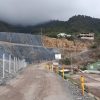
Pact Protecting Environmentalists Suffers Threats in Mexico
In the municipality of Papantla, in the southeastern Mexican state of Veracruz, the non-governmental Regional Coordinator of Solidarity Action in Defense of the Huasteca-Totonacapan Territory (Corason) works with local communities on empowering organizations, advocacy capacity in policies and litigation strategies.
Video: Roraima in Search of Safe and Sustainable Energy Autonomy
 Roraima, the northernmost state of Brazil, on the border with Guyana and Venezuela, is undergoing an energy transition that points to the dilemmas and possible solutions for a safe and sustainable supply of electricity in the Amazon rainforest.
Peru’s Democracy at a Crossroads
On 25 January, roughly six weeks after being sworn in following her predecessor’s removal, Peruvian president Dina Boluarte finally recognised that elections were the only way out of political crisis. Elections were rescheduled for April 2024, much earlier than the end of the presidential term she’s been tasked with completing, but not soon enough for thousands who’ve taken to the streets demanding her immediate resignation.
Management of Protected Areas Is a Latin American Priority for 2023
The environmental priority for South America in 2023 can be summed up in the management of its terrestrial and marine protected areas, together with the challenges of the extractivist economy and the transition to a green economy with priority attention to the most vulnerable populations.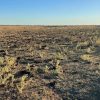
Long, Costly Drought Drives Climate Crisis Home in Argentina
Martín Rapetti, a fourth generation farmer in the province of Corrientes in northeastern Argentina, has already lost more than 30 cows due to lack of food and water, as a result of the long drought that is plaguing a large part of the country. “There is no grass; the animals have to sink their teeth into the dry earth,” he says with resignation.
Solar Energy Useless Without Good Batteries in Brazil’s Amazon Jungle
“Our electric power is of bad quality, it ruins electrical appliances,” complained Jesus Mota, 63. “In other places it works well, not here. Just because we are indigenous,” protested his wife, Adélia Augusto da Silva, of the same age.
The Mayan Train Pierces the Yucatan, the Great Jungle of Mexico – VIDEO
The Mayan Train (TM), run by the government’s National Tourism Development Fund (Fonatur), threatens the Mayan Jungle, the second largest in Latin America after the Amazon rainforest. its ecosystems and indigenous communities, as well as underground caves and cenotes - freshwater sinkholes resulting from the collapse of limestone bedrock that exposes groundwater. 
Chile’s Mapuche Indians Hurt by Rejection of a Plurinational Constitution
Mapuche indigenous leaders were hit hard by what they see as a collective defeat: the rejection in a September referendum of a plurinational, intercultural constitution proposed to Chile by an unprecedented constituent assembly with gender parity and indigenous representatives.
Unstoppable Gas Leaks in Mexico
A dark mole dots the brown earth, among the green scrub at this spot in southeastern Mexico. A repetitive “glug, glug,” a noise sounding like a thirsty animal, and an intense stench lead to this site, hidden in the undergrowth, where a broken pipe has created a pool of dense oil.
Cuban Innovator Drives Sustainable Energy Solutions – VIDEO
Félix Morffi supports the energy needs of his home with the help of the sun, in some cases through handcrafted solutions that make the most of an alternative source that is abundant in Cuba, but still used very little. 
Deportees Start Businesses to Overcome Unemployment in El Salvador
While grilling several portions of chicken and pork, Salvadoran cook Oscar Sosa said he was proud that through his own efforts he had managed to set up a small food business after he was deported back to El Salvador from the United States.
In Venezuela, Radio Stations are Shut Down and Information Is Just Another Migrant
More than 100 radio stations were shut down by the Venezuelan government this year, accentuating the collapse of the media and further undermining the already meager capacity of citizens to stay informed.
Money Laundering & Corruption Risks in Latin America
Over the last decades, the private investment fund sector has grown into a multi trillion-dollar industry. Private investment funds are vulnerable to money laundering because they contain a variety of structural risk factors that help camouflage illicit behavior.
Generation and Self-Consumption, the Path to Clean Energy in Argentina
With large projects held back by the economic crisis and lack of infrastructure, Argentina seems to be looking at an alternative path towards a more sustainable energy mix involving small renewable energy projects, promoted by environmentally aware industries, businesses and private users.
Biogas Spreads Among Cuban Families as an Alternative Energy – Video
Mayra Rojas is one of a small but growing number of people in Cuba benefiting from the production of biogas, a renewable energy source still little used in a country highly dependent on fossil fuels. 
Biodiversity Agreement Historic But Difficult to Implement
The pillar coral (Dendrogyra cylindrus), which takes its name from its shape, is found throughout the Caribbean Sea, but its population has declined by more than 80 percent since 1990. As a result, the International Union for Conservation of Nature (IUCN) has listed it as "critically endangered" due to the effects of the human-induced climate crisis.
Digital Treatment of Genetic Resources Shakes Up COP15
In addition to its nutritional properties, quinoa, an ancestral grain from the Andes, also has cosmetic uses, as stated by the resource use and benefit-sharing permit ABSCH-IRCC-PE-261033-1 awarded in February to a private individual under a 15-month commercial use contract.
New Political Agreement Finally Tackles Venezuela’s Social Crisis
The social crisis and humanitarian emergency in Venezuela became international headline news again once the government and the opposition, bitter adversaries for two decades, agreed to direct three billion dollars in state funds held abroad to social programs.« Previous Page — Next Page » *#*


The Week with IPS

NEXT STOP - SDGs
Tracking global progress towards a sustainable world
Tracking global progress towards a sustainable world

