Languages
Sunday, November 15, 2026



News and Views from the Global South
Middle East & North Africa
U.S.: Libya Intervention Unlikely to Be Repeated
As NATO-backed rebels continue efforts to secure Tripoli from forces loyal to Muammar Gaddafi, analysts here are already debating whether the apparently successful uprising in Libya offers a precedent for future action elsewhere.
LIBYA: Dreaming of a Future After Gaddafi
"We grabbed all these weapons from Gaddafi's compound just before NATO shelled the whole place," says rebel fighter Massud Askar in downtown Nalut. The 50-year-old rebel displays an Italian light semi-automatic rifle in his right hand and a hand grenade in the other.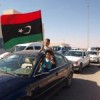
Libyans Find Historic Hope
"I’m 60 years old and I never thought I'd see this moment with my own eyes," Najib Taghuz tells IPS from the Tunisian-Libyan border. The engineer from the recently liberated town Gehryan is headed for Tunisia - his wife needs surgery on the left hand. But he hopes to return to a new Libya.LIBYA: No ‘Mission Accomplished’ Claimed in Washington Yet
While the apparent end of Muammar Gaddafi’s 42-year reign over Libya was greeted with considerable satisfaction here Monday, no one was prepared to declare "mission accomplished", particularly given the looming questions around what happens next.POLITICS: IBSA Opposes Measures Against Syria
Members of the emerging economy grouping known as IBSA - India, Brazil and South Africa - have joined China and Russia in opposing measures against Syria.Pockets of Resistance As Rebels Claim Tripoli
The head of Libya’s National Transitional Council (NTC) has announced the end of the Muammar Gaddafi era, while sporadic fighting continued across the capital, Tripoli.
Arab Spring Slips Into Tunisian Fall
Seven months after Tunisia’s historic uprising which saw the ouster of long-time dictator Zine el-Abidine Ben Ali and gave birth to the region’s Arab Spring, many Tunisians are losing confidence in the progress of their revolution.EGYPT: The Mubarak Show Goes Into Hiding
In a shuttered Cairo café, Egyptians crane their necks to watch the courtroom drama unfolding on a small television screen mounted high on the wall. The camera pans across the crowded courtroom and zooms in on a frail old man lying on a stretcher inside the caged defendants' box. Part Godfather, part Hannibal Lecter, he is the feared head of a powerful family at the centre of a web of violence and corruption. Beside him are his two sons, one known for shady business deals, the other groomed to head the cartel.SYRIA: Driving Into a Divided Land
Scores of buses carrying Syrians out of the country are waiting in uneven lines on the Lebanese-Syrian border for their paperwork to be processed. There are no Arab or Western tourists eager to cross to the other side, usually seen in hordes this time of year.
MIDEAST: Palestinians Strike to Seek Historic Agreement
Nestled between rolling hills just outside of Jerusalem, a dozen Palestinian workers have escaped the scorching summer heat in the shade of a makeshift tent, where they anxiously wait to sign what would be the first collective bargaining agreement between Palestinian workers and an Israeli employer.SYRIA: U.S., EU Call for Assad’s Ouster
After tiptoeing toward demanding the ouster of Bashir Al-Assad over the last several months, U.S. President Barack Obama Thursday finally jumped over the line with his first explicit call for the Syrian president to resign.
LEBANON: Women Prisoners Play the Liberation Role
To a soundtrack of almost constant pounding of fists against iron doors, drama therapist Zeina Daccache is trying to capture the attention of a group of women prisoners. Many of the 45 women are suffering from drug withdrawal and alternately appear agitated, upset, energised and detached. Others chat loudly, take long puffs off cigarettes, or pace the room.Int’l Pressure Mounts as Syrian Crackdown Grows More Violent
Though many expected the Muslim holy month of Ramadan to bring a significant boost to the beleaguered Syrian opposition movement, the past two weeks have instead brought the bloodiest government offensives to date.
MIDEAST: To Save From the Sea, and the Siege
It's a sunny Gaza morning and although a work day, the beach along Sheik Rajleen has enough people on it to keep Gaza's small number of lifeguards busy and alert. From a simple, raised wooden hut, a team of three monitor the sea, periodically calling out to swimmers below to move to calmer waters.EGYPT: Sinai Simmers in Security Vacuum
Even before the recent revolution, Egypt's strategic Sinai Peninsula - inhabited mostly by restive Bedouin tribesmen - had a reputation for lawlessness. But in the months since the popular uprising that led to Mubarak's February ouster, the situation in Sinai appears more precarious than ever.MIDEAST: Divided We Execute
The execution of a Palestinian father and son by Hamas security forces in Gaza throws up a sharp difference over the death penalty between Gaza and the West Bank. In the West Bank a temporary moratorium is in place.EGYPT: Labour Unions Shake Off Old Masters
The trade union federation that ex-dictator Hosni Mubarak used to repress labour movements and mobilise regime support for sham elections during his 30-year rule has been disbanded, striking a powerful blow to the old order.OP-ED: Save Egypt’s Judiciary, Save Its Revolution
The appearance of Hosni Mubarak in the opening of his trial reassured millions of Egyptians that their revolutionary struggle was not in vain. But, as Egypt and the world watch the resumption of proceedings today, the truth about Mubarak's ability to participate in his trial is still unclear.ISRAEL: Rights Recede Under Opium of Occupation
The nationwide movement for social justice that sent tens of thousands of Israelis to the streets on the weekend was seemingly oblivious to the fact that, concurrently, the Palestinians were officially announcing their bid for U.N.- endorsed recognition of statehood.TUNISIA: War Strangles Livelihoods on the Border
Tunisia’s border with Libya has been a major lifeline, keeping residents in Ben Guerdane economically afloat - so when the vital trade route is blocked by the municipality or by protestors, tempers flare.
MIDEAST: Work Has Come to This
It's a weekday morning, the beach is yet to fill with crowds seeking a break from the heat, but already the odd-jobbers are at work selling toys, clothes and food along the coast.« Previous Page — Next Page »


The Week with IPS

NEXT STOP - SDGs
Tracking global progress towards a sustainable world
Tracking global progress towards a sustainable world
