Languages
Thursday, November 19, 2026



News and Views from the Global South
Middle East & North Africa
TURKEY: Military Ghost Rises Again
Less than two years after its discreet sealing, the truce between ruling Justice and Development (AK) Party and the Turkish Armed Forces (TSK) seems to have ended.MIDEAST: Deal on Gaza Makes Headway
Under a complex twin-pronged initiative from the U.S. and Egypt, Israel's hard- line government is moving towards backtracking on two major planks of its policy in the occupied territories - resisting demands for a blanket freeze on all settlement building in the West Bank, and acquiescing in the end of its tight siege of the Hamas-controlled Gaza Strip.POLITICS-EGYPT: Women Get Help on Road to Parliament
Egypt elected the first Arab woman to parliament in 1957, but in the half century since, the most populous country in the Arab world has gone from being a leader in women's political participation to a lagger.MIDEAST: Arabs Court U.S. via Baghdad
Egypt finally appointed an ambassador to Iraq earlier this month after four years without diplomatic representation in Baghdad. While the last year has seen other Arab capitals do likewise, some critics question the wisdom of the move in light of Iraq's still volatile security situation.IRAQ: Lame-Duck Lawmakers Push Through Kurdistan’s New Charter
A draft constitution passed by the parliament of Iraqi Kurdistan has drawn divided reactions, with some questioning the very legitimacy of a lame-duck parliament to pass the single most important legal document of the Kurdish region and others touting it as a positive step forward.MIDEAST: Iran Crisis Ripples Outward
As the political crisis that erupted after Iran's Jun. 12 elections enters its third week, it is becoming evident that this crisis will have repercussions in many parts of the Middle East - and far beyond.EXCLUSIVE-PART 5: Freeh Became "Defence Lawyer" for Saudis on Khobar*
In early November 1998, Louis Freeh sent an FBI team off to observe Saudi secret police officials interviewing eight Shi’a detainees from behind a one-way mirror at the Riyadh detention centre. He planned to use the Shi’a testimony to show that Iran was behind the bombing.MIDEAST: Prisoners Shackled, and Hidden Away
The Public Committee Against Torture in Israel has accused the Israeli security forces of deliberately shackling Palestinian prisoners in a painful and dangerous manner, amounting to a form of torture.LEBANON: How Not to Oppose an Opposition
Christian heads of both the majority and the opposition have raised their stakes ahead of the imminent formation of the Lebanese government headed by Sunni leader Saad Hariri.EXCLUSIVE-PART 4: FBI Ignored Compelling Evidence of bin Laden Role*
Osama Bin Laden had made no secret of his intention to attack the U.S. military presence in Saudi Arabia. He had been calling for such attacks to drive it from the country since his first fatwa calling for jihad against Western "occupation" of Islamic lands in early 1992.POLITICS: U.S. to Name Ambassador to Damascus after Four Years
After informing the Syrian embassy in Washington on Tuesday night, the U.S. State Department announced on Wednesday that President Barack Obama will be sending an ambassador to Damascus for the first time since 2005.MIDEAST: The Writing Is On the Settlement Walls
A paralysing equation has long bedevilled would-be Middle East peacemakers: either, go directly to negotiating the kernel issues of the Israel-Palestine conflict - borders, security, refugees, Jerusalem - and leave, in the context of a full peace, the thorny question of Israeli settlements in the West Bank to fall naturally into place. Or, tackle the settlements head-on, thereby opening the way for a peace drive.
EXCLUSIVE-PART 3: U.S. Officials Leaked a False Story Blaming Iran*
In March 1997, FBI Director Louis Freeh got what he calls in his memoirs "the first truly big break in the case": the arrest in Canada of one of the Saudi Hezbollah members the Saudis accused of being the driver of the getaway car at Khobar Towers.
MOROCCO: African Refugees Targeted
More than 300 African refugees are gathered at the gates of the Moroccan United Nations Refugee Agency (UNHCR), asking to be moved to another country because their rights are not respected in Morocco. Several refugees say they have been beaten up by Moroccan UN personnel.MIDEAST: Bloody Showdown Looming if Unity Talks Fail
Egyptian mediators have set Jul. 7 as deadline for final Palestinian reconciliation talks in Cairo. The Egyptians say time is running out, and if there is no progress in July, they will no longer be prepared to arbitrate.
EXCLUSIVE-PART 2: Saudi Account of Khobar Bore Telltale Signs of Fraud*
In the last week of October 1996, the Saudi secret police, the Mabahith, gave David Williams, the FBI's assistant special agent in charge of counter-terrorism issues, what they said were summaries of the confessions obtained from some 40 Shi’a detainees.US-IRAQ: Fate of Withdrawal Pact to be Decided at the Polls
As Iraqis witness a spike in violence after a months-long relative lull, the government of Prime Minister Nouri al-Maliki has decided to put its security agreement with the U.S. to a public referendum, although the move appears to be only heightening a sense of uncertainty over the fate of the country.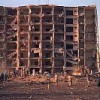
EXCLUSIVE-PART1: Al Qaeda Excluded from the Suspects List*
On Jun. 25, 1996, a massive truck bomb exploded at a building in the Khobar Towers complex in Khobar, Saudi Arabia, which housed U.S. Air Force personnel, killing 19 U.S. airmen and wounding 372.EGYPT: Unquiet Flows the Nile
Differences over sharing of Nile waters may have deepened following the failure among the nine countries along the Nile to come to an agreement.MIDEAST: Aid Agencies Slam Gaza Blockade
Forty international aid agencies and NGOs have released a joint statement condemning Israel's blockade of Gaza, to mark the second anniversary of the coastal territory being hermetically sealed off from the outside world.LEBANON: Defeated Shias Ponder Uncertain Future
A large highway cuts through the green hills connecting Lebanon's south to the Mediterranean Sea. Here, nestled amid banana trees and colourful bougainvillea bushes, lies the city of Tyre, a bastion of the Shia community and a significant base of the Lebanese opposition. Now, following the parliamentary elections and the victory of the March 14 political group, Shias of the south are asking what lies in store for them.« Previous Page — Next Page »


The Week with IPS

NEXT STOP - SDGs
Tracking global progress towards a sustainable world
Tracking global progress towards a sustainable world
