Languages
Thursday, November 19, 2026



News and Views from the Global South
Middle East & North Africa
DEVELOPMENT: Preparing for Water Quarrels, if not Wars
The Fifth World Water Forum begins in Istanbul Mar. 16 in the face of some stark facts: of the world's water, 97.5 percent is the sea, and of the remaining, 70 percent is frozen in polar icecaps. That leaves precious little for 6.76 billion people around the world, expected to grow to 9 billion by 2050.US-MIDEAST: Even Mixed Signals Mark a Policy Shift
The British government has announced it will hold talks with the political wing of Lebanon's Hizbullah. The Barack Obama administration sent two envoys to Syria to discuss steps to improve relations. U.S. Secretary of State Hillary Clinton has invited Iran to take part in a conference on the future of Afghanistan.
Q&A: Play for Peace
Sport could be one way of alleviating the thousands of children drawn into armed conflicts around the world. Certainly Prince Feisal Bin Al-Hussein of Jordan, also president of the Jordanian Olympic Committee, believes this, and has been using sports to heal traumatised children all his life.
Q&A: Plenty of Water in the Desert, if Only…
Most policy makers draw a bleak picture of dramatic water scarcity in the Middle East, warning of water wars to come. But there is plenty of water in the desert, says Tunisian geographer and water expert Habib Ayeb.MIDEAST: Women Migrant Workers With HIV Get Raw Deal
Thousands of Asian women flock to the affluent sheikhdoms of the Middle East annually, seeking jobs as domestic workers. For many this quest for a livelihood comes to a humiliating end when they test positive for HIV.MIDEAST: Border Areas Bombed Again
Almost two months after the war on the Gaza Strip, the border area between the battered coastal enclave and Egypt continues to come under frequent Israeli aerial bombardment. Israeli officials say the strikes target cross-border tunnels used to smuggle weapons to Palestinian resistance factions.MIDEAST: Singing Across the Divide
From the flattened buildings in Gaza, through angry demonstrations outside a Swedish tennis stadium, to the web pages of human rights reports, battles continue to rage over Israel's policies and the legacy of its Gaza war.U.S.: Islamist Govts Not the Enemy, Say Mideast Experts
Scores of Middle East and democracy experts released an open letter to U.S. President Barack Obama Tuesday asking him to focus more of his foreign policy efforts at making reforms in the region, including boosting human rights.MIDEAST: Palestinian Unity as Elusive as Deal With Israel
Intensive unity talks are under way in Cairo as five Palestinian committees, representing 13 factions and independents, face each other across a table in a bid to form a new Palestinian unity government.U.S.: Muslim Women Try to Shatter the “Glass Minaret”
It's Ramadan, and Sara Elghobashy and a group of her women friends, having broken their fast, are looking for a mosque where they can hear the recitation of Koran.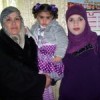
MIDEAST: Home Demolitions Threaten Peace Talks
Eight months pregnant Shireen Abu Sbeh, 20, mother of a two-year-old, lives with eight other people in a two-bedroom apartment that is on a list of Palestinian homes in East Jerusalem to be demolished by the Israeli authorities.MIDEAST: Hot Air Brings no Winds of Change
Last November, on the day marking the assassination of Israel's peace-making leader Yitzhak Rabin, the now outgoing Prime Minister Ehud Olmert told Israelis something which, for decades, not even Rabin had dared say - we must end the occupation of the Palestinian territories and return to the 1967 borders.POLITICS: Iran’s Anti-Israel Rhetoric Aimed at Arab Opinion
After Iranian President Mahmoud Ahmadinejad called in October 2005 for an end to the state of Israel, Israeli leaders began stepping up talk of an "existential threat" to the country.MIDEAST: Israeli Settlers Terrorise Palestinian Villagers
"I couldn't run. My pregnancy was too far advanced and there was nowhere to hide," said Amna Salman Rabaye, 31, as she recalled the terrifying incident several months ago.RIGHTS-US: Profiling Still Plagues Muslim Communities
On the heels of a recent poll that found that American Muslims experience emotional turbulence due to the stereotypes and suspicion of Islam since the Sep. 11, 2001 terrorist attacks, two major Muslim-American organisations issued scathing indictments of the tactics of the Federal Bureau of Investigation and the Department of Homeland Security.
MIDEAST: Where Every Day Is a Woman's Day
We've been warned she's a "harsh case". Hesitantly she enters, a withdrawn smile hidden behind glasses and a canopy of thick black hair. Impassively, she tells her life story - as if it's about someone else entirely: She's 19. Since seven, she's been sexually assaulted by "an influential family relative."MIDEAST: East Jerusalem Settlements Ratchet Up Tensions
As the fires of human misery continue to smolder in Gaza, the situation in Israeli-occupied East Jerusalem is emerging as another potentially explosive issue in, and far beyond, the Middle East.
MIDEAST: Suddenly, Home Was Gone
Dates in the calendar to mark the rights of women mean little to Manwa Tarrabin (56) and her two daughters. They have lost home, and any rights to it.
ENVIRONMENT-ISRAEL: Bury the Bridge
If all goes to plan, passengers will not get to see the beautiful Yitla Stream, or what is left of it, on the train from Jerusalem to Tel Aviv.IRAQ: Medical Care At Last, At a Price
Prompt medical care is at last on offer in Iraq, for those who can find the dollars for it.U.S.: Military Dominance in Mideast Proven a Costly Myth
The arguments for maintaining a major U.S. combat force in Iraq at least through 2011, escalating U.S. military involvement in Afghanistan and assuming a confrontational stance toward Iran appear to assume that the United States remains the dominant military power in the region.« Previous Page — Next Page »


The Week with IPS

NEXT STOP - SDGs
Tracking global progress towards a sustainable world
Tracking global progress towards a sustainable world
