Languages
Monday, October 26, 2026



News and Views from the Global South
Middle East & North Africa

Video of Police Beating Black Soldier Sparks Protests by Israel’s Ethiopian Jews
A video that caught an Israeli police officer and a volunteer shoving and punching a black soldier in uniform outraged members of the Ethiopian Jewish community and set off a clash Sunday between Ethiopian Jews and police in central Tel Aviv.
Opinion: The West and Its Self-Assumed Right to Intervene
The ‘West’ is a concept that flourished during the Cold War. Then it was West against East in the form of the Soviet empire. The East was evil against which all democratic countries – read West – were called on to fight.
Q&A: Comprehensive Ban on Nuclear Testing, a ‘Stepping Stone’ to a Nuke-Free World
With the four-week-long review conference of the Nuclear Non-Proliferation Treaty (NPT) underway at the United Nations, hopes and frustrations are running equally high, as a binding political agreement on the biggest threat to humanity hangs in the balance.
Middle East Conflicts Trigger New U.S.-Russia Arms Race
The escalating military conflicts in the Middle East – and the month-long aerial bombings of Yemen by an Arab coalition led by Saudi Arabia – have triggered a new arms race in the politically-volatile region.
Opinion: Arab Youth Have No Trust in Democracy
The results of a survey of what 3,500 young people between the ages of 18 and 24 – in all Arab countries except Syria – feel about the current situation in the Middle East and North Africa have just been released.
Saudis Compensate Civilian Killings with 274 Million in Humanitarian Aid to Yemen
Saudi Arabia’s right hand does not know what its left foot is up to, belittles an Asian diplomat, mixing his metaphors to describe the political paradox in the ongoing military conflict in Yemen.In One Terrible Weekend, ISIL Beheads Christians and Hundreds Drown in a ‘Mass Grave’
As Europeans debated their policies towards the leaky flotillas steaming out of Libya, carrying most to a certain death at sea, members of ISIL were streaming a video of captured Ethiopian Christians on a beach.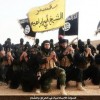
Foreign Fighter Recruits: Why the U.S. Fares Better than Others
More than 25,000 fighters seeking to wage “jihad” or an Islamic holy war have left home to join terrorist networks abroad.
U.N. Struggles to Cope with New Humanitarian Crisis in Yemen
The United Nations, which is providing humanitarian aid to over 50 million refugees worldwide, is struggling to cope with a new crisis in hand: death and destruction in Yemen.
Q&A: Iranian Balochistan is a “Hunting Ground” – Nasser Boladai
Nasser Boladai is the spokesperson of the Congress of Nationalities for a Federal Iran (CNFI), an umbrella movement aimed at expanding support for a secular, democratic and federal Iran. IPS spoke with him in Geneva, where he was invited to speak at a recent conference on Human Rights and Global Perspectives in his native Balochistan region.
State of Palestine in Overtime
The large majority of countries, and most of the people in the world, already recognise Palestine as an independent state.At Least 18 Already Killed in Yarmouk Attacks: Amnesty International
At least 18 civilians have already been killed in the attack on the Syrian refugee camp of Yarmouk, according to Amnesty International.
Israeli Forces Target Journalists in West Bank
It is becoming increasingly risky to cover clashes and protests between Israeli security forces and Palestinian protesters in the West Bank as the number of journalists injured, in what appears to be deliberate targeting by Israeli security forces, continues to rise.Situation in Besieged Yarmouk Camp ‘One of the Most Severe Ever’
The head of the United Nations agency for Palestinian refugees has described the situation inside the Syrian refugee camp of Yarmouk, under attack by Islamic State (IS) militants, as “one of the most severe ever” for the already spartan camp.
Environmental Terrorism Cripples Palestinian Farmers
“Exactly which olive trees do you want to see? The Israeli settlers have cut down thousands. Can you be more specific?” asked the taxi driver, telling IPS that he wished to remain anonymous.
Recycling Revives Art of Glass-Blowing in Lebanon
In the Khalife workshop, in the southern coastal village of Sarafand, four men stand beside an oven, fixed in concentration despite the oppressive temperature. Blowing through a long tube, one of the group carefully shapes white-hot melted glass into a small ball, while two others coax it into the form of a beer glass. The fourth, the veteran of the group, cuts off the top of the glass, creating an opening from which beer will one day flow.
Civil Society and Politics March for Negev Bedouin Recognition
There was a symbolic dimension to a recent four-day march from the periphery of Israel to the corridors of power in Jerusalem to seek recognition for Bedouin villages.
Obama Prepares for Showdown with Congress Over Iran Deal
Two days after the deadline for reaching a deal over Iran’s nuclear programme had passed, negotiators looked like they would be going home empty handed. But a surprisingly detailed framework was announced Apr. 2 in Lausanne, Switzerland, as well as in Washington, and in the same breath, U.S. President Barack Obama acknowledged the battle he faces on Capitol Hill.
U.N.’s Next Stop: Humanitarian Summit to Resolve Exploding Refugee Crisis
As the world's spreading humanitarian crisis threatens to spill beyond the borders of Syria and Iraq into Libya and Yemen, the United Nations is already setting its sights on the first World Humanitarian Summit scheduled to take place in Istanbul next year.
Pledges for Humanitarian Aid to Syria Fall Short of Target by Billions
When United Nations Secretary-General Ban Ki-moon stood before 78 potential donors at the Bayan Palace in Kuwait Tuesday, his appeal for funds had an ominous ring to it: the Syrian people, he remarked, "are victims of the worst humanitarian crisis of our time."
U.N. Staffers Caught in Deadly Crossfire in Ongoing Conflicts
The deadly Syrian military conflict - now entering its fifth year - which has claimed the lives of over 200,000 mostly civilians, including women, children and aid workers, has not spared the United Nations either.« Previous Page — Next Page »





The Week with IPS

NEXT STOP - SDGs
Tracking global progress towards a sustainable world
Tracking global progress towards a sustainable world
