Languages
Sunday, November 22, 2026



News and Views from the Global South
Regional Categories

Looking Back to Look Forward: What Does the Next Normal Look Like?
In the last 100 years there have been seven crises that have had a truly global impact. Two global wars (1914-18 & 1939-1945); two global health pandemics, the Spanish Flu (1918) and HIV/AIDS (1980s onwards); one major political crisis (1989 – the end of the cold war); and two financial crises (1929 and 2008).
Semiarid Regions of Latin America Cooperate to Adapt to Climate
After centuries of poverty, marginalisation from national development policies and a lack of support for positive local practices and projects, the semiarid regions of Latin America are preparing to forge their own agricultural paths by sharing knowledge, in a new and unprecedented initiative.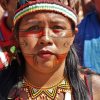
Amazon ‘Women Warriors’ Show Gender Equality, Forest Conservation Go Hand in Hand
On an early December morning last year in the state of Maranhão, Brazil, half a dozen members of the Indigenous Guajajara people packed their bags with food, maps and drone equipment to get ready for a patrol. They said goodbye to their children, uncertain when, or whether, they would see them again. Then, they hoisted their bags over their shoulders and set out to patrol a section of the 173,000 hectares (428,000 acres) of the primary rainforest they call home.
Firing Up India’s Clean Cooking Fuel Plan
Usage of liquefied petroleum gas (LPG) in rural Indian households has surged, partly due to India’s flagship clean cooking programme, but beneficiaries of the scheme consume less LPG than general customers per year, reports a new study.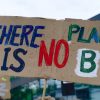
What Will It Take to Prioritise Climate Change?
India ranks third in terms of absolute levels of carbon emissions after China and the United States. In a business as usual scenario, by 2030, emission levels are predicted to reach more than 4.4 gigatonnes of carbon dioxide (GTCO2) equivalent of greenhouse gas—up from 3 GTCO2 today—overtaking the United States as the second-largest emitting country.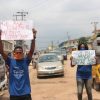
Standing Up to Myths and Misinformation in Nigeria During the Pandemic
‘An apple a day keeps the doctor away’ is a common and seemingly harmless saying. But what happens when commonly eaten foods like pepper, garlic and ginger are wrongfully said to prevent COVID-19? What can we do to fight harmful misinformation?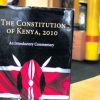
Katiba at 10: A Landmark Constitution and a Blueprint for Deepening Democracy
On 27 August 2020, we mark the tenth anniversary of the New Constitution of Kenya – a landmark social contract inspired by citizens’ desire for a country characterised by participatory governance, inclusive development, human rights and the rule of law.
The Recent Mauritius Oil Spill in Policy and Historical Context
On July 25 2020 the Japanese bulk carrier MV Wakashio with 3,894 tonnes of fuel aboard ran aground off the cost of Mauritius. By 9 August over 1000 tonnes of oil had seeped into the pristine waters off the coast of this beautiful island haven. This spill was so large that it was even visible from space https://www.livescience.com/mauritius-oil-spill-from-space.html
Covid is a Great Unequaliser, But the Crisis Could Enable us to Build a More Equal Future
Any of the first names that the media reported as having Covid were those of the rich and powerful, from movie stars to political leaders. Be ye ever so high, the virus is above thee – or so it seemed.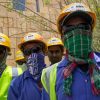
Defying Predictions, Nepal’s Remittances Still High
Despite dire predictions about a drastic drop in remittances that Nepal gets from its workers abroad due to the Covid-19 induced economic downturn, money transfers have hit Rs875 billion which is only 0.5% less than the preceding year.
Approval of a Coronavirus Vaccine Would Be Just the Beginning – Huge Production Challenges Could Cause Long Delays
The race for a SARS-CoV-2 vaccine is well underway. It’s tempting to assume that once the first vaccine is approved for human use, all the problems of this pandemic will be immediately solved. Unfortunately, that is not exactly the case.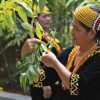
Covid-19 Pandemic Another Threat to Indigenous Communities
The voices of indigenous people worldwide are being silenced and their lives made invisible. Stewards of the earth, they are left at the fringes of public discourse in countries around the globe. Indigenous people are not “extinct”, they exist, and they are building innovative networks and solutions, that could be the key to many of our world’s problems.
World Bank’s ‘Mobilizing Finance for Development’ Not Financing Development
The World Bank leadership must urgently abandon its ‘Maximizing Finance for Development’ (MFD) hoax. Instead, it should resume its traditional multilateral development bank role of mobilizing funds at minimal cost to finance developing countries.
Mayan Train Threatens to Alter the Environment and Communities in Mexico
Mayan anthropologist Ezer May fears that the tourism development and real estate construction boom that will be unleashed by the Mayan Train, the main infrastructure project of Mexican President Andrés Manuel López Obrador, will disrupt his community.
A Not-To-Do List for Guyana’s New Administration When It Comes to Oil
Just over five years ago, a major oil discovery occurred on the northeastern coast of South America. There have been a series of additional discoveries ever since. But this time it was not Venezuela. It was Guyana.
How Women-led Agribusinesses are Boosting Nutrition in Africa
Oluwaseun Sangoleye’s son developed rickets after rejecting baby formula. So she started a business to make natural baby cereal from locally-sourced ingredients in Nigeria.
Fueling Pacific Economic Engines with Open Data in Times of Covid-19
Throughout my career, I have always championed the value of open data, especially geospatial and earth observation data for the social, environmental and economic growth that it brings. Access to timely and accurate data is critical to maximizing the efficiency of development programmes and is a critical economic as well as scientific imperative for our region.
The Abraham Accord: Will it Bring Peace or Perpetuate Pain in Palestine?
There is not much good news for President Donald Trump of the United States these days. If electoral polls have any credibility, he is staring at the face of almost certain defeat in the elections come November. So, when the so-called Abraham Accord between Israel and the United Arab Emirates (UAE) was sealed in a telephone call between him and the leaders of Israel and the UAE, signalling a sliver of silver lining in the otherwise hovering dark clouds over him, Trump was ecstatic. A Trump twitter called it a “HUGE breakthrough among “three GREAT friends!”.
Transforming the Global Economy or Parachuting Cats into Borneo?
The COVID 19 Pandemic continues relentlessly. Deaths approaching a million globally, 22 million infected and growing. Brazil, India, the US and Russia accounting for almost 50% of the total cases in the world.
A Historical SPC Tuna Tagging Cruise
 The Pacific Community (SPC) 7-week research expedition to monitor the health of world’s largest tuna fishery has departed from Honolulu on Saturday 15 August 2020 despite the significant challenges presented by COVID-19. With most research and fisheries observer programmes currently suspended, the importance of this cruise cannot be overstated. Half of the world's tuna catch comes from the Western & Central Pacific, providing a critical source of protein and export revenue for Pacific Island Nations.

Q&A: Ageing Africa Left out of COVID-19 Policies
Nearly three quarters of respondents in a survey across 18 African countries have claimed that their countries’ COVID-19 responses are gravely lacking in addressing the ageing population.
« Previous Page — Next Page »


The Week with IPS

NEXT STOP - SDGs
Tracking global progress towards a sustainable world
Tracking global progress towards a sustainable world
