Languages
Wednesday, October 28, 2026



News and Views from the Global South
Regional Categories
A New World Order Where Might is Right
As the build-up for a proposed “new world order” continues, a lingering question remains: will the country with the most powerful military reign supreme? The United Nations remains politically impotent. The UN charter is in tatters. The sovereignty of nation states and their territorial integrity have been reduced to political mockery. And the law of the jungle prevails—be it Palestine, Ukraine, Venezuela or Iran.
How UNDP & Global Partners are Tackling Root Causes of Violent Extremism in Ghana’s Borderlands
Across the world’s fragile borderlands where insecurity, climate stress, and marginalization intersect, communities often find themselves on the frontlines of violent extremism. Yet these same communities also hold the greatest potential for peace, when given the confidence, tools, and opportunities to shape their own future.
How Child Labour Persists Along Zanzibar’s Blue Economy
As the tide falls on Zanzibar’s western coast, 13-year-old Asha* moves across the reef, her gown flapping in knee-deep water. She carries a plastic basin and a knife. Since dawn, Asha has been prying octopus and scaling fish for drying and selling.
Cuba Has its Back Against the Wall
The crisis could scarcely be more dramatic. The US is blocking practically all oil deliveries to Cuba. The island depends on imports for all diesel, petrol and kerosine. Without diesel trucks cannot move, food cannot reach Cuban towns and hospitals will not get any oxygen.
UN Leaders, Diplomats Warn of Middle East Instability Following Weekend Air-Strikes in Iran
The United States and Israel launched a joint military strike on Iran on February 28. Iran followed with military strikes on Israeli bases and on Arab Gulf states, including Bahrain, Oman, and the United Arab Emirates. The realized threat of a new war has caused alarm for the security situation in the Middle East and its impact on civilian populations.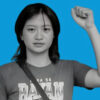
Philippines: ‘Preventing Similar Cases Requires Dismantling the Mechanisms That Treat Dissent as Crime’
CIVICUS discusses the criminalisation of dissent in the Philippines with Kyle A Domequil, spokesperson of the Free Tacloban 5 Network, a campaign supporting journalist Frenchie Mae Cumpio, human rights defender Marielle Domequil and their co-accused and advocating for their release.
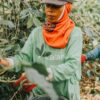
Climate Change Is Coming for Your Morning Coffee
Your morning cup of coffee could soon cost more, thanks to climate change, which is raising the heat on the production of the world's most loved beverage.
Maison des Talibés Confronts Abuse of ‘Talibé’ children in Senegal
When you walk through the streets of Senegal’s cities, you notice them almost immediately: young boys in worn clothes, clutching plastic cans or tin bowls, weaving between cars and pedestrians to ask for spare change or food. They are often barefoot, alone and hungry. These children are known as talibés.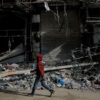
Over 25,500 Palestinians Killed: Absence of Accountability is Nothing Short of Shameful
The situation in the Occupied Palestinian Territory is a human-made disaster. The report before you sets out events between 1 November 2024 and 31 October 2025 that show Israel’s utter disregard for human rights in Gaza and the West Bank, and the serious violations also committed by Hamas and other Palestinian armed groups.
Massive US War Spending Hike Raises Debt, Taxes, Doubts
As US President Donald Trump pushes the world to war, arms spending has been rising worldwide. Wars secure more budgetary allocations, mainly benefiting the US-dominated military-industrial complex.
Why Ugandan Male Sexual Violence Survivors Suffer In Silence
When people ordinarily think about sexual violence, it's of the rape of women by men. In Uganda, as in other countries, activists say men are also victims of sexual violence perpetrated by women, though males remain silent.
International Women’s Day & 70th Session of the UN Commission on the Status of Women
International Women’s Day 2026 comes at a defining moment: Women and girls have never been closer to equality, and never closer to losing it. Legal protection against domestic violence has expanded in many countries. Yet, the rights of women and girls are being rolled back in plain sight, and across the world, women still do not enjoy the same legal rights as men.
Will Palestine Preside Over the Next UN General Assembly?
The 193-member General Assembly, the highest-ranking policy-making body at the United Nations, is most likely to elect Palestine as its next President in an unprecedented move voting for a “non-member observer state”—a state deprived of a country to represent.
Why Tenure Reform Is Key to Curbing Land Degradation
Farmland has long been one of the most important sources of security across generations. Writing about China nearly a century ago, Pearl S. Buck noted in The Good Earth, “If you will hold your land, you can live.” That holds true today. When farmers own land, they invest in it. When they don’t, they extract what they can today without thinking of tomorrow.
Trachoma: What It Takes to Eliminate a Disease in the Pacific Islands
Two Pacific Island nations have been applauded for their successes in the global health campaign to eliminate the infectious eye disease, Trachoma.
Generative AI Could Deepen Inequality, Revenue Losses in Creative Industries
As generative artificial intelligence (AI) rapidly expands across nearly every sector of society, those that work in cultural and creative industries are expected to bear some of the greatest losses. With AI-generated content projected to dominate global markets in the coming years, combined with a lack of strong regulatory frameworks to protect intellectual property and AI’s ability to produce content quickly at a low cost, the United Nations Educational, Scientific, and Cultural Organization (UNESCO) warns that generative AI may become a major driver of inequality, threatening the livelihoods of millions of cultural workers around the world.
After a Brutal Winter, Millions of Ukrainians Face Deepening Displacement and Uncertainty
After surviving the harshest winter in a decade, millions of displaced Ukrainians are confronting a growing crisis marked by hardship and ongoing attacks as peace prospects remain distant.
Can “Human Fraternity” Move Peace?
As wars drag on and the international order grows increasingly unstable, Abu Dhabi has been offering a different kind of narrative. It sought to recognize early efforts at reconciliation, bring religious leaders into the same space, and place former adversaries under the same spotlight. At the heart of the February 4, 2026 Zayed Award for Human Fraternity ceremony was an attempt to make visible, in a public setting, the choice of moving in the direction of easing conflict.
Iran: A Regime with Nothing Left but Force
The Islamic Republic of Iran has put down another uprising, with a ferocity that makes previous crackdowns seem restrained. The theocratic regime has survived, but it has done so by substituting violence for the economic security it cannot provide and the political legitimacy it no longer has. Its show of force is also an admission of weakness.
People’s Pursuit of Dignity, Equality and Justice is Unshakeable
A fierce competition for power, control and resources is playing out on the world stage at a rate and intensity unseen for the past 80 years. People are feeling unmoored, anxious and insecure. The gears of global power are shifting; the consequences are not clear. Some are signalling the end of the world order as we know it.
Loneliness on Planet Earth
Loneliness is a significant health concern on planet Earth. It affects virtually every aspect of human wellbeing and development worldwide.« Previous Page — Next Page »





The Week with IPS

NEXT STOP - SDGs
Tracking global progress towards a sustainable world
Tracking global progress towards a sustainable world
