Languages
Friday, November 27, 2026



News and Views from the Global South
Regional Categories

Are Prospects of Rural Youth Employment in Africa a Mirage?
Many recent accounts tend to dismiss productive employment of youth in rural areas in Africa as a mirage largely because they exhibit strong resistance to eking out a bare subsistence in dismal working and living conditions. We argue below on recent evidence of agricultural transformation that this view is overly pessimistic, if not largely mistaken.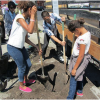
How US Is Taking Climate Action Without Trump
Even after President Trump announced his intention to pull the United States out of the Paris Agreement, much of the country is moving forward with climate action anyway. According to new analysis, more than 2,500 non-federal actors representing more than half the U.S. economy—including cities, counties, states, businesses and more—have pledged their support for the Paris Agreement goals. If these actors were their own country, they’d be the world’s third-largest economy.
Global Campaign for Mercury-Free Dentistry Targets Africa
A vibrant global campaign to ban the use of mercury in dentistry is shifting direction: moving from Europe to the developing world.
Aid Groups Sound Alarm on DRC Crisis
The Democratic Republic of the Congo (DRC) is on the brink of a humanitarian crisis and the international community must step in before it worsens, humanitarian agencies warn.
Economic Development vs. Climate Action: Rebutting Deniers and Wafflers
As negotiators meet in Bonn to put together a deal to implement the Paris Agreement, John Holdren, a professor of environmental policy at the John F. Kennedy School of Government, Harvard University, stressed that economic development and climate change mitigation and adaptation are not ‘either-or’ but must be pursued together.
Climate Change Poses Alarming Threat to Food Security in Pacific Islands
A high-level meeting of political leaders -– hosted by the Food and Agriculture Organisation (FAO) -– sounded an ominous warning: that climate change poses an “alarming threat to food systems and food security in the Pacific islands.”
Aid Groups Condemn Yemen Blockade, Warn of ‘Catastrophic’ Famine
If aid deliveries are not resumed, Yemen will experience the worst famine the world has seen in recent decades.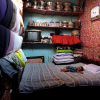
Nations without Nationality – An ‘Unseen’ Stark Reality
Here’s another ‘unseen’ stark reality—that of millions of people around the world who are deprived of their identity, living without nationality. Their total number is by definition unknown and their only ‘sin” is that they belong to an ethnic, religious or linguistic minority in the country where they have often lived for generations.
Yolanda (Haiyan): Remembrance, Reflection and Responsibility
In the arcane world of natural disasters, names matter a great deal—not only because of history and science, but because people need them in order to remember or mourn what and whom they have lost.
Big Hearts in a Small Village
Johora, 60, came to the IOM-supported community clinic in Kutupalong, Ukhiya sub-district, with Shajeda, her 20-year-old daughter-in-law, who is in her eighth month of pregnancy and expecting her first child.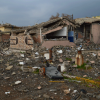
The Illusion of Justice: When Will Reparations be Served to Iraq’s Victims?
It is difficult to spend any time in Iraq without being struck by a sense of profound injustice. After successive decades of war and occupation, violence has become the rule rather than the exception in the country, with each phase of conflict outdoing the previous in terms of brutality and capacity to shock the conscience.
SLIDESHOW: Two Models of Development in Struggle Coexist in Brazil’s Semi-arid Region
 Irrigated green fields of vineyards and monoculture crops coexist in Brazil’s semiarid Northeast with dry plains dotted with flowering cacti and native crops traditionally planted by the locals. Two models of development in struggle, with very different fruits.

“Refugees Are Nothing but Commodities”
As countless refugees arriving on Italy’s shores report torture, extortion and forced labour in Libyan detention centers, many say they never intended to make the journey to Europe until the chaos in Libya left them no other choice.GCAA welcomes women aviators from South America in ‘Women in Aviation’ programme
As part of a programme to advance the role of women in the aviation sector, both in the UAE and around the world, the General Civil Aviation Authority, GCAA, welcomed its third group of women from Latin American to take part in the ‘Women in Aviation Chapter.’
Victims of El Salvador’s Civil War Demand Reparations
Among the sea of names of victims of the Salvadoran civil war, engraved on a long black granite wall, Matilde Asencio managed to find the name of her son, Salvador.
Will Policymakers Listen to Climate Change Science This Time Around?
Climate change is altering the ecosystem of our oceans, a big carbon sink and prime source of protein from fish. This is old news.
Pacific Communities Building Resilience in the Face of Climate Change
In the Pacific, climate change is an ever-present threat, undermining human rights, livelihoods, and security. Pacific Islanders are working with courage and resolve to build the resilience of their communities and to catalyse international actions towards ending global carbon pollution.
Fighting the Creeping Catastrophe of Climate Change
November 8 marks the fourth anniversary of Haiyan’s landfall in the Philippines. The super typhoon was the strongest ever to make landfall.
Emerging Markets at Risk Again
Emerging market governments often draw lessons from previous financial crises – or at least claim to do so – to prevent their recurrence. However, such preventive measures are typically designed to address the causes of the last crisis, not the next one. Hence, some measures adopted may inadvertently become new sources of instability and crisis.
Conservation Agriculture: Zambia’s Double-edged Sword against Climate Change and Hunger
As governments gather in Bonn, Germany for the next two weeks to hammer out a blueprint for implementation of the global climate change treaty signed in Paris in 2015, a major focus will be on emissions reductions to keep the global average temperature increase to well below 2°C by 2020.
4 Reasons for Countries to Enhance Climate Commitments by 2020
The Paris Agreement was widely hailed for drawing all nations together to tackle climate change, based on bottom-up contributions that will be reviewed and strengthened over time. These contributions are aimed at achieving the ambitious but necessary long-term goals of limiting global temperature increase and building resilience to climate impacts.« Previous Page — Next Page »


The Week with IPS

NEXT STOP - SDGs
Tracking global progress towards a sustainable world
