Languages
Monday, August 31, 2026



News and Views from the Global South


The Global South in the New Cold War
Marginalised and dominated economically by the Global North, developing countries must urgently cooperate to better strive for their shared interests in achieving world peace and sustainable development.
Rising Temperatures Threaten Our Oceans
Human practices, such as unsustainable fishing, pollution, coastal development, and fossil fuel use have pushed the Earth’s oceans to their limits. This has resulted in warmer, more acidic waters. As global temperatures rise yearly due to climate change, oceans continue to see significant losses in biodiversity, rising sea levels, and environmental damage.
Mixed Fortunes for Africa’s Rapid Urbanization—Report
A new report says African cities will record rapid urbanization in the next decade, creating a mixed bag of socio-economic opportunities and challenges for the continent. This development is projected to result in wealthier consumer markets, better connected and more sophisticated commercial hubs, and larger bases for industrial production.
TOGO: ‘The International Community Must Send a Clear Message That Power Grabs Won’t Be Tolerated’
CIVICUS discusses the crackdown on civil society in Togo with a human rights defender who asked to stay anonymous for security reasons.
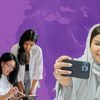
Women Lead Record Number of Central Banks, but More Progress is Needed
Women are leading more central banks than ever before, thanks to appointments in the past year, but recent gains still leave the share of female governors far short of parity.
Children in Gaza Threatened by Polio and School Closures
It has been nearly one year since the commencement of Israeli occupation in the Gaza Strip and living conditions for millions of children continue to grow more dire. The rampant spread of disease among children as well as the stagnant state of Gaza’s schooling system have been greatly aggravated by continued hostilities.
How Much Damage Can Be Done by a Few? The Tragedy in Gaza, Part 2
Hungarian-Swedish microbiologist George Klein, who in 1944 escaped from a train destined to Auschwitz, once wrote that his father jokingly used to say that he had caused World War I. While working as a medical doctor in Bosnia he had cured a young boy called Gavrilo Princip from a deadly disease. As an adult Gavrilo shot and killed Archduke Franz Ferdinand, presumptive heir to the throne of Austria-Hungary, whose death became the immediate cause of World War I. Can a single person, knowingly or unknowingly, change the course of history? We talk about “Putin’s war” and “Trump’s USA”. Are individuals so important? Lev Tolstoy wrote in War and Peace that it was absurd to attribute historical events to acts of individuals. The French revolution could quite easily have produced another person like Napoleon. He insisted that the French emperor knew as little of what was happening in the battle of Borodino as the meanest soldier serving under him.
60 Years After Lyndon Johnson’s “Daisy Ad,” the Silence on Nuclear War Is Dangerous
One evening in early September 1964, a frightening commercial jolted 50 million Americans who were partway through watching “Monday Night at the Movies” on NBC. The ad began with an adorable three-year-old girl counting petals as she pulled them from a daisy. Then came a man’s somber voiceover, counting down from ten to zero. Then an ominous roar and a mushroom cloud from a nuclear bomb explosion.
Small Glacial Lakes’ Mass Destruction in the Himalayan Community
Small glacial lakes can cause destruction, which may impact the livelihoods of entire communities. Now this is the harsh reality that the community of Thame village in the Mt. Everest region of Nepal now faces as they rebuild after the August 16 disaster.
A Cuban Town Improves Water Quality Through Desalination
Overnight, hundreds of people in the rural community of Las Mangas, located in Granma province in eastern Cuba, realised something they had already suspected: that the water they had been drinking for decades was not exactly crystal clear, but rather “salty”, as they say.
Partnership-building: A Sustainable Tool for African Non-profit Organisations
In the landscape of African nonprofit organisations and indeed the world over, sustainability remains a cornerstone for enduring impact. However, continued funding is a pivotal aspect of sustainability.
El Niño-Induced Water Crisis Drubbing Villagers in Zimbabwe
Side-by-side with fellow male villagers, Enia Tambo uses a white 25-liter plastic bucket to dig out mounds of sand in the Vhombozi River, in Mudzi district located in Zimbabwe’s Mashonaland East Province. The woman, in her late 50s, is digging to reach the water that is lying deep beneath the soil.
Armed Conflict and Climate Crisis Threatens the Lives of Millions in Yemen
Yemen is currently in the midst of a severe humanitarian crisis that has been exacerbated by a litany of environmental issues. Years of armed conflict, constant windstorms, flooding, mass displacement, cholera outbreaks, and acute food insecurity have all compounded into a severe issue for millions of Yemeni people. Currently, it is estimated by the International Committee of the Red Cross (ICRC) that approximately 70 percent of Yemen’s population depends on humanitarian aid to survive.
Nigeria: Protecting the Vulnerable on the Path to Progress
Returning to Nigeria after five years, I was struck by the changes - both the challenges and the opportunities. To better understand these dynamics, I have been undertaking visits to states across Nigeria.
Africa’s Strong Case for Reforms of UN Security Council Led by Sierra Leone Presidency
At most international forums, including the annual UN General Assembly high-level debate, Sierra Leonean President Julius Maada Bio consistently highlights the injustices of the global system, particularly Africa’s absence in the permanent category and underrepresentation in the non-permanent category of the United Nations Security Council (UNSC).
Bangladesh Flash Floods ‘Tragic Reminder’ of Impact of Climate Disasters
Since late August, severe flash floods and monsoons plaguing Bangladesh have affected nearly 6 million people. Bangladeshi officials have declared the floods to be the country’s worst climate disaster in recent memory. These recent floods follow the wake of Cyclone Remal, which devastated Bangladesh and West Bengal earlier this year.
Knowledge is Power. Gaza War Supporters Don’t Want Students to Have Both
With nearly 18 million students on U.S. college campuses this fall, defenders of the war on Gaza don’t want to hear any backtalk. Silence is complicity, and that’s the way Israel’s allies like it.
Rural Survival: Guardians of Mother Earth Saving Mau, Revitalizing Native Lands
The Great Rift Valley is part of an intra-continental ridge system that runs through Kenya from north to south. A breathtaking, diverse mix of natural beauty that includes dramatic escarpments, highland mountains, cliffs and gorges, lakes and savannas. It is also home to one of Africa’s greatest wildlife reserves—the Maasai Mara National Reserve.
At 76, India’s ‘Super Granny’ to Run Marathon in Australian Masters Event
Kmoin Wahlang, a 76-year-old woman, starts her running training every morning at 4 a.m. Dressed in track pants, a jacket, and running shoes, she sets out to navigate the hilly terrain of the small village of Shngimawlein in the southwest Khasi Hills district of Meghalaya, a state in northeastern India.
Climate Action Greatest Economic Opportunity of this Century, Says UN Climate Chief
With fewer than 100 days to go to COP29, the highest decision-making body on climate issues under the United Nations Framework Convention on Climate Change (UNFCCC), the need for creative and innovative solutions to protect lives and livelihoods is now extremely urgent.
INDIA: ‘Civil Society Organisations Are at the Forefront of the Fight Against Gender-based Violence’
CIVICUS discusses the recent wave of protests against gender-based violence (GBV) in India with Dr Kavitha Ravi, a member of the Indian Medical Association (IMA).
« Previous Page — Next Page »


Want to keep up with the latest news and views from the Global South? Sign up for IPS Daily News Report for daily emails with our top stories about international development, climate change, gender and more. (Formerly IPS TerraViva since 1993).

The Week with IPS

NEXT STOP - SDGs
Tracking global progress towards a sustainable world
Tracking global progress towards a sustainable world
