Languages
Saturday, September 5, 2026



News and Views from the Global South


In Samoa, Protecting the Ocean is Our Way of Life
In Samoa, we use a simple phrase to capture our way of life: Fa’asamoa. At the core of this concept is respect for others, devotion to family and a deep appreciation for the preservation of our natural resources. Importantly, Fa'asamoa has enabled us to sustainably fish our vibrant coral reefs for millennia, in a way that provides good health and prosperity for everyone in our communities.
Uganda Coffee Smallholders Grapple With EU Regulations on Imports
In Kubewo village in eastern Uganda, children often go to work with their parents in the coffee gardens. Earnings from Arabica coffee are used, their parents and grandparents say, to pay for children’s education and other expenses for the family.
Absence of Reproductive Care Haunts Syrian Displaced Women
Pregnant women in northern Syria's camps for internally displaced people fear about their health and the health of their unborn children because of a lack of basic medical care and a healthy diet. These conditions exacerbate the illnesses and challenges faced by women, particularly amid the region's widespread poverty, food insecurity, and the remoteness of hospitals and health centers from the camps.
UK: ‘Many in the Climate Justice Movement Are Finding Creative and Imaginative Ways to Protest’
CIVICUS speaks with Chris Garrard, co-founder and co-director of Culture Unstained, about the campaign to end fossil fuel sponsorship of cultural institutions, which oil companies use to try to present a positive public image.
Bridging the Gap: How Self-Awareness Can Unleash Youth Potential
Imagine a world where every young person has the tools they need to succeed, regardless of their age, area of residence, ethnicity, college name, or the title on their resume. It’s a world where dreams are limitless, and potential knows no bounds.
Climate Change Poses Yet Another Stumbling Block for Pakistani Sportswomen
Goalkeeper Rehana Jamali, 17, is jubilant. Her team came in second in the All Sindh Women Hockey Tournament, held last month.
James Baldwin Fest To Celebrate Writer, in Paris
For the centenary of James Baldwin’s birth, an international array of literature fans are coming together in Paris at a festival that will honour the life and work of the iconic American author and civil rights activist.
Transforming India’s Villages Through Innovative Water Harvesting Techniques
Brij Mohan, a 37-year-old farmer from Deoria, a modest village in India’s northern state of Uttar Pradesh, has a story of resilience and transformation. Mohan, the lone breadwinner for his family, has two children, the eldest just 10 years old.
Biden’s Convention Speech Made Absurd Claims About His Gaza Policy
An observation from George Orwell -- “those who control the present, control the past and those who control the past control the future” -- is acutely relevant to how President Biden talked about Gaza during his speech at the Democratic convention Monday night.
Various Uncertainties Block Indigenous Land Rights in Brazil
A never-ending battle threatens the indigenous rights that seemed clear and secure in Brazil, until the extreme right emerged in 2018 with a force challenging the civilisational advances set out in the Constitution.
Neglected for Years, Mpox Now a Public Health Emergency of International Concern
There is a deadly outbreak of a new and graver variant of mpox in the Democratic Republic of Congo (DRC), and at least one case has been confirmed in nearly 12 African countries, including those like Kenya, Burundi, Uganda, and Rwanda that were previously unaffected. Suspected mpox cases across these countries have surpassed 17,000, a significant increase from 7,146 cases in 2022 and 14,957 cases in 2023.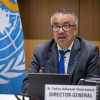
The Troubling Truth of Mpox
On August 15th, the Deputy Spokesperson for the Secretary-General, Farhan Haq, stated at a press briefing at the United Nations Headquarters that the Mpox epidemic continues to surge in the Democratic Republic of Congo and spreads throughout Africa. The alarming frequency of these cases constitutes a global health concern. Mpox, formerly known as monkeypox, is an epidemic that has grown exponentially in severity over the past two years. Originating in Central Africa in 1970, rates of infection have risen significantly since late 2023, with a new variant of the infection, known as clade 1 Mpox, infecting over 17,000 people in the Democratic Republic of Congo. These cases have generated increasing alarm, so much so that the World Health Organization has declared Mpox to be a worldwide public health emergency. Shortly after this declaration, the first case of clade 1 Mpox was reported in Sweden which greatly elevated global concern of a worldwide epidemic.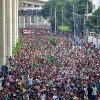
Does the Uprising in Bangladesh have Similarities with Arab Spring?
“I hope the outcome [of the recent revolution in Bangladesh] would be different. I hope the end result will not be the same,” says Shireen Huq, women’s rights and human rights activist and Founder of Naripokkho organization, to IPS about the many similarities with the Arab Spring.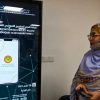
Mauritania Pilots Digital ID App
Governments are increasingly adopting the digital public infrastructure (DPI) approach to deliver public services. An essential component of this is digital identity. Digital identities are often designed to provide a seamless experience for users which ought to be secure, user-friendly, and preserve privacy.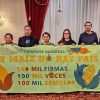
US Flails in GM Corn Dispute with Mexico
Closing arguments are in in the U.S. trade complaint against Mexico’s restrictions on genetically modified (GM) corn, with the three-arbitrator tribunal set to rule on the matter in November. The legitimacy of the trade agreement itself hangs in the balance.
Venezuela Struggles to Hold on to Hope
There was an unusual sense of hope going into Venezuela’s 28 July presidential election. Democracy seemed on the horizon. María Corina Machado, the opposition’s rallying figure, had inspired a rare level of enthusiasm, promising millions of exiles they’d soon be able to return to a new Venezuela.
Kazakhstan Takes Lead in Global Push for Nuclear Disarmament Amid Heightened Tensions
In a world increasingly shadowed by the threat of nuclear conflict, Kazakhstan is stepping up its efforts in the global disarmament movement. On August 27-28, 2024, in collaboration with the United Nations Office for Disarmament Affairs (UNODA), Kazakhstan will host a critical workshop in Astana. This gathering, the first of its kind in five years, is set to reinvigorate the five existing Nuclear-Weapon-Free Zones (NWFZs) and enhance cooperation and consultation among them.
How Extreme Heat Intensifies Health Problems and Hunger
In May, temperatures soared above 52° Celsius (125.6° Fahrenheit) in Pakistan’s southern province of Sindh. To cope, Samina Kanwal, a community health worker with Action Against Hunger, began work at 7:00 am — the earliest time possible given neighborhood security protocols — to travel door-to-door helping vulnerable with the health consequences of extreme heat including heatstroke, difficulties with brain function, and even hunger.
2023 Deadliest Year for Aid Workers– & 2024 Could be Even Worse, Predicts UN
Back in August 2003, the United Nations faced one of its violent tragedies when a terrorist attack on the UN headquarters in the Iraqi capital of Baghdad claimed the lives of 22 people. Among those killed was Sergio Vieira de Mello of Brazil, the UN envoy in Iraq and High Commissioner for Human Rights, who had a long and distinguished UN career stretching over 30 years.
Micro-Dams, a Solution to Water Shortages in Rural Brazil
Water shortage is over, springs have emerged or become perennial, small ponds with fish have formed and pastures have become greener and more permanent, all thanks to the ‘barraginhas’, the Portuguese name given in Brazil to micro-dams that retain rainwater and infiltrate it into the soil.
Origins of the Gaza Catastrophe – Part 1
During the first half of the 20th century, antisemitism was endemic in Europe and eventually burst out in full force when Nazi-Germany and its collaborators between 1941 and 1945 systematically (and well-documented) murdered six million Jews across German-occupied Europe. In an environment mined by hostile public opinion, the Zionist Nahum Sokolow popularized the Hebrew term Hasbara. The word has no real equivalent in English, but might be translated as “explaining”, indicating a strategy seeking to explain actions, regardless whether or not they are justified. As a skilled diplomat, Sokolow based his widely publicized opinions on in-depth research of actual events, though he presented his findings in a manner that favoured his cause.« Previous Page — Next Page »


Want to keep up with the latest news and views from the Global South? Sign up for IPS Daily News Report for daily emails with our top stories about international development, climate change, gender and more. (Formerly IPS TerraViva since 1993).

The Week with IPS

NEXT STOP - SDGs
Tracking global progress towards a sustainable world
Tracking global progress towards a sustainable world
