
Monday, November 23, 2026



News and Views from the Global South

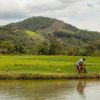
Solving the Climate Crisis is Beyond Governments
Throughout my ten years working in international development and climate policy, I’ve mostly heard colleagues talk about the private sector as if it was this intangible, multifaceted medusa with its own business lingo that is impossible for us policy experts to tackle: “the ‘private sector’ needs a return on investment in order to act on climate” or “the ‘private sector' does not have the right incentives, but we need ‘private’ capital to solve this crisis”
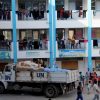
UN Aid Boss Promises “Punishment” for Misconduct in Yemen and Palestine
A senior United Nations official has promised a thorough investigation into allegations of misconduct in field operations in Yemen and the occupied Palestinian territories, saying that those responsible would be punished.
South Must Also Set International Tax Rules
Recently, Christine Lagarde, outgoing Managing Director of the International Monetary Fund (IMF), argued that developing ‘countries need a seat at the table’ to design rules governing international corporate taxation. This acknowledges recent IMF findings that developing countries lose approximately USD200 billion in potential tax revenue yearly, about 1.3 per cent of their GDP, due to companies shifting profits to low-tax locations. Oxfam estimated in 2018 that extreme poverty could be eradicated for USD107 billion annually, i.e., about half the lost revenue.
World Health Organisation’s New Effort Can Help End Neglected Tropical Diseases
Recently, the World Health Organisation (WHO) launched global consultations for a new Roadmap on how to eliminate Neglected Tropical Diseases (NTDs). The roadmap would help achieve universal health coverage by 2030, address health emergencies and promote healthier populations.
Addressing Gender & Protection Issues During Humanitarian Emergencies
Vanuatu is among the world’s ‘most at-risk’ countries to natural disasters. In the last 12 months alone, the country has faced multiple volcanic eruptions, earthquakes, cyclone and tsunami.
The Role of Women’s Organisations in Crisis-Settings
To mark World Humanitarian Day, we celebrate the overlooked women leaders who are first responders, unwavering advocates, and powerful change-makers in humanitarian emergencies.
How Tibet Doubled its Life Expectancy
 Tibet's complicated typography means that the terrain is not easy for its people. Whilst the country is breathtaking, one incredible story about Tibet is that of the dramatic socio-economic changes the region has undergone.

Russia and Syria in the Spotlight for Latest Idlib Medic Deaths
Medical aid groups have again blasted Russian and Syrian government forces this week for an ever-growing death toll among doctors, paramedics and other health workers in military strikes in northwestern Syria.
A Key Role for 1.8 Billion Youth in UN’s 2030 Development Agenda
The UN Population Fund (UNFPA) is convinced that the world’s 1.8 billion adolescents and youth-- a quarter of the global population—have a key role to play in helping implement the UN’s 2030 Development Agenda.
Establishing a Science & Technology Park is No Walk in the Park
The success of Silicon Valley has been inspirational for many countries worldwide wishing to establish science and technology parks. In Asia, successful science and technology parks can be found in many economies, including China, Japan and Thailand.

Forests, Food & Farming Next Frontier in Climate Emergency
The special report by the Intergovernmental Panel on Climate Change (IPCC) on climate and land, launched last week, makes it clear that without drastic changes in land use, agriculture and human diets, we will fall significantly short of targets to hold global temperature rise below 1.5°C.
Producing Energy from Pig and Poultry Waste in Brazil
Romário Schaefer is fattening up 3,300 pigs that he receives when they weigh around 22 kg and returns when they reach 130 to 160 kg - a huge increase in meat and profits for their owner, a local meat-processing plant in this city in Brazil.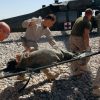
Rules of War Widely Flouted, 70 years on: Red Cross
World governments are not doing enough to stop armed groups from committing mass rape, torture and other war crimes, the head of the Red Cross aid group head Peter Maurer said on Tuesday.
Women Pastoralists Feel Heat of Climate Change
For many people, climate change is about shrinking glaciers, rising sea levels, longer and more intense heatwaves, and other extreme and unpredictable weather patterns. But for women pastoralists—livestock farmers in the semi-arid lands of Kenya—climate change has forced drastic changes to everyday life, including long and sometimes treacherous journeys to get water.
Will Sanctions Undermine 1947 US Treaty with UN?
When Yassir Arafat was denied a US visa to visit New York to address the United Nations back in 1988, the General Assembly defied the United States by temporarily moving the UN’s highest policy making body to Geneva-- perhaps for the first time in UN history-- providing a less-hostile political environment for the leader of the Palestine Liberation Organisation (PLO).
Mexican Women Use Sunlight Instead of Firewood or Gas to Cook Meals
Reyna Díaz cooks beans, chicken, pork and desserts in her solar cooker, which she sets up in the open courtyard of her home in a poor neighborhood on the outskirts of this town in southwestern Mexico.
Are Jair Messias Bolsonaro and Donald John Trump a Menace to the Planet?
We live in different worlds. The ones of friends, family and work colleagues. Worlds which are overshadowed by other, much bigger ones. Global spheres of international finance, politics, climate change, etc., contexts that might threaten our smaller circle of relationships; our family, our income, our general wellbeing, in short – our entire existence. However, even at those levels there exist small circles of acquaintances and associates able to make decisions that affect the entire humankind. Let me take one example – the regimes of U.S. President Donald J. Trump and Brazilian President Jair Messias Bolsonaro, which are menacing our global natural habitat.
The Missing Women in Finance
Women comprise a very small proportion of the financial industry workforce, and this has implications on the way female clients use and benefit from financial services.
Promoting Women’s Safety in Latin America
Every year, over 12,000 women are killed in Latin America. The region is plagued by extremely high levels of violence, and a vacuum of state power persists. Public face of this violence is caused by paramilitary, guerrilla, gangs and armed groups.
Towards a Sustainable Future: Case of China’s Economic Transformation
The Asia-Pacific region is at a crossroads. The traditional export-oriented, manufacturing-driven growth is facing headwinds from sluggish external demand and rising protectionist trade measures.
Revitalizing Indigenous Languages Is Critical
Being fluent in a world language is a desirable skill in modern day society. However, some languages are suffering and in danger of extinction -- namely those of the indigenous peoples.« Previous Page — Next Page »


Want to keep up with the latest news and views from the Global South? Sign up for IPS Daily News Report for daily emails with our top stories about international development, climate change, gender and more. (Formerly IPS TerraViva since 1993).

The Week with IPS

Tracking global progress towards a sustainable world
