Languages
Tuesday, November 24, 2026



News and Views from the Global South


Dismantling Patriarchy Must Begin at Home: A Reflection on Gender Equality
This week, I joined thousands of activists, campaigners, thought-leaders, and change-makers in New York to advocate for women's rights and promote gender equality during the 63rd session of the UN's Commission on the Status of Women (CSW).
Depression Is More than a Stigma
Depression is often distinguished from other non-communicable diseases or NCDs (e.g., cancer, diabetes, cardio-vascular diseases, hypertension) because of the stigma attached to it. Among other consequences, those suffering from depression are often denied access to medical care. Indeed, the latter is an outcome of interaction between supply of and demand for medical care. On the provider side, stigmatizing attitudes by service providers are identified as a barrier to access. On the demand side, stigma and low mental health literacy by community members are just as emphatically reported as barriers to accessing care.
UN’s Plan to Offshore Back-Office Jobs is Probably a Waste of Money
A $64 million plan to move 750 back office jobs from the UN’s main duty stations to four new centralized service centres in Budapest, Montreal, Nairobi and Shenzhen, could end up being a waste of money.
VIDEO: World Autism Awareness Day 2019 – Assistive Technologies, Active Participation
 Awareness of Austism Spectrum Disorder (ASD) has continued to grow worldwide, in recent years. But the number of diagnoses have continued to increase unabated.

VIDEO: Water for All – World Water Day 2019
Water is a precondition for human existence, and for the sustainability of our planet. It is entwined with almost everything human, from climate change and global economy to gender issues and human rights. 
Climate Change Also Affects Mental Health in Mexico
Minerva Montes lost her home on Holbox Island in 2005 when Hurricane Wilma hit the Yucatan Peninsula in southeastern Mexico. Rebuilding her home was quicker and easier than overcoming the psychological aftermath of the catastrophe.
Belt and Road Initiative vs Washington Consensus
With the Washington Consensus from the 1980s being challenged, President Donald Trump withdrawing the United States from the Trans-Pacific Partnership (TPP), and China pursuing its Belt and Road Initiative (BRI), most notably with its own initiatives such as the multilateral Asian Infrastructure Investment Bank (AIIB), the political and economic landscape in East Asia continues to evolve. Jomo Kwame Sundaram was interviewed about likely implications for developing countries in the region and beyond.
Guinea’s Returnee Migrants Harness the Strength of Unity
Elhadj Mohamed Diallo was a prisoner in Libya between October and November 2017, but he was not helpless. Far from his home in Guinea he understood the power of an organised union.
Closing the Gender Gap: The Economic Benefits of Bringing more Women into the Labour Force
As girls, we were raised with the belief that we could accomplish anything, and that no barrier was insurmountable. Yet, for so many women, the reality doesn’t quite meet their aspirations. Things weren’t exactly equal in the relatively conservative middle-class society in India where we both grew up.
Climate Change: a Threat to Agriculture & UN’s Goal to Eradicate Hunger
The United Nations has vowed to eradicate extreme hunger and malnutrition on a self-imposed deadline of 2030. But it is facing a harsh realty where human-induced climate change – including flash floods, droughts, heatwaves, typhoons and landslides-- is increasingly threatening agriculture, which also provides livelihoods for over 40 per cent of the global population.
Fighting the World’s Largest Criminal Industry: Modern Slavery
Modern slavery and human trafficking is one of the fastest growing criminal industries and one of the biggest human rights crises today, United Nations and government officials said.
Q&A: Caribbean Losing Momentum on Climate Change and Concerted Action is Needed
In 2015, the Caribbean was “the region that could” on the climate change scene. Countries rallied under the ‘1.5 to Stay Alive’ banner, in the face of an existential threat. The now former Sustainable Development Minister of Saint Lucia Dr. James Fletcher emerged as a climate change champion at the time. But now, three years on, the scientist is giving regional climate action a C- in an assessment.
It’s Simple, but Requires Determination
I am drafting this on International Women’s Day - March 8 - with an eye towards World Water Day on March 22. On International Women’s Day we celebrate progress in gender equality. At the same time, we recognize how much remains to be done: how many women remain excluded from decision-making across many professions. Changing this is urgent. Water – clean and accessible – is getting scarcer at an alarming rate. While working to change this, we cannot afford to exclude women.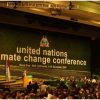
US Survey Finds Lack of Awareness on Global Warming
The U.N.’s World Water day is fast approaching as the state of the world’s consumable water supply remains dismal. Billions of people face at least the very real risk of scarcity, if they’re not facing scarcity already; and about a third of the world’s groundwater systems are in danger of becoming depleted.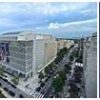
Seven Challenges for US Nominee for World Bank President
All incoming World Bank presidents bring a public record of their views about the bank and about development more generally. David Malpass, who is on track to become the bank’s next president, has not been shy in criticizing the role and management of the institution he now plans to lead.
Europe under Siege: Collusions, Dugin and Bannon
EU Parliament elections take place every fifth year and votes have steadily been decreasing. In the last 2014 election, the overall turnout was 42.54 percent of those entitled to vote, in some nations it was just around fifteen percent. Nevertheless, results will not only be eagerly awaited by pro- and anti-EU activists, but also by ideologist from non-member countries. Particularily vociferous among such people are Steve Bannon, who wants to “Make America Great Again” and Aleksandr Dugin who wants to “Make Russia Great Again”.
Climate Strike: Hundreds of Thousands Unite for the Planet’s Future
Friday, Mar. 15 saw hundreds of thousands of young people across the world take to the streets to join the climate strike. “We are demonstrating today for our planet and for our future. This is the place where we and those who come after us will live,” Jennifer, a 16-year-old girl from Rome, the Italian capital, who opted to join the protests, told IPS.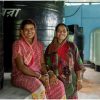
Women Take the Lead Tackling Climate Change in Bangladesh
The stakes are high for women when faced with a warming world – their livelihoods jeopardised by labour markets that tend to put men first, their family responsibilities increasing rapidly in the face of droughts and flooding, and politicians who refuse to acknowledge the challenges they face. The story of those living on the frontline of a harsher climate is simply not being heard.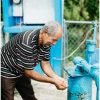
Three Takeaways from Disaster Relief in Puerto Rico
Those of us working in disaster relief know what to expect when a hurricane or earthquake strikes with devastating fury. We know that safe water, food, and shelter will be the most immediate needs for survivors. And we have a good idea of the kind of wreckage we’ll see, although we never cease to be humbled and sobered by the tragic sights.
Scholar Questions ‘Techie’ Approach to Dealing with Climate Change
Trinidad and Tobago unveiled its monitoring, reporting and verification system in mid-March with a flourish, with government authorities underscoring the launch of the Monitoring, Reporting, Verification as a milestone in that country’s efforts to reduce its emissions in line with its commitments under the 2016 Paris agreement.
VIDEO: “People Affected by Leprosy Suffer Severe Discrimination”
“More than 50 countries in the world have discriminatory laws against people affected by Hansen's disease. There is also a lot of discrimination in the public administration…and in society," Alice Cruz, U.N. Special Rapporteur on the elimination of discrimination against persons affected by leprosy and their family members, said in this interview with IPS (in Spanish, with English subtitles). « Previous Page — Next Page »


Want to keep up with the latest news and views from the Global South? Sign up for IPS Daily News Report for daily emails with our top stories about international development, climate change, gender and more. (Formerly IPS TerraViva since 1993).

The Week with IPS

NEXT STOP - SDGs
Tracking global progress towards a sustainable world
