Languages
Friday, November 27, 2026



News and Views from the Global South


Left Behind: Families of Migrants Wait in Limbo
Wahid Haider talks about his son’s departure to Italy almost seven years ago without regret or hesitation. Haider has not seen Nayeem, now 30 years old, since he left Nankar in search of better economic prospects, travelling through Romania, where he spent several months, before entering Italy.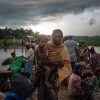
UN Migration Agency Appeals for USD 1.4 Billion to Help over 80 Million People in 50 Countries
IOM, the UN Migration Agency, is appealing for nearly USD 1.4 billion to address the needs of over 80 million people in 50 countries in 2018. These vital funds will support people displaced within the borders of their own countries, migrants, refugees and the communities that host them, people returning to their areas of origin and people experiencing or recovering from conflict and natural disasters.
Groups Condemn U.S. Cuts to Palestinian Refugee Agency
International organizations have criticized the United States’ decision to cut more than half of planned funding to a UN agency serving Palestinian refugees.
Davos: a Tale of Two Mountains
As the elite in the world of finance gather in the Swiss luxury town of Davos, rallies are taking place around the world as citizens demand for solutions to rising inequality. At the same time as the World Economic Forum’s rich and powerful hold forth about fixing the crisis of inequality they created, a new movement called the Fight Inequality Alliance is telling another story that is growing around the world.
US, Led by an Erratic Trump, Seeks to Undermine UN
The continued erratic and outrageous comments by President Donald Trump – and his attempts to undermine the United Nations – are threatening to cause irreparable damage to the world body.
Argentina’s Law on Forests Is Good, But Lacks Enforcement
Never in the parliamentary history of Argentina had something similar happened: one and a half million people in 2007 signed a petition asking the Senate to pass a law to reduce deforestation. The law was quickly approved, and promulgated on Dec. 26 of that year. But 10 years later, it has left a bittersweet taste.
“The World Has Gone in Reverse”
A year into his position, the United Nations Secretary-General António Guterres said that peace remains elusive and that renewed action must be taken in 2018 to set the world on track for a better future.
Caught Between Two Countries
Three friends are relaxing in a quiet courtyard. They speak English with a strong American accent and talk about their disadvantaged neighborhoods. Their tattoos depict a rough life on the street. One of them calls Massachusetts home, while the others grew up in Georgia.
Chance for Kenya to Make Amends for Post-Election Sexual Violence
I had already heard many disturbing stories of violence by the time I interviewed Mercy Maina, whose name I have changed to protect her privacy. Even so, what Mercy told me was truly disturbing. She said she was raped during the post-election violence in August alongside her sister by two men wearing uniforms and helmets, and carrying guns and walkie-talkies.
PPPs Likely to Undermine Public Health Commitments
The United Nations Agenda 2030 for the Sustainable Development Goals (SDGs) is being touted in financial circles as offering huge investment opportunities requiring trillions of dollars. In 67 low- and middle-income countries, achieving SDG 3 — healthy lives and well-being for all, at all ages — is estimated to require new investments increasing over time, from an initial $134 billion annually to $371 billion yearly by 2030, according to recent estimates by the World Health Organization (WHO) reported in The Lancet.
40% of India’s Thermal Power Plants in Water-Scarce Areas, Threatening Shutdowns
New WRI research finds that 40 percent of the country’s thermal power plants are located in areas facing high water stress, a problem since these plants use water for cooling. Scarce water is already hampering electricity generation in these regions—14 of India’s 20 largest thermal utilities experienced at least one shutdown due to water shortages between 2013-2016, costing the companies $1.4 billion.
Expansion of Soy Resurrects Key Railway Line in Brazil
The railroad can contribute to the economy, making transportation cheaper, but it is unlikely to foment equitable development in and of itself, apart from facing complex construction obstacles in countries like Brazil.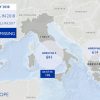
Mediterranean Migrant Arrivals Reach 1,916 in 2018; Deaths Reach 194
IOM, the UN Migration Agency, reports that 1,916 migrants and refugees entered Europe by sea through 14 January. This compares with 3,046 coming ashore during a similar period in 2017.
Breaking the Silence: Why We Should All Take a Zero-tolerance Approach to Sexual Harassment and Abuse
Around the world, brave women have broken their silence on the sexual harassment and abuse suffered at the hands of those with power. Their courage is paving the way for others to speak out about their own experiences.
Pakistan, Facing Military Aid Cuts, One Step Ahead of US
When the United States abruptly cuts off military supplies to its allies for political or other reasons, the reaction has been predictable: it drive these countries into the arms of the Chinese, the Russians and Western European weapons suppliers.
Fate of the Rohingyas – Part Two
With discussions underway between Bangladesh and Myanmar about the repatriation of more than a half a million Rohingya refugees, many critical questions remain, including how many people would be allowed back, who would monitor their safety, and whether the refugees even want to return to violence-scorched Rakhine state.
From Seedling to Shade: Planting Trees in South Sudan’s Displacement Sites
With sweltering heat — temperatures often over 40 degrees Celsius — and either extreme humidity or dust, life in the UN protection of civilians (PoC) site in Bentiu, South Sudan, is harsh by any measure. Bentiu hosts the largest PoC site in the country, with a population of more than 112,000 people, many of whom have been seeking protection in the site since the conflict erupted in December 2013.
Pardon of Former Peruvian President Fujimori Deals Blow to Fight Against Gender Violence
The political crisis triggered in Peru by the presidential pardon of former president Alberto Fujimori granted on Christmas Eve casts a shadow of doubt over what actions will be taken to curb violence against women in this country, where 116 femicides were registered in 2017, and which ranks eighth with respect to gender-related murders in Latin America and the Caribbean.
Sustainable Energy Critical for Achieving Overall Goals of Paris Climate Agreement
The Paris Agreement ushered in a new global approach to climate change. At the core of this agreement are the Nationally Determined Contributions. We are now implementing these pledges.
Thousands Still Dying at Sea En Route to Europe
Amid concerns that 160 people may have drowned while attempting to cross the Mediterranean this week alone, the UN refugee agency have urged countries to offer more resettlement places.
Fate of the Rohingyas – Part One
The repatriation of Rohingya refugees driven from their villages through violence and terror appears uncertain, with critics saying the agreement legalising the process of their return is both controversial and impractical.« Previous Page — Next Page »


Want to keep up with the latest news and views from the Global South? Sign up for IPS Daily News Report for daily emails with our top stories about international development, climate change, gender and more. (Formerly IPS TerraViva since 1993).

The Week with IPS

NEXT STOP - SDGs
Tracking global progress towards a sustainable world
