Languages
Friday, November 27, 2026



News and Views from the Global South


UN Chief Calls for Collective Global Response to Migration
I am very pleased to present this report, “Making Migration Work For All”, which serves as my principal input to the zero draft of the “Global Compact for Safe, Orderly and Regular Migration.”
Tocantins, a River of Many Dams in Central Brazil
Tocantins, the newest of Brazil’s 26 states, which was created in 1988 to seek its own paths to development in central Brazil, fell into the common plight of expanding borders, based on soy and hydroelectricity.
Women Displaced by Brutal Violence in the DR Congo Tell Their Harrowing Stories
Women have borne and continue to bear a disproportionate amount of the suffering caused by two decades of conflict in North Kivu in the Democratic Republic of the Congo (DRC).
The Reality of North Korea as a Nuclear Power
With a track record of six underground nuclear tests between 2006 and 2017, North Korea is desperately yearning to be recognized as the world’s ninth nuclear power – trailing behind the US, UK, France, China, Russia, India, Pakistan and Israel.
Argentina Pursues the Lithium Dream
The government of Mauricio Macri dreams of Argentina becoming the world leader in lithium production. But it does not seem so clear that this aspiration, underpinned by the interest of multinational corporations, would also drive the development of local communities.
Philippines Most Dangerous Country in Southeast Asia for Journalists
It’s not just suspected drug users and dealers at risk of targeted killing in the Philippines. The International Federation of Journalists (IFJ) reported last week that the Philippines is the most dangerous country in Southeast Asia for journalists. Globally, the island nation came sixth on the list of most murderous countries.UN Urges Comprehensive Approach to Sexuality Education
Close to 10 years after its first edition, a fully updated International Technical Guidance on Sexuality Education published today by UNESCO advocates quality comprehensive sexuality education to promote health and well-being, respect for human rights and gender equality, and empowers children and young people to lead healthy, safe and productive lives.
Can Uganda Reduce Financial Exclusion to 5% in 5 Years?
In October 2017, Uganda launched a new five-year National Financial Inclusion Strategy. The strategy seeks to reduce financial exclusion from 15 to 5 percent by 2022 by ensuring that all Ugandans have access to and use a broad range of quality and affordable financial services.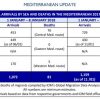
Mediterranean Migrant Arrivals Reach 1072 in first week of 2018; Deaths Reach 81
IOM, the UN Migration Agency, reports that 1,072 migrants and refugees entered Europe by sea during the first week of 2018, with around 450 each landing in Italy and Greece and the remainder in Spain. This compares with almost an identical number – 1,159 – coming ashore during a similar period in 2017.
The Data Revolution Should Not Leave Women and Girls Behind
If there is one political principle that has been constant throughout the history of human civilization it is the fact that land is power. This is something that is particularly true, and often painfully so, for women who farm in Africa.
Clean Energy Sources Manage to Cut Electricity Bill in Chile
A 75 percent drop in electricity rates, thanks to a quadrupled clean generation capacity, is one of the legacies to be left in Chile by the administration of Michelle Bachelet, who steps down on Mar. 11.
Policy Support Gap for “Climate-Smart” Agriculture
Conditioned that ploughing is the sure way to produce crops, Zimbabwean farmer Handrixious Zvomarima surprised himself by trying a different method. He planted cowpea seeds directly without tilling the land. It worked.
“The smuggler destroyed our passports and dropped us in the mountains”
While the world’s attention is drawn to the plight of migrants and refugees and Asia and Africa, a small but significant number of irregular migrants continue to arrive in central European counties like Bosnia and Herzegovina, placing huge strains on local authorities.
How Low-Income Bangladeshis Use Loans
Bangladeshis have a long tradition of borrowing from family, neighbors and other informal sources. Microfinance institutions (MFIs) have proliferated over the past three decades and offer a more formal loan service that has been taken up with enthusiasm, and today some 25 million Bangladeshis borrow from MFIs.
Why the #MeToo Movement Disrupts the Creeping Commodification of Feminism
As the 62nd Session of the Commission on the Status of Women (CSW) at the United Nations in New York draws near, women from every corner of the world will convene to deliberate on the theme of CSW 2018: Challenges and Opportunities in achieving gender equality and the empowerment of rural women and girls. This year, the theme of empowerment has added significance. The #MeToo movement has shocked our collective conscience and made it impossible to ignore that empowerment goes far beyond economic agency.
Tourism Should Be Regulated, Before It Is Too Late…
This year, we will have 3 million tourists each day wandering the world. This massive phenomenon is without precedent in human history and is happening (as usual), with only one consideration in mind: money. We should pause and take a look at its social, cultural and environmental impact and take remedial measures, because they are becoming seriously negative if things are left as they are.
2017 Was a Year of Record-Breaking Climate Events
Parts of the United States are experiencing blizzard and record low temperatures, with sharks freezing in the Atlantic and cold-snapped iguanas falling from trees in Florida.
Landlocked, a Railway Remains Idle in Brazil
The rails have been laid - thousands of km of rails deteriorating due to lack of use, to the despair of those who believe that a country as vast as Brazil can only be developed by means of trains.
2018 Brings No End to Violence Against Rohingya as Refugees Continue to Flee to Bangladesh
This week, Rohingya refugees were still arriving in Cox's Bazar, Bangladesh – the New Year bringing no end to the reports of violence and fears, which forced them to flee their homes in Myanmar.
‘Red Alert’ 2018 – Global Unity, Media & Humanitarian Action
“Unity is the path. Our future depends on it,” said UN Secretary-General Antonio Guterres, as he issued an unequivocal global ‘Red Alert’ in his New Year message on December 31, 2017.
Disasters Bring Upheaval to Sri Lanka’s Rural Economy
Last year was an annus horribilis for 52-year-old Newton Gunathileka. A paddy smallholder from Sri Lanka’s northwestern Puttalam District, 2017 saw Gunathileka abandon his two acres of paddy for the first time in over three and half decades, leaving his family almost destitute.« Previous Page — Next Page »


Want to keep up with the latest news and views from the Global South? Sign up for IPS Daily News Report for daily emails with our top stories about international development, climate change, gender and more. (Formerly IPS TerraViva since 1993).

The Week with IPS

NEXT STOP - SDGs
Tracking global progress towards a sustainable world
