Languages
Wednesday, September 30, 2026



News and Views from the Global South

CENTRAL AMERICA: Water as a ‘Divine Gift’
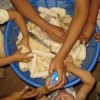
"Many people still believe that water is a gift from God." This statement from a Guatemalan scientist alludes to Central America's neglect of its water resources - - and the subsequent impact on agriculture.
Genetic Flight of Nature's Jewels from Chile
Nearly half of Chile's flora is found exclusively in this country and many possess unique chemical compounds. But for now there is no legal way to control their exploitation abroad.
Water as a 'Divine Gift'
Central America has been focusing on tourism and exports, failing to pay necessary attention to water and agriculture, say experts.Ecobreves – BRAZIL: Eco-Friendly Formaldehyde Disposal
A technique for breaking down formaldehyde before disposal has been developed by Brazilian scientist Sônia Borges de Oliveira, professor at the University of São Paulo in Ribeirão Preto.Ecobreves – HONDURAS: Financing for a Million-Dollar Wind Project
The Central American Economic Integration Bank (BCIE) will provide 209.3 million dollars in financing for a company with U.S. capital to generate wind energy in Cerro de Hula, south of the Honduran capital.Ecobreves – VENEZUELA: Protests Against Sale of Pink River Dolphins
Thousands of residents in the Venezuelan city of Valencia signed petitions to convince the government to halt the shipment of two pink river dolphins (Inia geoffrensis) to Daejeon Aquaworld, in South Korea.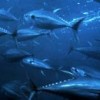
Seasonal Bans Not Enough to Save Pacific Tuna
The countries that fish for tuna in the Eastern Pacific Ocean see seasonal bans as a form of responsible fishing, but environmentalists argue that they are not enough to ensure the survival of a resource that is threatened around the world.Ecobreves – BRAZIL: Making Use of Construction Waste
Mineral and industrial waste from construction is becoming raw material for new building through a technique developed by engineer Janaína Accordi Junkes, at the Federal University of Santa Catarina in southern Brazil.Ecobreves – MEXICO: Requesting More Funds Against Climate Change
Actions for adapting to and mitigating climate change need at least one percent of Mexico's gross domestic product (GDP), proposed a collective of environmental groups.Ecobreves – HONDURAS: A New Way to Collect Trash
The municipal government of the southern Honduran city of Choluteca decided to collect garbage using horse-drawn carts in the neighborhoods not served by the sanitation service.Ecobreves – ARGENTINA: Hunger Strike Against Fumigation
On the eve of a predicted record soybean harvest, an Argentine forestry engineer, backed by environmental groups, began a hunger strike against crop fumigation with dangerous agro-chemicals.
MEXICO: Summit Host Cancun No Model for Climate Change
The beauty of the Mexican Caribbean resort city of Cancún may have been one reason for choosing it to host the upcoming global summit on climate change. But Cancún has little to recommend it as a model for adapting to the challenges posed by climate change.
More Protection, but Not Enough, for Patagonian Sea
Argentina has widely expanded the protected area of the Patagonian Sea, but it is less than two percent of the nation's maritime waters.
Summit Host Cancún No Model for Climate Change
When the delegates arrive for the global climate summit in late November, Cancún cannot pose as a model city for confronting the impacts of climate change.Ecobreves – BRAZIL: Unbeatable in Can Recycling
Brazil recycled 98.2 percent of the aluminum cans used last year, according to a study by the Brazilian Aluminum Association (ABAL).Ecobreves – HONDURAS: Eco-Stoves Arrive in the Capital
"Eco-stoves," an improved version that reduces the consumption of firewood, are finding their way to Tegucigalpa's largest low-income neighborhoods -- in a bid to halt deforestation.Ecobreves – Census of Environmentalists
Venezuela has 131 civil society groups dedicated to environmental issues in a country of 28 million people, with half of its 916,445 square kilometers under some degree of environmental protection, according to the Directory of Environmental Non-Governmental Organizations, published by the Tierra Viva Foundation.Ecobreves – MEXICO: Irrigation Plan to Fight Climate Change's Effects
Renewing water pumping equipment, rehabilitating wells and using technology in irrigation are the steps necessary to mitigate the impacts of climate change and adapt Mexico's agriculture to the new reality, propose two environmental organizations.Ecobreves – HONDURAS: Saving Lake Yojoa
Environmental, community and government organizations are putting the final touches on a plan to save Lake Yojoa, the largest lake in Honduras -- and on the verge of turning into a swamp.Ecobreves – BRAZIL: Trees Are the Key to Sustainable Farming
Farmers and members of a cooperative in Valle del Ribeira, in the Brazilian state of São Paulo, are developing a farming technique that uses less water and no agro-chemicals, and is based on planting trees.Biodiversity Pact Begins With the Genes
The delegates to the 10th Conference of Parties (COP 10) to the Convention on Biological Diversity ended up with a relatively weak plan for the Herculean task of halting the disappearance of species. The exception was a pact on the use of genetic resources.« Previous Page — Next Page »


Tierramérica is the main communications platform on sustainable development and the environment in Latin America and the Caribbean. It is produced by IPS Noticias, the agency’s Spanish-language service, which created it jointly with the United Nations Development Programme (UNDP) and the United Nations Environment Programme (UNEP), with later support from the World Bank. The weekly editions of Tierramérica are published in Spanish, Portuguese and English and are picked up and printed by dozens of media outlets in the region. Follow us on Facebook and Twitter.

From the Frontline of Environment
Supported by

Tierramérica en Español

Terramérica em Portuguese

