Languages
Saturday, November 7, 2026



News and Views from the Global South


ENVIRONMENT: Global Financial Crisis a Bad Sign for Andean Biodiversity
The crisis affecting the financial sector and stock markets around the world could fuel the expansion of extractive industries in South America's Andean region, warn experts.Ecobreves – BRAZIL: Housing Credits Require Certified Lumber
The leading provider of housing finances in Brazil, the government-run Federal Economic Bank, will only finance buildings made from certified legally-cut lumber, beginning in 2009.Ecobreves – VENEZUELA: Action for Sloths
The southeastern district of the capital known as Baruta will place signs in public areas about the movement among trees -- and possible fall -- of brown-throated three-toad sloths (Bradypus variegatus), relatives of the anteater and the armadillo that move at just 200 meters per hour.Ecobreves – CUBA: Vaccines for Hurricane-Hit Population
Residents older than one year in the town of Holguín, one of the Cuban provinces hardest hit by Hurricane Ike, began receiving immunizations against leptospirosis with a homeopathic vaccine produced in Cuba.Ecobreves – CHILE: Government Promotes Solar Panels
The government of Chile this week will send a bill to Parliament to reduce taxes on the installation of solar panels on newly constructed homes that are worth up to 4,500 production units (Unidades de Fomento, UF), about 160,000 dollars.
Global Financial Crisis a Bad Sign for Andean Biodiversity
The global financial shake-up could intensify oil and gas exploitation in biodiverse areas of the South American Andes, already a source of environmental and social conflicts.
“Profit Is Enemy Number One of the Environment”
Capitalism is a brutal, Mephistophelian intervention in the natural systems, says Chilean economist and ecologist Marcel Claude in this exclusive Tierramérica interview.Ecobreves – HONDURAS: Indians Aim to Generate Their Own Energy
Residents of the indigenous town of Tomalá, in the western Honduran department of Lempira, are seeking resources to build a mini-hydroelectric dam that would generate 10 to 15 megawatts.
ENVIRONMENT-CHILE: Pedalling Against Pollution
As greenhouse gas emissions drive global warming and fuel prices continue to soar, pedalling has come back in style in many cities of the industrialised world. In Chile, as well, public bicycle services, bike routes and special parking areas are some of the initiatives currently being developed.
CENTRAL AMERICA: Garifunas Confront Their Own Decline
"The Garífuna were the best sailors in the world," says Jermonino Barrios, standing barefoot on this slender thread of land between the Laguna de Los Micos and the blue Caribbean Sea.
Garífunas Confront Their Own Decline
The Garífuna culture, a "masterpiece" of human heritage according to UNESCO, could disappear as the result of the privatization of Central America's beaches.
Pedaling Against Pollution
Citizens from around the world are rediscovering the bicycle, an efficient, cheap and clean form of urban transportation.Ecobreves – BRAZIL: Sawdust to Remove Metals from Water
Lumber waste is helping to clean up rivers and industrial effluents, removing heavy metals like chromium and lead, according to a study by the University of Brasilia.Ecobreves – ARGENTINA: Protests Against Cereal Pollution
Based in a tent in the eastern Argentine city of Rosario, civil society groups are demanding action on a court order to shut down a cereal storage and production site that they say is polluting the environment with pesticides.Ecobreves – MEXICO: A Highway Challenge
Mexican authorities approved the construction of 62 kilometers of highway in a forested area outside the capital, but environmentalists are preparing legal action and mobilizations, charging that the road would destroy a biodiverse area that is also essential for water production.Ecobreves – CENTRAL AMERICA: Regional Lacks Environmental Policies
In Central America "there are no uniform public policies to ensure that polluting our quality of life is also a matter of corruption and lack of transparency," said Roxana Salazar, environmentalist and interim judge in Costa Rica's Constitutional Court.
Q&A: "Future Prosperity Is in Green Technologies"
Achim Steiner, the eloquent executive director of the United Nations Environment Programme (UNEP), believes that Mexico could take a leadership role in the new "green" economy.
ARGENTINA: Women Create Food and Jobs in Wetlands
Wearing a cap and a white apron, Melina Lucero cuts the heads and tails off fish caught in the Paraná River, before skilfully filleting them. Her co-workers will process and package the fish to sell as traditional, small-scale fish preserves at food fairs along the banks of the river in Argentina.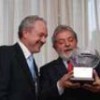
Ecobreves – LATIN AMERICA: Official Inauguration of Tierramérica Center
The Tierramérica International Center for Sustainable Development and Environmental Defense was inaugurated at the United Nations headquarters in New York, with Brazil’s President Luiz Inácio Lula da Silva in attendance.Ecobreves – CUBA: Eco-Materials for Areas Hit by Hurricanes
A construction method with alternative materials resistant to extreme climate will help alleviate the housing deficits in two Cuban provinces hard hit by hurricanes Ike and Gustav.
Women Create Food and Jobs in Argentine Wetlands
Tierramérica explored the effort behind preparing artisanal dishes made from a declining catch of fish, an effort towards sustainability taken up by the women of river communities in northeast Argentina.« Previous Page — Next Page »





Tierramérica is the main communications platform on sustainable development and the environment in Latin America and the Caribbean. It is produced by IPS Noticias, the agency’s Spanish-language service, which created it jointly with the United Nations Development Programme (UNDP) and the United Nations Environment Programme (UNEP), with later support from the World Bank. The weekly editions of Tierramérica are published in Spanish, Portuguese and English and are picked up and printed by dozens of media outlets in the region. Follow us on Facebook and Twitter.

From the Frontline of Environment
Supported by

Tierramérica en Español

Terramérica em Portuguese

