Languages
Friday, November 20, 2026



News and Views from the Global South
Africa

GENDER: Zimbabwe Basket Fund Takes Off
A basket fund aimed at increasing the economic participation of women in Zimbabwe, has been relaunched after a start which faltered due to the delayed appointment of the new government earlier this year.SOUTH AFRICA-RIGHTS: Push To Protect Sex Workers During World Cup
As the 2010 Soccer World Cup approaches, calls for the decriminalisation of sex work in South Africa have been renewed.
HEALTH: Raising the Recommended CD4 Count for ART
Newborn babies in South Africa will now be treated for HIV, regardless of their CD4 count. President Jacob Zuma announced several new measures which focus on expanding the country’s anti-retroviral (ARV) programme, especially in terms of mother-to-child-transmission, and for those with both TB and HIV.
AFRICA: Campaign to Unite Against Malaria Kicks Off
Growing up in Cameroon, Joseph-Antoine Bell and his friends used to think that by playing football they could get rid of malaria.SENEGAL: Farmers Anxious About Aid
As part of a project to support community initiatives and fight poverty in South Senegal, the Sédhiou Local Development Fund received a donation of agricultural equipment worth more than half a million dollars in a bid to reverse the region's dramatic drop in agricultural production in recent years.HEALTH-ZIMBABWE: Lots of Drugs, No Takers
Martha* knows that her two young sisters and her need medicine. She also knows where to get it – a clinic a few yards away from her home in Glen Norah, a high-density suburb in the Zimbabwean capital.
WORLD AIDS DAY: Herdboys at Risk to Contract HIV
In the scorching heat of the midday summer sun, a teenage boy’s sharp voice can be heard vividly as he continuously summons his cattle. Glad in his shabby-looking rag that used to be a blanket and black gumboots, the only thing that occupies his mind is his herd, his everyday companions, nothing else.
Q&A: Even Island States Can Make Plans to Improve Food Security
Eric Mangar deplores the fact that Mauritius, despite being a net food importer, has failed to learn its lessons from the food crisis. The island state is pursuing "business as usual" without taking steps to improve food production on the local front.
WORLD AIDS DAY: Growing Up with HIV
Sixteen-year-old Andela Milambo* wants a husband. She is not looking for love, but for someone to share the burden of living with HIV. She wants to be able to take her medicine without having to hide, to discuss the recurring herpes with someone who understands.
POLITICS-NAMIBIA: Born Frees Make their Mark
"It was like writing my first exam. I was nervous and didn’t want to make a mistake. I must have checked the ballot 10 times."Q&A: ‘You Have To Be Educated To Be A Leader’
Traffic flowing in and out of her office, each interruption addressed with effortless calm, the nurse in charge of Hospitalisation and Immunisation at Nyamata Health Center in Bugesera District, is a confident woman in her element.
NAMIBIA: Waiting at the Polls
The Electoral Commission of Namibia (ECN) has again suspended the observer status of a human rights watchdog it accuses of lying about mistakes on the voter’s roll.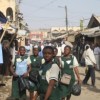
RIGHTS: Nigeria Failing To End Discrimination Against Women
Nigeria ratified the Convention on the Elimination of Discrimination Against Women (CEDAW) in 1985 without reservations. But few of its citizens have ever heard of the document. Day-to-day life for women in Nigeria is shaped less by international conventions than it is by the diverse cultures, traditions and religions found in the country.Q&A: CEDAW – Signed, Sealed and Largely Left on the Shelf
Mauritania formally adopted the Convention on the Elimination of Discrimination Against Women in 2001, but in the eight years since, it has had limited effect on the status of women.
SOUTH AFRICA: Legal Victory Offers Little Relief For Sex Workers
More than seven months after the Cape High Court ruled in favour of the Sex Workers Education and Advocacy Taskforce (SWEAT), interdicting the police for harassment and arrests, sex workers are losing the daily battles against police and criminal elements on the streets.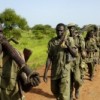
SUDAN: Peace Agreement Proving Less Than Comprehensive
The 2005 Comprehensive Peace Agreement (CPA) ended one of Africa's longest and complex civil wars, with nominal agreement reached on security, wealth sharing, and governance issues. But there are renewed fears that conflict could erupt again in the country as divisions between the north and the south deepen.
POLITICS-NAMIBIA: SWAPO’s Dominance Challenged
"Man RDP!" sighs Martha Hamukoto, sitting on the steps of a Windhoek office block. She is lamenting the breakaway faction, the Rally for Democracy and Progress (RDP).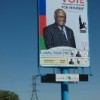
POLITICS-NAMIBIA: ‘Parties Totally Don’t Care About Women’s Rights’
Gender activists foresee a drop in female parliamentarians after Namibia’s general and presidential elections on November 27 and 28. It’s a trend that jeopardises the region’s goal of 50 percent female representation in politics by 2015.
GENDER-SOUTH AFRICA: ‘There Is A Sense Of Vindication’
Born in a squatter camp in Orlando East and raised by a single mother; working in a factory while completing secondary school by correspondence; arrested and banned by the apartheid government: South Africa's ambassador to Italy is an example of the long road her country has travelled.SOUTH AFRICA: ‘Shoot to Kill’ Comment Shocks Judge
In more than 34 years as a judge, he has not been as deeply concerned by anything as he was by the recent comment of a South African deputy minister of police that police officers should shoot and "kill the bastards".ZAMBIA: Electoral Commission Accused of Bias
The Electoral Commission of Zambia (ECZ) is once again under fire from opposition political parties and some civil society organisations, which accuse it of bias in favour of the ruling party during elections.« Previous Page — Next Page »


The Week with IPS

NEXT STOP - SDGs
Tracking global progress towards a sustainable world
Tracking global progress towards a sustainable world
