Languages
Friday, November 20, 2026



News and Views from the Global South
Africa
ZAMBIA: Media Resists Calls for State Regulation
After almost a decade of fighting for self-regulation, the Zambian media may finally have its wishes entrenched with constitutional protection.NAMIBIA: Gender Legislation Futile If Not Implemented
Namibian women’s rights activists say existing gender legislation has failed to improve women’s lives because it is not being implemented widely enough. Last August, Namibia signed the Southern African Development Community (SADC) gender protocol but politicians have yet to ratify it.
RIGHTS-SOUTH AFRICA: Women Farmworkers Threaten Election Boycott
Women from South Africa's three Cape provinces have marched to parliament in Cape Town to denounce the country's "slow and unbalanced" land redistribution programme. The protesters said if they are not given greater access to land, they will not vote in the country's Apr. 22 general elections.RIGHTS-BENIN: Support for Women Facing Violence
Judges and gynaecologists in Benin have undergone training on the interpretation of forensic evidence in cases of violence against women, as well as in investigative procedures when dealing with rape cases.MINING-AFRICA: Help Yourself, There's Plenty
The African continent is rich in natural resources; but the terms under which multinational companies exploit these resources mean that governments - and Africa’s people - enjoy only a tiny fraction of the benefits.SOUTH AFRICA: Food Banks to Curb Hunger
In yet another attempt to bolster food security in the country, a charity organisation has opened a food bank in Cape Town which will operate like a huge warehouse from which food is handed out to the poor.
SOUTH AFRICA: Activists Lament Lack of HIV/TB Co-Treatment
Despite repeated calls for integrated HIV and tuberculosis (TB) health services from medical experts and AIDS activists, most of South Africa’s public health facilities continue to treat the diseases independently. Co-infection presents a major risk to the lives of people living with HIV.
CULTURE-ETHIOPIA: Old Master Challenges Film-makers to Look Within
Haile Gerima's film "Teza" may only have come to the world's attention when it won Africa’s highest prize in Ouagadougou on Mar. 7, but it has been a sensation in his native Ethiopia since it premiered in Addis Ababa at the start of the year.
ZIMBABWE: Researchers Developing New Ways to Purify Water
Scientists at Bulawayo's National University of Science and Technology (NUST) have embarked on research to develop simple and affordable water purification methods, as more than a billion people live without safe drinking water in developing countries.
NAMIBIA: Food Security Hangs in the Balance
Don't talk about food prices in Namibia. Wedged between costly imports from South Africa and failing projects to achieve food security, Namibians are upset, and hungry.
TRADE-TANZANIA: Crafts Charity Disproves Myths About Disability
After Joel Haule developed a crippling childhood disease that left him wheelchair-bound, his parents began calling him ‘‘Matatizo’’, the Kiswahili word for ‘‘problems’’.
MALAWI: Bringing TB Testing and Treatment To Those Who Need It
Malawi does not have accurate statistics that define the extent of tuberculosis (TB) cases within its borders, and there are fears that only half of those infected with the disease are able to access testing and treatment.
SOUTHERN AFRICA: Politicians Fail to Address HIV
Parliamentarians across the Southern African Development Community (SADC) have failed to put HIV on the political agenda.
SOUTH AFRICA: Water Meters for the Poor: New Name, Old Problems
Many poor communities in South Africa continue to struggle for their constitutional right to clean, safe drinking water.
WATER-UGANDA: Creating a ‘Safe Water Chain’
Uganda spends close to $10 million each year treating waterborne diseases; the productive time lost to illness and caring for the sick has an even greater financial impact. But residents of Katosi village on the shores of Lake Victoria aren't waiting for the government to find a solution.
ECONOMY: Namibia Gets BIG on Poverty
There was no mention of a special grant to tackle poverty in the Namibian national budget speech delivered on Mar. 19, much to the disappointment of campaigners for a Basic Income Grant (BIG) for all citizens.
AGRICULTURE-MALAWI: Water Makes the Difference
Water has become the very essence of economic development for a rural community of Ngolowindo, in Malawi’s lake district of Salima, where households are reducing poverty thanks to irrigation.ENVIRONMENT-KENYA: Rainwater Harvesting: Two Birds With One Stone
Bitter irony: in recent years Nairobi has experienced severe flooding and widespread water shortages, due to poor urban planning and collapsing infrastructure systems that are failing to support the Kenyan capital's expanding population.SIERRA LEONE: Radio Stations Banned for Inciting Violence
Sierra Leone's vice president, Samuel Sam-Sumana, on Mar. 13 ordered an indefinite ban on radio stations owned by the ruling All Peoples Congress (APC) and its main rival, the Sierra Leone Peoples Party (SLPP).POLITICS-MADAGASCAR: Rajoelina Assumes Power
After 24 months as self-declared head of a transitional authority, the deposed mayor of Antananarivo, Andry Rajoelina, was confirmed as the new president of Madagascar by the Constitutional Court on Mar. 18.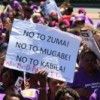
RIGHTS-SOUTH AFRICA: Election Campaign Silent on Violence Against Women
With its emphasis on gender equality, the South African constitution is regarded as a great example for many other developing countries. Yet, despite laws intended to protect the rights of women like the Sexual Abuse Act and the Domestic Violence Act, women in the country still suffer indignities at the hands of police and in court.« Previous Page — Next Page »


The Week with IPS

NEXT STOP - SDGs
Tracking global progress towards a sustainable world
Tracking global progress towards a sustainable world
