Languages
Friday, November 20, 2026



News and Views from the Global South
Africa
RIGHTS-AFRICA: Extending Constitutional Justice
Jurisprudence in Africa has improved a lot since the early 1990s, but a lot of work still has to be done to improve justice structures across the continent.
ZIMBABWE: ‘‘Dollarisation’’ of Economy Hitting Poor Hard
The collapse of the Zimbabwean economy has led to the ‘‘dollarisation’’ of the economy – and even to what some, who have still maintained some sense of tragicomedy, call the ‘‘petrolisation’’ of the economy because of the re-emergence of barter trade.Q&A: Zimbabwe – Fighting Cholera on a Shoestring
Nearly 50,000 cases of cholera have been reported in Zimbabwe by the World Health Organisation; the death toll stood at 2,755 on Jan. 21.
Q&A: Unlocking the Power of Constitutional Rights
South Africa's constitution is often celebrated for its protection of social and economic rights; but how readily can this protection be invoked by the most vulnerable?
HEALTH-MALAWI: Rains Expose Poor Sanitation
Zimbabwe - where cholera has claimed more than 2,700 lives so far according to the Red Cross - is not the only southern African country facing increased disease as rains set in across the region. Malawi is also battling a cholera outbreak which has killed 19 people since the onset of the rainy season, an unusually high death toll.ZIMBABWE: So How Does One Budget in a Collapsed Currency?
In November 2007, Zimbabwe's then Minister of Finance, Samuel Mumbengegwi struggled through the reading of the 2008 budget, his tongue tripping over figures in the trillions and quadrillions of Zimbabwean. So embarrassed was Mumbengegwi that he even shied away from announcing the total budget figure of 7.84 quadrillion Zimbabwe dollars, then a record amount.
ZIMBABWE: ‘Life Is Like A Casino – We Live Each Day As It Comes’
Long lines of stalls, run by women, have sprung up next to many of Zimbabwe’s highways, selling honey, milk, mushrooms, tomatoes, onions and chickens. As prices in towns skyrocket due to unprecedented inflation levels running in the millions, people leave their towns to purchase basic commodities.
TRADE: Exporting Inside Africa as Expensive as Exporting to Asia
Despite the new free trade agreement linking southern African states, it still costs as much to move goods between African states as it costs to move goods from Asia to Africa, according to an economist.
SOMALIA: Poverty Forces Children Into the Streets
Hassan Maye, 13, has been fending for himself and his family in the streets of Mogadishu since he was ten. He shines shoes in the Sinai neighbourhood in the southern part of the Somali capital. On a good day, he says he earns 18,000 shillings - equivalent to roughly 50 cents.
ZIMBABWE: Now a 'Factory for Poverty'
Over 75 percent of the people in crisis-riddled Zimbabwe are living in desperate poverty, with children bearing the brunt. And with rival parties still deadlocked over implementation of a power-sharing agreement signed four months ago, things are likely to get worse before they improve.
KENYA: Tourism Industry Picking Up Again After Election Violence
As the eagerly awaited recovery in tourism after the election violence in Kenya takes off, bad news has come in the form of corruption allegations.
AFRICA: Climate Change Threatens Food Security
Climate change will have a significant impact on southern Africa’s already compromised food security, environmental experts warned at the fifth Alexander von Humboldt International Conference at the University of Cape Town (UCT) in South Africa.
DR CONGO: Ugandan Rebels Add to Woes in the Northeast
Reports from non-governmental organisations and the United Nations on the humanitarian situation in the north-eastern region of the Democratic Republic of Congo (DRC) state that over 400 civilians were killed at the end of last month by the Lord’s Resistance Army, a Ugandan rebel faction with bases in that part of the country.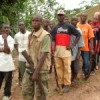
LIBERIA: Life a Struggle for Ex-Combatants
Hajah Kamara's life of violence began when she was not yet a teenager. After rebels butchered her father and pregnant mother in their Voinjama home, they forced her to become a ‘wife’ and a fighter in their warring faction.DEVELOPMENT-AFRICA: Better Education Improves Health of Mothers and Children
A new UNICEF report reveals there is still much to be done to reduce infant and maternal mortality in sub-Saharan Africa. Failure to improve care for pregnant women and newborns threatens to undermine progress on all health-related development goals.ZAMBIA: Corruption: Two Steps Forward, Two Steps Back
Zambia's Anti-Corruption Commission (ACC) received more than 2,000 corruption complaints from the public for 2008, the ACC yearly report states.POLITICS-DR CONGO: Talks Resume
Direct talks between the Democratic Republic of Congo (DRC) government and rebels have resumed in Nairobi with discussions on a joint cessation of hostilities currently underway. The talks seek to bring calm to the troubled eastern part of the country.DR CONGO: Speak of the Real Authors of the War
Each episode of the Democratic Republic of Congo's long-running civil war has weighed particularly heavily on women, yet women have relatively little voice in the negotiations for peace.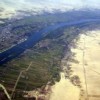
DEVELOPMENT-AFRICA: New Nile Pact Stalled
Ten years of negotiations over a new protocol governing shared use of the Nile River are hanging in the balance, with Egypt and Sudan refusing to give up their present power over how much water is used by countries further upstream.ECONOMY-TANZANIA: Investing The Money Under The Mattress
Omari Saidi heard bad news about the global financial crisis, but the 34-year-old Tanzanian taxi driver felt too far removed from the world market to worry.ETHIOPIA: Political Space Narrowing
Bertukan Mideksa has a reputation in Ethiopia as a competent politician, but voters will not be able to cast ballots for her in the next national election. The revocation of her 2007 pardon has sent a chill through Ethiopia's opposition parties.« Previous Page — Next Page »


The Week with IPS

NEXT STOP - SDGs
Tracking global progress towards a sustainable world
Tracking global progress towards a sustainable world
