Languages
Friday, November 20, 2026



News and Views from the Global South
Africa
AIDS-AFRICA: Some Signs of Progress
The latest UNAIDS Report estimated that 33 million people around the globe are living with HIV; 22 million in Sub-Saharan Africa alone. Around 2.7 million new HIV infections occurred worldwide in 2007. However, encouraging new data suggests there have been significant gains in preventing new infections in several African countries with high prevalence rates.SWAZILAND: Patients Fail to Adhere to TB Treatment
Every five minutes she gives a hacking cough. Ndlaleni Ndzinisa (70) says she has continuously suffered from tuberculosis for the past five years. Because she cannot afford to pay for transport to the nearest hospital, she has repeatedly failed to adhere to her tuberculosis (TB) treatment.DEVELOPMENT: Africa May Face ‘Centuries’ of Poverty
Extreme poverty will continue to blight sub-Saharan Africa for another 200 years unless action to overcome it is intensified, a new report has suggested.CULTURE-NIGERIA: Dance Draws Young Into Museum
On any weekday evening in the heart of Kano's Old City, the sounds of a koroso dance troupe can be heard from within the maroon walls of the Gidan Makama Museum.POLITICS-GHANA: New President Must Tackle Economy
As Ghana’s president-elect, John Evans Atta Mills, prepares to take office, he has his work cut out for him translating several years of strong macro-economic performance into tangible benefits for the majority of Ghanaians.HEALTH-AFRICA: Maximising the Benefits of AIDS Funding
Significant new investments in the fight against the AIDS pandemic could have positive impacts on broader health systems in Africa if governments handle them right.SOUTH AFRICA: Community Gardens Contribute to Food Security
A few years ago 66-year-old grandmother Regina Fhiceka and her family of five ate vegetables only once a week. They would survive on maize and bread the rest of the time - the cheapest food available in the poor township of Philippi, just 15 minutes from the affluent business district of Cape Town.
ZIMBABWE: Holy Water Is Serious Business
"I am making much more profit selling seawater than I used to get from selling groceries and small household goods," Carlos Marufu, a holy water dealer based in Harare told IPS.
SOUTHERN AFRICA: Climate Change Threatens Livelihoods
Climate change will affect the Zambezi River basin more severely than any other river system in the world, according to Kenneth Msibi, Water Policy and Strategy Expert for the Southern African Development Community (SADC). Increased floods, drought and increased levels of disease threaten lives and livelihoods all along the river’s length.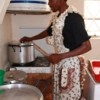
GENDER-SOUTH AFRICA: 'A Real Man Does Provide Care'
Sonwabo Qathula puts on his apron and starts peeling a pile of butternuts, while a pot of rice boils on the stove next to him. The 50-year-old is preparing lunch for poor and orphaned children who attend a rural school in the Eastern Cape.ZIMBABWE: Cholera Drowns Christmas Spirit
On Christmas Day, Robson Nzuza and his family usually drive to their village in Silobela, in the Midlands Province, to spend a week with members of the extended family and throw a big party.POLITICS-GUINEA: Captain Named President, Promises Elections in 2010
Just under 48 hours after the death of Guinean president, Lansana Conté on Dec. 22, Captain Moussa Dadis Camara has been named Guinea's new head of state by the National Council for Democracy and Development, known by its French acronym, CNDD.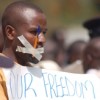
KENYA: Press Freedom: Going, Going, Gone
Dark clouds are forming against freedom of expression in Kenya, following the recent passing of a controversial Bill by parliament. The Kenya Communications (Amendment) Bill, awaiting presidential assent to become law, gives the state powers to invade media houses, seize broadcast equipment, control broadcast content, even taking a station off air.ANGOLA: Deadly Countdown for Small Parties
Angola’s vast, confusing party landscape is about to undergo a major transformation: as of January, 22 parties and coalitions will simply vanish from the political map.CLIMATE CHANGE: African Proposal Yet to Gain Foothold
Africa's bid to expand carbon-trading mechanisms and create rewards for sustainable farming practices on the continent made little headway at the recently concluded climate change conference in Poznań, Poland.AIDS-SOUTH AFRICA: Balancing Individual Rights Against Public Health
Public health and individual human rights are poor friends. What may be good for society may be bad for the individual, or the other way round. And nothing sharpens this tension as starkly as AIDS.DEVELOPMENT-AFRICA: Sanitation: 'This Is the Way We Live'
In 1925, Mahatma Gandhi remarked that "Sanitation is more important than political independence." More than 80 years later, access to basic sanitation remains out of reach for 546 million people in sub-Saharan Africa.
SOUTHERN AFRICA: Building Regional Water Management
As southern Africa braces for the negative effects of climate change, calls for integrated water resources management become more strident.AGRICULTURE-SUDAN: Can Local Investors Beat Foreign Investment?
Sudan is hoping to use foreign cash to reinvigorate its under-performing agricultural sector, but there is growing disagreement over the extent to which outsiders, rather than local farmers, should be taking control of the industry.
SOMALIA: Piracy Threatens Aid Effort
Pirate attacks in East African waters this year have disrupted the delivery of much-needed food aid to Somalia. With millions of lives at stake, U.N. World Food Program officials said the commencement last week of a European Union naval escort mission should help guarantee regular food shipments in the early months of 2009.
Q&A: Failure to Translate Women’s Legal Rights into Action
Each year, for 16 days in December, the world’s focus shifts towards taking action against gender-based violence. Governments and civil society organisations raise awareness around women’s rights and lobby for gender equality. But activists lament that little action is taken throughout the rest of the year and women’s legal rights often fail to be implemented and put to action.« Previous Page — Next Page »


The Week with IPS

NEXT STOP - SDGs
Tracking global progress towards a sustainable world
Tracking global progress towards a sustainable world
