Languages
Saturday, June 6, 2026



News and Views from the Global South
Africa
African Bloc Can Pursue Feminist Foreign Policy in Global Governance Reform Push
The United Nations Commission on the Status of Women will this month bring together government, civil society, and the private sector to strategize on the acceleration of gender equality, through strengthening institutions and financing from a gender perspective.
UN Environmental Assembly Call for Action to Address Planetary Triple Threat
The Sixth United Nations Environmental Assembly (UNEA-6) ended with delegates calling for firm actions to address the triple planetary crisis of climate change, nature loss, and pollution. The assembly also reaffirmed its call for “environmental multilateralism” in seeking solutions to the threats, noting that time was running out fast before the threats could besiege the planet and make life a bigger nightmare, especially for the underprivileged.
Air Quality Sensors Boosting Nairobi’s Fight Against Air Pollution
Deborah Adhiambo (43) has been battling mild asthma since 2022, a condition she describes as “both a health and economic burden.’’ The mother of three lives within Dandora Estate, nine miles east of Kenya’s capital, Nairobi. Dandora is home to Kenya’s largest open landfill, which receives more than 2,000 metric tonnes of waste daily.
Africa’s Debt Crisis Needs a Bold New Approach– & a Way Forward
It hasn’t been easy for African states to finance their developmental and environmental policy objectives over the past few years. Recent events suggest that the situation may be improving. For the first time in two years, three African states have been able to access international financial markets, albeit at high interest rates. Kenya, for example, is now paying over 10% compared to about 7% in 2014.
‘I Haven’t Forgotten Where I Came From,’ says Yvonne Pinto, Incoming IRRI Chief
Growing up on a small farming station in Holetta (Ethiopia), Yvonne Pinto would accompany her agriculturist father to the farm, where she would spend her time cross-fertilizing plants. Her tiny fingers making the task easier, as she would marvel at the end product of a prospective new and higher yielding variety. These formative years laid the foundation for her career in agricultural science.
Female Genital Mutilation Continues Amid Sudan’s Conflict and Forced Displacement
Female genital mutilation (FGM) stands as one of the most egregious violations of human rights, particularly affecting women and girls worldwide. However, when conflict and forced displacement enter the equation, the horrors of FGM are exacerbated, creating a dire situation that demands urgent attention and action. Where instability and insecurity prevail, the prevalence of FGM often intensifies, exacerbated by factors such as displacement, poverty, and the breakdown of social systems.
Call for Scaled Up Funding for Much-Needed, Successful Joint Program in Nigeria
Nigeria is home to 15 percent of the world’s out-of-school children. More than 7.6 million girls are not in school, and only nine percent of the poorest girls in the country are in secondary school. The Boko Haram insurgency and other armed groups fuel the out-of-school crisis in northeast Nigeria, disrupting the education of nearly two million school-age children.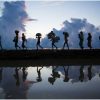
Funding, Policy Changes Could Result in Countries Reaping Benefit of Migration
Amid an escalation of global conflict and climate change-induced displacements, the International Organization for Migration (IOM) is escalating its donor campaign. For the first time since the organization’s formation in 1951, the IOM says it is "proactively approaching all partners to fund this vital appeal," at a time when the number of migrants making perilous intercontinental journeys has increased.
Who Wants to Live by the Sea?
For most of history, only those who made their living from the sea chose to live on the coast. Fear of being battered by storms, not to mention vulnerability to attacks from foreign navies, kept most people inland. Gradually that changed and, along with fisherfolk and their families, the idea of a coastal location became something of a cult. High property prices still reflect its popularity. But is it any longer so desirable?
Phasing out from Fossil Fuels: An Imperative for Climate Justice
Climate change made 2023 the warmest year on record. As urgency mounts to address this worldwide crisis, phasing out the use of fossil fuels is a necessary step that all nations must take. This is because fossil fuels—coal, oil and gas -- are the primary drivers of the climate crisis accounting for over 75% of global greenhouse gas emissions and nearly 90% of all carbon dioxide emissions.
INTERVIEW: AI Expert Warns of ‘Digital Colonization’ in Africa
Artificial intelligence (AI) is ripe to help resolve certain major problems in Africa, from farming to the health sector, but Senegalese expert Seydina Moussa Ndiaye is warning of a new “colonization” of the continent by this new technology if foreign companies continue to feed on African data without involving local actors.
Smallholder Farmers Are Key to CGIAR Response to Hunger Crisis
Dr Ismahane Elouafi has her work cut out. As the new executive managing director of CGIAR, a global network of agricultural research centers, her mandate, simply put, is to tackle the world’s most severe hunger crisis in modern history. And it is in Africa that the former Chief Scientist of FAO with a PhD in durum wheat genetics faces her greatest challenges, both in terms of developing science-based innovations and technologies and lobbying governments to adopt responsible policies.
South Africa vs Israel: ICJ Declines SA’s New Application But Says Israel Duty Bound to Protect Civilians
The International Court of Justice has declined the South African government's urgent application for further measures to prevent an "unprecedented military offensive against Rafah,” but reiterated that Israel is bound to protect civilians in the country. South Africa argued in an urgent application that this military offensive “announced by the State of Israel, has already led to and will result in further large-scale killing, harm, and destruction in serious and irreparable breach both of the Genocide Convention" and of the Court's Order of January 26, 2024.
Unveiling the Power Play: Non-Profit Funding as a Strategic Tool for Agenda Setting
In the realm of public discourse, non-profit organizations often serve as the torchbearers of societal change, championing causes ranging from environmental conservation to social justice. Yet, beneath the altruistic facade lies a complex interplay of interests, where non-profit funding emerges as a potent tool for shaping the narrative and driving the agenda.
Women, Girls Equal Partners in HIV Responses, Says Activist
UNAIDS Executive Director, Winnie Byanyima, recently made an impassioned call for governments to support women and girls from marginalized communities at the frontlines of the defence of human rights, to help ensure, among others, that global health is protected.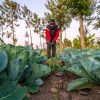
Start-ups Powering up Africa’s Solar Energy Ecosystem
Often referred to as the “Sun continent,” Africa receives more hours of bright sunlight than any other continent. But even with 60 per cent of the world’s solar resources, Africa has only one per cent of solar generation capacity, according to the International Energy Agency (IEA).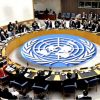
Africa’s Absence as Permanent Member a “Flagrant Injustice,” says UN Chief
As the UN continues its never-ending saga on the reform of the Security Council (UNSC), one of the political anomalies that keeps cropping up is the absence of Africa, among the five permanent members (P5)—a privilege bestowed only on the US, UK, France, China and the Russian Federation.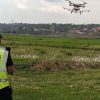
Proven Vector Control Interventions Needed to Stem Malaria Infections in Africa
Experts recommend that the current prevention of malaria in highly endemic countries in Africa should integrate "locally appropriate" control measures to cope with the highest burden of mosquito-borne disease on the continent.
Revolutionist Returnees: Fulfilling Dreams, Finding Freedom
In 1977, a record-breaking mini-series carved its place in the milestone of US history. Based on Alex Haley’s Pulitzer Prize-winning novel, Roots: The Saga of an American Family, the small-screen adaptation exposed the atrocities of the transatlantic slave trade and its impact on generations thereafter.
Road to COP29: Highest Climate Ambitions Needed to Decarbonize World
The road to COP29 has begun in earnest in the backdrop of a global climate report indicating that not only was 2023 the warmest year in a 174-year climate record, it was the warmest by far. Record-breaking temperatures, combined with El Niño, pushed vulnerable and poor nations in the Global South to the frontlines of extreme and severe weather events.
How Soil Microbes Could save the World
The 500 per cent increase in global agricultural productivity over the past 60 years has largely been made possible by the scientific advances of the “Green Revolution” – from the ability to breed higher yielding varieties to improvements in farm inputs, especially fertiliser.« Previous Page — Next Page »


The Week with IPS

NEXT STOP - SDGs
Tracking global progress towards a sustainable world
Tracking global progress towards a sustainable world
