Languages
Sunday, September 27, 2026



News and Views from the Global South
Asia-Pacific
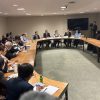
Nuclear Testing in Kazakhstan Documentary Showcases Urgent Need for Nuclear Abolition
The documentary I Want to Live On: The Untold Stories of the Polygon exposes the lifelong impacts of nuclear testing in Kazakhstan’s Semey region. As a third-generation survivor born in Semey, international relations legal expert based in New York, Togzhan Yessenbayeva said she was aware of the “profound impact” that nuclear testing has had on her community and environment. She remarked that the tests in Semipalatinsk have left a “legacy of challenges” that people must deal with to this day.
Agriculture for Economic Resilience During Political and Financial Crisis – The Case of Bangladesh
The recent student movement in Bangladesh demanding reform of the quota system for public jobs led a ‘march of the people’ towards the official Residence of the Prime Minister Sheikh Hasina on 5th of August 2024. The security forces of the country, including the army, refused to open fire on the marching crowd. Fearing an imminent attack on her residence without the protection of the army, Sheikh Hasina fled to neighbouring India after being in power continuously since 2008. With Sheikh Hasina fleeing to India on 5th of August 2024 her authoritarian and corrupt rule of 15 years just melted away.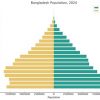
Bangladesh Economy: Turning Demographic Challenges into Opportunities
Speaking at the recent annual conference of the Bangladesh Administrative Service Association, Chief Adviser Dr Muhammad Yunus has emphasised the need to create opportunities for young people, asserting that Bangladesh’s large population is not a burden but a valuable resource.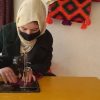
Stitching Hope: Two Afghan Women Rebuild Their Lives with Needle and Thread
Zainab and Mursal, two young Afghan women, had their education cut short by the Taliban. But instead of surrendering to despair, they picked up a needle and thread—transforming their skills into a thriving sewing business that now provides income and inspiration to other Afghan women.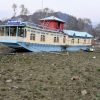
Not Seen in Living Memory: Kashmir’s Rivers Run Dry, Snow Disappears, and Hope Dissipates
The picturesque Kashmir Valley is battling nature’s fury. This time of year, its majestic mountains would typically be capped with thick snow, and its emerald streams would gush with fresh waters. However, none of these scenes are visible this year.
Tanzanian Speaker Calls for Urgent Investment in Youth to Harness Demographic Dividend
Speaker of the Tanzanian Parliament and President of the Inter-Parliamentary Union (IPU), Tulia Akson, has called for bold and immediate investments in young people to unlock the demographic dividend and accelerate sustainable development across Africa and Asia.
Mussel Divers in Kerala Face Livelihood Loss, with Species Habitat Under Threat
Ibrahim Basheer plunges into the sea and disappears. He remains gone for a couple of minutes before resurfacing for a deep breath of air, repeating this for the next half an hour. When he finally climbs aboard his boat, the net sack around his neck is filled with mussels—his catch for that diving trip. He rests for a short while before diving into the sea again—needing one more such trip to fill the basket he has brought along.
Shaping AI Rules Through Trade Agreements
The inclusion of AI provisions in preferential trade agreements (PTAs) has been steadily rising. Since 2019, when the China-Mauritius Free Trade Agreement first mentioned AI, PTAs have progressively evolved to include elements addressing the broader implications of emerging technologies.
Fatima’s Story: The Struggles of Afghan Women Under Taliban Rule
Fatima Mohammadi was a manager in a government office in Afghanistan’s Parwan province before the Taliban came to power. But having been forced out of her job she is back home unemployed.
World’s Largest Religious Gathering Becomes Trans-Inclusive Despite Controversies
Despite a blazing sun and growing heat, Pavitra Nandagiri sits on a cot smiling. Clad in a saffron robe and headgear with her forehead painted with turmeric and vermillion, Nandagiri is a Mahamandaleshwar—one of the highest-ranking monks of the Kinnar Akhada (Transgender Arena) at the Maha Kumbh, the world’s largest religious gathering currently underway in northern India.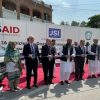
Afghan Refugees, Among Others, Feel the Impact of USAID Funding Freeze
“I was shocked when told by a security guard that the clinic has been closed down. I, along with my relatives, used to visit the clinic for free checkups,” Jamila Begum, 22, an Afghan woman, told IPS.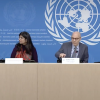
Bangladesh: UN Human Rights Denounces Former Government’s Violations Against Protestors
A new report from the UN Human Rights Office confirms that Bangladesh’s former government coordinated and committed human rights violations against its civilians to suppress the protest movement in July last year, with the high commissioner calling for justice and serious reform to end the cycle of violence and retribution.
Human Insecurity from Climate Change on Vanuatu and Guam
The climate crisis is severely endangering human well-being. While the climate security nexus is omnipresent in national security strategies and on international institutions’ agendas, political responses remain insufficient and are often problematic. Among other issues, related policies often struggle with siloization or a focus on symptoms instead of root causes.

Climatic Change Pushes Pakistan’s Promising Trout Fish Farming Towards Brink of Collapse
Pakistan’s once-thriving trout fish farming industry, a vital source of livelihood for communities in the country’s mountainous northern region, is now on the verge of collapse due to the devastating impacts of climate change.
Online Education: A Lifeline for Afghan Girls Amid Taliban Restrictions
Since the Taliban regained power in Afghanistan in 2021, girls and women have been systematically banned from education, making Afghanistan the only country in the world that denies schooling to girls over the age of 12. The situation continues to deteriorate, with even primary school enrollment for girls in decline, according to UNESCO.
Pakistan: Freedom of Expression at Stake With New Cybercrime Law
“I may not be able to continue hosting my show because the content I put up will most certainly land me in prison,” said senior correspondent Azaz Syed who works for a private TV channel, but who also has his own private online digital channel. He was referring to the recent amendment in the already existing cybercrime law, terming it a “wild” law which has been instituted to grapple with fake news among other online harms.
Afghanistan’s Humanitarian Crisis Expected to Worsen in 2025
The humanitarian crisis in Afghanistan has deteriorated significantly since the 2021 Taliban Offensive, an insurgency that resulted in the Taliban’s reclamation of power and the fall of the nation’s republic. In 2024, the Taliban issued further restrictions on human rights in Afghanistan, particularly for women and girls. These restrictions caused the country to enter a state of economic emergency. This, compounded with heightened insecurity and limited access to basic services, has left over 23 million people in dire need of humanitarian assistance.
Davos Leaders Pledge Support for Bangladesh Reform Agendas
As Bangladesh Chief Adviser Professor Muhammad Yunus emerged from a meeting during the World Economic Forum (WEF), Timor-Leste President Jose Ramos-Horta came forward to greet him, a demonstration of how warmly the global leaders and dignitaries received the person tasked with leading the interim government.
How Artificial Intelligence Will Affect Asia’s Economies
Asia-Pacific’s economies are likely to experience labor market shifts because of artificial intelligence (AI), with advanced economies being affected more. About half of all jobs in the region’s advanced economies are exposed to AI, compared to only about a quarter in emerging market and developing economies.
Taliban’s Decrees Worsen Crisis for Afghan Women, Banning All NGO Work
Afghan women are enduring perhaps their most challenging time. Since the Taliban regained power four years ago, restrictions on women and girls have escalated, beginning with bans on education and paid employment.
Photo Essay: Kashmir’s Ingenious Climate-Responsive Architecture.
India's average temperature has risen by 0.7°C since 1901, bringing more frequent and intense heat waves, erratic rainfall patterns, and a marked decline in monsoon consistency since the 1950s.« Previous Page — Next Page »


The Week with IPS

NEXT STOP - SDGs
Tracking global progress towards a sustainable world
Tracking global progress towards a sustainable world
