Languages
Tuesday, September 29, 2026



News and Views from the Global South
Asia-Pacific

‘For the Human Race, Ignoring the Climate Emergency Is No Longer an Option’
At the International Court of Justice (ICJ), no matter if the country had high Himalayas, was a small island nation or was experiencing armed conflict, they all agreed that the due diligence principle and the obligation of states to prevent harm caused by climate change, especially for high greenhouse gas emitters, were non-negotiable.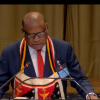
African Union, Nations Lay Bare Climate Vulnerabilities at UN’s Top Court
Kenya agrees with many UN member states testifying before the International Court of Justice (ICJ) that the law of international responsibility should hold countries legally responsible for major damage to the global climate system.
Another Tsunami Sweeps Sri Lanka
On 26 December 2004 a powerful Asian tsunami swept over many of Sri Lanka’s coastal provinces, killing thousands of people and wildlife, devastating habitats and even washing away a trainload of passengers far from the rail tracks.
Climate Finance Not Charity, But Obligation, International Court of Justice hears
Developing nations should not bear the brunt of the climate crisis caused by the industrialized world's historical emissions. This was the resounding message as the Solomon Islands, India, and Iran, among others, presented their cases before the International Court of Justice (ICJ).
States Individually Accountable For Contributions to Climate Change—Fiji
At The Hague, the United Nation’s highest court heard Fiji, a small island nation, lay out its arguments on the threat posed by climate change and the legal obligations, especially those of developed nations.
Lahore’s Smog: With the Sun Out, the Government Lifts Restrictions
Atif Manzoor, 45, the owner of the renowned blue pottery business in Multan, had every reason to feel cheerful last week when the sun finally came out. For a good three weeks, the city of Sufi shrines had been shrouded in an envelope of thick smog.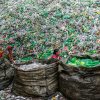
Bangladesh Bans Polythene Bags Again, Sparking Hopes for the Eco-Friendly ‘Sonali Bag’
After Bangladesh’s interim government banned polyethene bags, a new sense of hope has emerged for the Sonali bag—a jute-based, eco-friendly alternative developed in 2017 by Bangladeshi scientist Dr. Mubarak Ahmed Khan. Sonali bag, or the golden bag, is named after the golden fiber of jute from which it is made.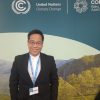
Global Climate Challenges: Perspectives from a Chinese COP29 Delegate
As COP29 draws to a close, voices from diverse regions have shed light on their contributions, challenges, and aspirations in tackling the climate crisis.
Science Ignored, Promises Delayed: Bangladesh’s Environment Minister Expresses Dismay Over COP29 Outcomes
Syeda Rizwana Hasan, an adviser to the interim government of Bangladesh and as Minister of Environment, Forestry, and Climate Change, urged the global and regional leaders to prioritize ambitious, evidence-based climate targets in the climate negotiations.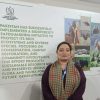
Pakistan’s Climate Minister Pitches for ‘Climate Diplomacy’ at COP29
Romina Khurshid Alam, the Coordinator to the Prime Minister of Pakistan on Climate Change, praised the resilience of the people of her country in the face of climate disasters and has put her faith into diplomacy to achieve climate justice.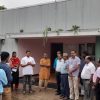
The Soil Mechanic: A Farmer’s Tale to Save Soil and Lives
In the heart of southern India lies an inspiring tale of determination, resilience, and an unyielding commitment to sustainable farming. This is the story of Anand Ethirajalu, who turned his childhood curiosity about food adulteration into a life mission to transform agriculture and protect human lives.
Climate Change Threatens Our Existence, Says Indian Spiritual Leader Sadhguru
A sudden flurry of activity as Jagadish Vasudev, known widely as Sadhguru, emerges from an interview room in the COP29 media centre. It's early days of the conference and there is energy and excitement at the venue in Baku.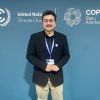
Women, Indigenous Communities Must Lead Climate Finance Allocations at COP29—Plan International Global Director
Plan International, a global leader in advocating for children’s rights and gender equality, sees the need for women and Indigenous people to be at the forefront of climate negotiations.
Human Rights Violations Against Women Rises in Afghanistan, While Taliban Enjoy Impunity
It has been three years since the 2021 Taliban offensive and the humanitarian crisis in Afghanistan continues to grow more dire. Human rights violations are committed by the Taliban insurgent group on a frequent basis, with gender-based discrimination and violence being regular occurrences for millions of Afghan women. Gender inequalities are pervasive, with freedom of speech and mobility being significantly limited. The humanitarian crisis is exacerbated by widespread impunity enjoyed by members of the Taliban.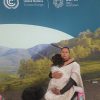
Walking with Wisdom: Whaia’s Mission to Bring Indigenous Knowledge to COP 29
Kaitiaki! Whaia says she is at COP29 to bring indigenous wisdom to influence policy and to provide guardianship (kaitiaki) of the climate negotiations.
Asia’s Economies Can Embrace Services to Boost Growth & Productivity
The Asia-Pacific region prospered by becoming the source of more than half of global factory output, but another transformation to higher-productivity services has the potential to further support growth.
Cryosphere Crisis: Scientists Warn of Devastating Global Impacts Without Urgent Climate Action
Scientists warn of vastly higher impacts on billions of people’s livelihood and cost to the global economy by the accelerating losses in the world’s snow and ice regions, aka the cryosphere. Over 50 leading cryosphere scientists released an annual report on the status of the world’s ice stores on Tuesday (November 12) at the UN Climate Conference (COP29) in Baku. An updated report on the world's ice warns of “drastically higher costs without immediate emissions reductions.”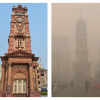
Lahore’s Dangerous Smog: Where Disease and Death Stalk
"It's been horrible; I've been sick on and off for the last 10 days," said 29-year-old asthmatic Natasha Sohail, who teaches A-Level students at three private schools in Lahore. Last week, her condition worsened with a vertigo attack and fever. “It’s criminal what is happening here,” said an incensed Sohail, referring to the “band-aid measures” taken by the Punjab government.
Farming in Crisis: Suicides and Climate Change Threaten India’s Agrarian Future
"Farming is in my blood, and I can’t imagine doing anything else," said Mahim Mazumder, a farmer from Assam. "Even though the past three to five years have seen drastic changes—with temperatures rising so much that even sitting under a tree no longer offers relief—I will keep farming, even if it only yields a small harvest. I've spent my entire life farming, and despite all the challenges, I’ll continue."
Arab Region Leaders, Experts Gather to Find Solutions to Water Scarcity, Sustainable Development
The Arab region is among the most water-scarce areas globally, as nearly 392 million people live in countries facing water scarcity or absolute water scarcity. So dire is the situation that, of the 22 Arab countries, 19 fall below the annual threshold for water scarcity in renewable resources, defined as 1,000 cubic meters per person.
How Blue Carbon Ecosystems are Saving the Philippines’ Sinking Islands
Imagine living with water up to your knees for half of the year, where homes are flooded, and people constantly fear that the sea might one day engulf the town and everyone in it.« Previous Page — Next Page »


The Week with IPS

NEXT STOP - SDGs
Tracking global progress towards a sustainable world
Tracking global progress towards a sustainable world
