Languages
Thursday, November 19, 2026



News and Views from the Global South
Asia-Pacific
Q&A: ‘We will not leave you alone’
U.S. President Barack Obama has made Afghanistan and Pakistan his number one foreign policy priority. As acting U.S. Ambassador, Francis J. Ricciardone, outlined his country's strategy for long-term peace, justice and prosperity in the region in an exclusive hour-long interview. Excerpts:AUSTRALIA: Climate Change – Further Threat to Aboriginals
Climate change will further marginalise Australia’s Aboriginal communities, forcing them out of their traditional lands, destroying their culture and significantly affecting their access to water resources, indigenous rights advocates warn.
RIGHTS-INDIA: Activist Doctor's Incarceration Flouts Democratic Norms
Even while India goes to the polls in a lumbering show of democracy, human rights activist-doctor Binayak Sen remains in prison on unproven terrorism charges.DEVELOPMENT-EAST TIMOR: ‘Big’ Projects To Make Up Oil Losses
With an eye on tourist dollars, the government of East Timor has given the go-ahead to two major developments, including a shopping mall complete with stores, restaurants and the impoverished island nation’s first escalator.
PAKISTAN: Taliban Stop Civilians From Leaving
Thousands of people are stranded in violence-wracked Swat and Buner districts in the North West Frontier Province (NWFP) because the Pakistan Taliban have refused to allow them passage to safer places.CHINA: New Border Dispute Body at Time of Growing Tensions
Beijing has confirmed that its more assertive stance in recent territorial spats with its neighbours is a prelude to a more forceful projection of China’s rising military and diplomatic clout in the region and beyond.
POLITICS-INDIA: A Fighter Without a Pause
Mamata Bannerjee, six-time member of Parliament from West Bengal, bucks the stereotype of women political leaders in India.POLITICS-INDIA: Criminalisation Deters Women Candidates
While India's major political parties are pledged to increase the space for women in the electoral process, a major deterrent to female participation is the steady criminalisation of politics in this country.ENVIRONMENT: Coral Reefs Lucky – This Time
Scientists have been surprised by the rapid recovery of coral reefs from mass bleaching on Australia's iconic Great Barrier Reef, but they warn that reefs remain particularly vulnerable to the effects of climate change.
PAKISTAN: Military Crackdown on Taliban Uproots Civilians
Thousands of civilians are continuing to migrate to safer places from Upper Dir and Buner districts - the new theatres of an internal war between Pakistan’s Taliban and the military in the North West Frontier Province (NWFP).
PAKISTAN: Media in the Taliban’s Crosshairs
Till two months back, Shireen Zada of the private television channel Express News would carry a pistol whenever he covered the news in the restive Swat Valley in Pakistan’s North West Frontier Province (NWFP).BURMA: Opposition Balks at Giving Legitimacy to 2010 Polls
With the hint of a general election in the air, the largest opposition party in military-ruled Burma is facing a dilemma about its future. Should it or should it not contest the planned poll in 2010?AUSTRALIA: Asylum Seekers at Centre of Political Squabble
Australia’s opposition and governing parties have been admonished for attempting to make ‘political capital’ out of the recent spike in asylum seekers trying to reach the nation’s shores by boat.
CAMBODIA: Corruption Allegations Undermine Khmer Rouge Tribunal
The voice of Comrade Duch reverberates daily through the speakers at the 500- seat courtroom in Phnom Penh as he gives testimony in his trial for crimes against humanity.SINGAPORE: Evangelical Christians Take on Civil Society
For 25 years, the Association of Women for Action and Research (AWARE) has been Singapore's most important civil society campaigner for gender justice.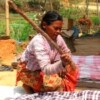
NEPAL: People's Voices: Reflecting on the Republic
Maoist hammer and sickle graffiti from last year's constituent assembly (CA) election is still fresh on the walls all around Gorkha Bajar. This historic town, some 150 km west of the capital Kathmandu, used to be a Maoist stronghold during the 'peoples war' from 1996-2006.FIJI: Women Sidelined By Military Regime
Fiji, a multi-racial, multi-cultural country of 300 islands in the South Pacific, has undergone another coup - the fourth in 22 years. The women of Fiji want their voices to be heard as they work on ways to bring peace back to their country, and they are asking for the United Nations to support their efforts.Q&A: Freedom of Expression Behind Indonesian Democratic Advances*
Indonesian voters had a large pool of candidates to select from during early April polling here, 38 parties nominated 12,000 candidates to vie for the 560 seats in the national legislature.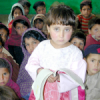
RIGHTS-PAKISTAN: Back to School in Swat, But for How Long?
Tiny Sheema is happy to be back in school in Swat, a volatile northern district in the North West Frontier Province (NWFP).HEALTH-ASIA: Taiwan Blazes a Trail to Help Drug Users with HIV
Taiwan is emerging as a beacon of hope for countries across Asia grappling to stop the spread of the AIDS epidemic among injecting drug users (IDUs), a major risk group.
AUSTRALIA: Forgotten Victims of Bushfires’ Fury
The fires which swept across 400,000 hectares of bush in the south-eastern Australian state of Victoria in February left 173 people dead and ruined more than two thousand homes. But while they razed businesses, schools and kindergartens to the ground, wildlife and their habitats were also destroyed.« Previous Page — Next Page »


The Week with IPS

NEXT STOP - SDGs
Tracking global progress towards a sustainable world
Tracking global progress towards a sustainable world
