Languages
Thursday, November 19, 2026



News and Views from the Global South
Asia-Pacific
ECONOMY: 'Financial Meltdown Decolonising Asian Minds'
The year 2008 may well go down in history as a watershed in which the global financial crisis, precipitated by the collapse of Western economic models, ‘decolonised’ Asians minds, say observers.BURMA: Junta Determined to ‘Guide’ 2010 Polls
Burma’s military regime ended 2008 with greater resolve to steamroll over opposition voices in order to pave the way for a junta-friendly government when the country holds general elections in 2010.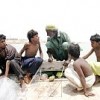
INDIA/PAKISTAN: Prisoner Repatriations Bring Hope
As the New Year dawns, the repatriation by India of 66 Pakistan nationals brings hope for hundreds of Pakistanis and Indians incarcerated in prisons across each other’s countries - and for peace between the South Asian neighbours.RIGHTS-AUSTRALIA: ‘Prison-like’ Immigration Facility Open
Refugee rights organisations have criticised the Rudd government’s decision to hold suspected asylum seekers in a controversial detention centre on an isolated Australian island in the Indian Ocean.BURMA: New Thai Policies Not Junta-Friendly
If Burma's military regime is showing signs of worry about the change of guard that has taken place in neighbouring Thailand, there are good reasons.INDIA: Seeking China's Support in Dealing With Pakistan
As the Pakistani government digs its heels in against India’s demands for action on the suspected masterminds of the November terrorist strikes in Mumbai, the Indian foreign policy establishment is looking to China and other regional powers, besides the United States, for support.ENVIRONMENT-AUSTRALIA: Emissions Reduction Target ‘Weak’
The gap between the Rudd government’s rhetoric and practice in addressing climate change, albeit with one eye on the worsening global financial conditions, has led to a palpable feeling of betrayal among Australians.THAILAND: Taking Lese-Majeste Laws Seriously
Until late August, Harry Niccolaides was just one of thousands of foreigners working in Thailand as English teachers. But now the 41-year-old Australian national is behind bars, charged with violating this kingdom’s draconian lese majeste laws.RIGHTS-NEPAL: Maoists Attack Journos, Threaten Media Freedom
When Kunda Dixit, editor of the ‘Nepali Times’ and 12 other staff members of the Himalmedia publishing house were attacked and injured by supporters of Communist Party of Nepal-Maoist (CPN-M), a week ago, it was a sign that Nepal’s ruling party intends to influence the media through intimidation.LABOUR-PHILIPPINES: Bleak New Year For Migrant Workers
Diovie Arcilla is happy to be home for Christmas. This Singapore-based computer programmer values being with her family and friends in the holiday season. But news that some of her colleagues have been retrenched is making Arcilla anxious.
BANGLADESH: Corrupt Politicians, Cleaner Polls
Bangladesh goes to polls on Monday after a military-backed interim government spent two years trying to cleanse the country's electoral system of fraud and get rid of rampant corruption in public life.
PAKISTAN: Like Other Assassinations Bhutto's Remains a Mystery
"The chapter is closed, and the Pakistan People’s Party [PPP] is dead. It doesn’t matter who killed her," said Mohammad Sharif, a young driver working for a voluntary agency, referring to former prime minister Benazir Bhutto’s assassination on Dec. 27 last year.
RIGHTS-SRI LANKA: 'Do They Know It's Christmas?'
The eight rows of pews at St. Fatima’s church in Colombo were mostly empty despite the festive look from Christmas decorations.PAKISTAN: Suspected Terror Group Will Challenge UN Ban
Jamaat-ud-Dawah (JuD), the Pakistani organisation on which the United Nations Security Council (UNSC) imposed sanctions two weeks ago, on suspicion of being involved in terror activity, insists that it is a charity and that it will challenge the ban at the International Court of Justice.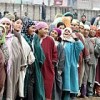
INDIA: Kashmiri Women Repose Faith in Electoral Politics
With voting for the provincial elections in Indian Kashmir safely over, observers say that what was remarkable about the process - apart from its relative peacefulness - was the active participation of women in a Muslim-majority state.ENVIRONMENT-AUSTRALIA: E-Waste – ‘Motherboard of All Problems’
With electronic items high on Christmas shopping lists, a new report is calling on the government to ensure that manufacturers collect and recycle unwanted computers and mobile phones to protect environmental and human health.ENVIRONMENT-PHILIPPINES: Aerial Spraying Case – Profits Vs Public Health
Cecilia Moran never thought that she would one day have to give up farming owing to poor health. She grew up helping her father tend a family-owned plot in Davao province. The sale of such produce as rice, corn, coconut and durian in the local market took care of family needs.RIGHTS-PHILIPPINES: Stalled Talks With Muslim Rebels Hard on Civilians
With the government insisting that the Moro Islamic Liberation Front (MILF) in conflict-ridden Mindanao disarm prior to resumption of peace talks - and the rebels refusing to do so - prospects for quick resettlement of some 300,000 internally displaced people (IDP) seem bleak.
INDIA: China Swamps Handloom Silk Industry
Legend has it that India’s famed handloom silk industry began around 300 A.D. after a Chinese princess smuggled out the eggs of the silkworm moth and the seeds of the mulberry tree in her headdress.HEALTH-ASIA: Harried by Sporadic Bird Flu Outbreaks
New cases of avian influenza across Asia in recent weeks confirm warnings that the deadly virus still lurks in the region and raise questions of gaps in efforts to contain it in affected communities.
There’s no Law that Says People Have to Suffer
Our world today faces unprecedented problems, for a start, the current environmental and financial crises. Without global solidarity and a conscious commitment to peaceful coexistence both within human society and with the systems of life that support us, it is becoming clear that there is no future for us. We have reached a point where we each need to strive in our own unique way to make the greatest possible contribution to the realisation of human rights.« Previous Page — Next Page »


The Week with IPS

NEXT STOP - SDGs
Tracking global progress towards a sustainable world
Tracking global progress towards a sustainable world
