Languages
Saturday, October 10, 2026



News and Views from the Global South
Asia-Pacific

Young People Shape Sustainable Development in Timor-Leste
In 2002, a group of young people in Timor-Leste were asked to look ahead into the future and write down on a postcard what they hoped their country could achieve by the year 2020.
Kerala Proved Good Governance Vital in a Pandemic
When COVID-19 claimed millions of lives across India, Kerala state at the southern tip of the subcontinent stood apart for low mortality rates that experts attribute to good governance, a robust public health delivery system and strong civil society support.
Where is India Heading?
Some time ago I watched the Indian blockbuster RRR (Rise, Roar, Revolt). It received universal praise for direction, screenwriting, cast performances, soundtrack (which won an Oscar) and thrilling action sequences. RRR is filled with gore; bodies beaten, pierced and torn apart. An overblown combination of Quentin Tarantino and Bollywood, far away from Satyajit Ray’s emotionally moving films, as well as Bollywood’s romantic comedies and mythological dramas. RRR never pauses for breath. The two male protagonists are supermen, not exposing many recognizable human traits, even if they might occasionally sing and talk about love. Hard to understand, since the few women of the story are cut-out clichés.
Are Many Children in Japan Going Hungry? How Can We Help?
Picture this: It’s the scorching days of summer, and kids are flocking to the nearby mall, eager to bask in the cool air and hang out with friends. But among the laughter and chatter, one girl stands alone in the food court.
Growing Appetite for Nutrient-Rich Native Indigenous Australian Foods
Growing up in Sydney, Kalkani Choolburra, a Girramay, Kuku Yalanji, Kalkadoon and Pitta Pitta woman from Far North Queensland, would frequently travel with her family up and down Australia’s eastern seaboard. Her grandfathers and uncles would bring fresh catch of dugong, her favourite bush food, and she would go hunting for the short-necked turtle with her aunties and female cousins.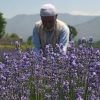
Wrecked by Climate Change, Farmers in Kashmir Shift to Lavender Cultivation
Mohammad Subhan Dar diligently tends to some bright purple plants on a four-acre farm in Bijbehara, a hamlet south of Kashmir’s capital, Srinagar. As you draw nearer, you’ll be mesmerized by the sight of sprawling lavender fields, where about 10 to 15 farmers, including Dar, prepare for a promising harvest.
Navigating Challenges of New City Development for Nusantara, Indonesia’s Future Capital
Many nations are engaged in ambitious urban planning endeavors and the creation of new capital cities. Nusantara, Indonesia, is the latest in a series of modern cities that have sprung up across Asia.
Skyrocketing Inflation Puts Food Security in Pakistan at Risk
“We are under extreme stress about skyrocketing prices of essential edible commodities and the cost of gas and electricity. The situation is becoming worse because every day. We must pay more for wheat flour, sugar, tea, milk, oil, etc.,” Azizullah Khan, a civil servant, says.
After Nagorno-Karabakh, is Armenia Next?
On September 19, the sound of bombs reminded the world of a long-forgotten conflict. In the Caucasus, the Azerbaijan’s army was launching a massive attack against a small enclave, Nagorno-Karabakh.
Why Floods ‘Beyond Our Imagination’ Hit Nepalese Himalayan Town
When a flash flood descended on a Himalayan community in the Mustang district in Nepal, it shocked the residents, climate change experts, and disaster risk management. Anil Pokharel described it as "beyond our imagination." He has experienced many disasters as the Chief Executive at the National Disaster Risk Reduction and Management Authority for the Government of Nepal.
‘The International Community Must Act on Afghanistan’ – PODCAST
 “If you were waiting for a couple of years to see how the Taliban would perform, we now have a pretty good idea. We can see that they have moved, step by step, back towards how they ran the country in their first period in power,” says UN Special Rapporteur on the situation of human rights in Afghanistan, Richard Bennett, in this episode.
The Case for Afghan Women and Girls: How an International Criminal Court Investigation Could Expand Human Rights
Two years have passed since the Taliban re-assumed power in Afghanistan, and women and girls have yet to return to work or school. Can the international justice system now come to their defense? Experts say a case for Afghan women and girls has the potential to change the way the legal community thinks about human rights abuses. Will it?
Multilingual #AfghanGirlsVoices Campaign to Return Millions Back to School
A Taliban edict is rolling back time in Afghanistan after access to education for all Afghan girls over the age of 12 was indefinitely suspended on September 18, 2021. Afghanistan is the only country in the world where girls are forbidden from attending school beyond the primary level, leaving more than 1.1 million girls and young women without access to formal education.
Human Trafficking: Women Lured by Promise of Jobs, Sold as Brides
It has been over a decade since 32-year-old Rafiqa (not her real name) was sold to a villager after being lured by the promise that she would be employed in the handicrafts industry of Indian-administered Kashmir.
Elevating Farmers’ Income Through Organic Poultry Rearing
Even after toiling hard for an entire year, Shivaji Rao, a 37-year-old farmer, would find it hard to cover the basic expenses of his family. He cultivates maize from his one-and-a-half-acre land in India’s Southern State of Telangana.
Safe, Regular & Orderly Migration for Inclusion and Sustainability
In Asia and the Pacific, migration is again on the rise. In 2020, almost 109 million people lived in a country other than that of their birth. They represented 2.3 per cent of the region’s population in 2020 and almost 38 per cent of the world’s international migrants.
Kazakhstan’s Transition: From a Nuclear Test Site to Leader in Disarmament
Exactly 32 years ago, on August 29, 1991, Kazakhstan, then part of the Soviet Union, made a historic decision that would alter its fate. On that day, Kazakhstan permanently closed the Semipalatinsk Nuclear Test Site, defying the central government in Moscow. This marked the start of Kazakhstan's transformation from a nuclear-armed state, possessing the fourth-largest nuclear arsenal at the time, to a non-nuclear-weapon state. Kazakhstan's audacious move to eliminate its nuclear weapons was rooted in a profound commitment to global disarmament, setting an inspiring precedent.
India Can Beat the Heat with Inclusive Fintech
Thunderstorms, flash floods, and landslides have made headlines this year’s monsoon season, as rainfall in northern India was far more intense than forecast. This comes hot on the heels of what was for many, the warmest pre-monsoon season on record. These extreme weather patterns are creating chaos for farmers, with smallholders hardest hit.
Lawmakers Call on G20 to Prioritise Spending on Youth, Gender, and Human Security
Legislators from around the world, this week, officially submitted to the Sherpa of the G20 meeting set for September in New Delhi a declaration calling on governments to prioritise spending on ageing, youth, gender, human security, and other burning population issues.
Bangladesh’s Battle Against Climate Change: A Nation at Risk
Bangladesh, a picturesque land of rivers, lush green landscapes, and a vibrant cultural heritage, faces one of its most significant challenges ever — climate change.
Climate Justice Delayed, Is Justice Denied
The failure to tackle the climate change crisis is an injustice to the millions who have lost lives and livelihoods through floods, extreme weather, and wildfires, pointing to the urgency of adaptation and mitigation finance, experts say.« Previous Page — Next Page »





The Week with IPS

NEXT STOP - SDGs
Tracking global progress towards a sustainable world
Tracking global progress towards a sustainable world
