Languages
Sunday, November 8, 2026



News and Views from the Global South
Asia-Pacific

The Costs of Heightened Conflict in the Himalayas
As a series of conflicts in the Hindu Kush Himalayan region come into sharp focus, sidelining local populations, the long-term environmental costs may leave the region degraded, poor and desperate.
Awareness Should be the Priority in Public Health Efforts against Leprosy
Increasing awareness of the continuing existence of Hansen’s Disease (leprosy) is critical to sustaining effective public health efforts against the disease, eliminating the social stigma associated with it, and halting its transmission.
Kashmir: How Modi’s Aggressive ‘Hindutva’ Project has Brought India and Pakistan to the Brink – Again
August is immensely important in the history of the Asian subcontinent, marking the month that India and Pakistan gained independence from the British in 1947. Now, in 2019, it has once again proved momentous, when, ten days before India’s Independence day celebrations, prime minister Narendra Modi’s government revoked the autonomy of Indian-administered Kashmir – a status provided for under the Indian Constitution.
The Business of Social Enterprise
Organisations supporting people affected by Hansen’s disease (leprosy) have social rather than capitalist aims, but they need to take a business-minded approach to their work if they wish to be sustainable, experts at a global conference in Manila, Philippines said.
Global Network Key to Strengthening Leprosy Organisations
Organisations of people affected by Hansen’s Disease or leprosy agree that a global network of volunteer groups is key to eradicating the disease, but concrete steps need to be taken to move the idea from an often-discussed concept to a reality.
First Global Forum of Leprosy-Affected People’s Organisations Kicks off in Manila
Being part of a platform where leprosy-affected people from all over the world can freely interact, exchange and share opinions, ideas, experiences and strategies was always something Tasfaye Tadesse dreamt of.
A Global Forum to Encourage Dialogue and Share Solutions
 Professor Takahiro Nanri is the executive director of the Sasakawa Health Foundation, co-organiser of the Global Forum of People’s Organisations on Hansen’s Disease, which will take place from Sept. 7 to 10 in the Philippines.

Is There Discrimination Against Women in Healthcare in India?
In an inaugural lecture at the Radcliffe Institute at Harvard University, Amartya Sen began with a swipe at Queen Victoria who complained to Sir Theodore Martin in 1870 about & quote: this mad, wicked folly of 'Woman's Rights’ ", as in her rarefied world nobody could trample upon her rights. The world has of course changed dramatically and women’s rights are widely acknowledged but injustices persist. Our concern here is with health injustices that are widely prevalent in India. These take multiple forms: female foeticide, widespread morbidity and denial of access to good quality healthcare until a critical condition develops. Our focus here is on vulnerability of women to non-communicable diseases (NCDs) and their limited access to good quality healthcare in India.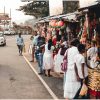
Sri Lanka Faces Major Challenges on UN’s 2030 Development Agenda
On the road to sustainable development, Sri Lanka provides an interesting case study. Having overcome a three-decade domestic conflict, Sri Lanka has begun its transformation towards a sustainable and resilient society. The extreme poverty rate ($1.90 a day) dropped to 0.8 per cent in 2016. The unemployment rate is below 5 per cent since 2010.
Animal Welfare: Where Does India Stand?
We have the potential to lead the world in animal welfare, but the tendency to look at the issue in a vacuum has prevented this movement from being taken seriously.
Disaster Risk Resilience: Key to Protecting Vulnerable Communities
The past five years have been the hottest on record in Asia and the Pacific. Unprecedented heatwaves have swept across our region, cascading into slow onset disasters such as drought. Yet heat is only part of the picture. Tropical cyclones have struck new, unprepared parts of our region and devastatingly frequent floods have ensued. In Iran, these affected 10 million people this year and displaced 500,000 of which half were children. Bangladesh is experiencing its fourth wave of flooding in 2019. Last year, the state of Kerala in India faced the worst floods in a century.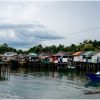
Malaysia Vastly Undercounting Poverty
Malaysia lays claim to the world’s lowest national poverty rate by using an unduly low poverty line that does not reflect the cost of living and by excluding vulnerable populations from its official figures.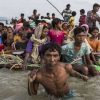
After Two Years of Horrors in Burma, the U.S. Is Still Doing Too Little, Too Late
Monsoon season is currently wreaking havoc on the more than 911,000 Rohingya refugees displaced from their homeland in Burma (Myanmar) to the ramshackle camps of Cox’s Bazar, Bangladesh.
Hong Kong Protests: A Peaceful and Violent Weekend
 As protests in Hong Kong continue over the weekend, thousands of people joined hands to form a human chain that stretched across the city on Friday. It was yet another demonstration – this one entirely peaceful – in a series of protests that have rocked the former British colony for the past 12 weeks.

Little Hope of Justice for Rohingya, Two Years after Exodus
Two years after the start of an exodus of Rohingya civilians from genocide-like attacks in Myanmar, members of the mainly Muslim minority have little hope of securing justice, rights or returning to their homes, according to the United Nations and aid groups.
How Tibet has Successfully Reduced Poverty
According to the Tibet's Social Science Academy’s Institute of Rural Economic Studies, the number of Tibetans still living in poverty has been brought down from 850,000 a few years ago to 150,000.
Tibetan officials say the government is committed to reducing that number to zero by the end of this year. 
Why Can’t Dynamic Asia-Pacific Beat Poverty?
Asia and the Pacific is lauded globally for its rapid economic growth over recent decades and has lifted 1.1 billion people out of extreme poverty since 1990. Nevertheless, the region continues to have the largest number of poor people in the world.
How to Bring the Indus Delta Back to Life – Give it Water
Gulab Shah, 45, is having sleepless nights. He and his family are worried about their imminent migration from their village in Jhaloo to a major city in Pakistan, thanks to the continued ingress of sea water inland.
Addressing Gender & Protection Issues During Humanitarian Emergencies
Vanuatu is among the world’s ‘most at-risk’ countries to natural disasters. In the last 12 months alone, the country has faced multiple volcanic eruptions, earthquakes, cyclone and tsunami.
How Tibet Doubled its Life Expectancy
Tibet's complicated typography means that the terrain is not easy for its people. Whilst the country is breathtaking, one incredible story about Tibet is that of the dramatic socio-economic changes the region has undergone. 
Will Sanctions Undermine 1947 US Treaty with UN?
When Yassir Arafat was denied a US visa to visit New York to address the United Nations back in 1988, the General Assembly defied the United States by temporarily moving the UN’s highest policy making body to Geneva-- perhaps for the first time in UN history-- providing a less-hostile political environment for the leader of the Palestine Liberation Organisation (PLO).« Previous Page — Next Page »





The Week with IPS

NEXT STOP - SDGs
Tracking global progress towards a sustainable world
Tracking global progress towards a sustainable world
