Languages
Sunday, November 8, 2026



News and Views from the Global South
Asia-Pacific

‘Salty’ Concern: Tackling High Salt Consumption in China
China’s almost meteoric transition from a being a low income to a middle income country within a span of four decades is often perceived as a miracle analogous to the post Second World War Japanese economic development experience.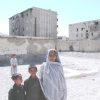
Afghan War Deadly for Children Despite Peace Process: UN
The United Nations has warned that the past four years were among the deadliest for children in Afghanistan since the United States-led invasion of 2001, with nearly 13,000 youngsters killed and injured in that period.
China Wants to Mainstream Environmental Protection
In the 2014 China-US joint announcement on climate change, China promised to peak its greenhouse gas (GHG) emissions around 2030. Later this commitment was cemented in the Paris Agreement signed in 2016.
No to Ageism, Yes to Intergenerational Equality
As we are celebrating the International Day of Older Persons today, we recognize that population ageing is a human success story, a story of longer and often healthier lives of the world’s people. The many faces of older persons that we see in Asia and in the Pacific, and, indeed, all over the world, attest to this fact. Still, however, ageing is considered a threat. There is talk about the “burden of ageing”, exploding healthcare costs, and concerns about plummeting economic growth due to the shrinking labour force. In many cities of Asia-Pacific, we see advertisement for “anti-ageing cosmetics” and surgeries. The current ideal is that we must be young, dynamic and without wrinkles or grey hair, especially older women.
Confronting New Climate Reality in Asia & the Pacific
Last week, world leaders gathered at the United Nations in New York for the Climate Action Summit. Their goal was simple: to increase ambition and accelerate action in the face of a mounting climate emergency.
Medical Centres Cover Every Village in Tibet
 Tibetan medicine is one of the world's oldest known traditional medicines, originally developed during the pre-Buddhist era in the kingdom known as Shang Shung. IPS correspondent Crystal Oderson visited one of the major Tibetan health facilities in Lhasa.... and got a glimpse of the age old tradition.
Climate Emergency: A Humanitarian Call to Action
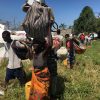
We saw this coming. As humanitarians, our risk assessments in different parts of the world have always factored in the potential for extreme weather events and the spread of vector-borne diseases, of drought, desertification, and mass displacement. Emergency first responders like us work up scenarios for interventions and gain experience each time we put our planning to the test in real crises.
50 Days of Kashmir Under Lockdown – in Pictures
It is 50 days into the lockdown in Kashmir since roads were blocked off, schools shut, and internet and communication services stopped.
Confronting the New Climate Reality in Asia and the Pacific
In less than ten days world leaders will be gathering at the United Nations in New York for the Climate Action Summit. Their goal is simple; to increase ambition and accelerate action in the face of a mounting climate emergency. For many this means ambition and action that enables countries to decarbonize their economies by the middle of the century. But that is only half the equation. Equally ambitious plans are also needed to build the resilience of vulnerable sectors and communities being battered by climate related disasters of increasing frequency, intensity and unpredictability.
Hiring for Inclusion
As companies begin to focus on hiring people with disabilities, we need to shape how they think and act on this interest.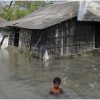
Rural Bangladesh Families Spend 2.0 Billion Dollars on Climate Change ― Dwarfing Government & International Finance
In an alarming imbalance struggling families in rural Bangladesh spend almost US$2 billion a year on preventing climate-related disasters or repairing damage caused by climate change ― far more than either the Bangladesh government or international bodies.
Community Management, Outmigration Help Nepal Double Forest Area
New analysis of historical satellite imagery indicates that Nepal’s forest area has nearly doubled, from 26% of land area in 1992 to 45% in 2016. The midhills have experienced the strongest resurgence, although forests have also expanded in the Tarai and in the mountains. This makes Nepal an exception to the global trend of deforestation in developing countries.
Do Women Suffer Greater Loss of Employment than Men in Morbidity?
In a life peppered with tragedy, Mary Shelley wrote in 1818, “Have I not suffered enough, that you seek to increase my misery?” That this accurately sums up the fate of many women in South Asia who suffer a major health shock such as a serious illness or a disability or both, is hard to dispute.
Human trafficking: A Disorganised Response to an Organised Crime
Human trafficking is perhaps one of the most well-organised crimes being committed in India. How else do we explain the phenomenon of adolescent girls and young women from remote villages across India being found in brothels in our cities?
How a Bangladesh Non Profit for Leprosy Made its Members Completely Self-Sufficient
 The 20th International Leprosy Congress just wrapped up in Manila, Philippines last week. Alongside policy makers, diplomats, medical researchers, doctors, donors and academics, several Hansen's disease-affected people’s organisations also participated in the 3-day congress that was co-sponsored by The Nippon Foundation (TNF) and Sasakawa Health Foundation (SHF).

Calls for Reform, Research and Reorganisation in Leprosy Healthcare
Rachna Kumari of Munger in Eastern India’s Bihar state is not yet 30. But she's already been married at 18, abandoned by her husband after she was diagnosed with leprosy and become an award-winning advocate of the disease. She has traversed a long road. And this week she undertook another step in her journey to fly to Manila, Philippines, as a delegate at the 20th International Leprosy Congress (ILC).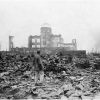
The Push for Peace-From the Global Village to the Global Neighborhood
From the ashes of a tragedy that wiped out almost 90% of the city of Hiroshima on 6 August 1945, an institute called the Hiroshima Peacebuilders Center (HPC) rose like a phoenix of hope that is pioneering the creation of a global pool of peacebuilders. It is driven by the 2030 Agenda for Sustainable Development declaration that "there can be no sustainable development without peace and no peace without sustainable development.”
‘Conference Emphasises Need for Partnerships to Create a World Without Leprosy’
Forty years ago, Yohei Sasakawa saw his father moved to tears after meeting and witnessing the suffering of people affected by leprosy – also known as Hansen’s disease. Not only did the patients have a physical illness, but they also suffered from social exclusion and discrimination. It made the young Sasakawa vow to work for the elimination of leprosy from the world – just as his father had been doing.
The Emergence of a Global Voice for Hansen’s Disease Affected Persons
The Global Forum of People’s Organisations on Hansen’s Disease, which was attended by members of people’s organisations from 23 different countries, wrapped up in Manila, Philippines, today Sept. 10 after four days of discussion and deliberation. The main outcome was a set of recommendations, which included participants stating that those affected by the disease should have more inclusive roles in the global campaign against leprosy.
‘Join Me on this Journey’ to Eliminate Leprosy – WHO Ambassador
Octogenarian Yohei Sasakawa has travelled to more than 90 countries across the globe; from areas of conflict, to the jungles of Brazil, shaking hands, hugging and washing the feet of Hansen’s disease-affected people. His message is simple: Stop stigmatisation and eliminate the disease. 
India Promotes South-South Cooperation, but Key Questions Unaddressed
At his speech at the United Nations Convention to Combat Desertification (UNCCD) summit in Delhi, Prime Minister Narendra Modi emphasised South-South cooperation and technology solutions, but issues of land ownership dog the ongoing negotiations. As the second week of the UNCCD Conference of Parties (COP) kicked off in Delhi, Indian Prime Minister Narendra Modi highlighted South-South cooperation and issues of land degradation.« Previous Page — Next Page »





The Week with IPS

NEXT STOP - SDGs
Tracking global progress towards a sustainable world
Tracking global progress towards a sustainable world
