Languages
Sunday, November 8, 2026



News and Views from the Global South
Asia-Pacific

Sri Lanka’s Presidential Election Brings Back a Polarising Wartime Figure
On 16 November, Gotabaya Rajapaksa – who served as defence secretary during the final phase of Sri Lanka’s brutal civil war – won a decisive victory in Sri Lanka’s presidential election.
As Donors Ramp up Polio Funding, Worries of Comeback Persist
Efforts to wipe polio off the face of the planet took a step forward this week, with a multibillion-dollar fundraiser in the Middle East helping eradication schemes tackle a virus that disproportionately kills and cripples children in poor countries.
Seeing Through the Smog: Can New Delhi Find a Way to Limit Air Pollution?
Ankita Gupta, a housewife from south Delhi, is anxious about whether she should send her 4-year-old daughter to kindergarten. Outside visibility is poor as smog — a combination of emissions from factories, vehicle exhausts, coal plants and chemicals reacting with sunlight — has settled over the city, surpassing dangerous levels.
The Ocean in Us: Ocean Action for Climate Ambition
In just under a month, countries around the world will gather for UNFCCC COP 25. The hashtag for this year’s “Blue COP” is yet another reminder to us all that it is “Time For Action”. We can no longer afford to wait as the effects of the climate crisis become ever more present. Vulnerable populations, whether from Small Island States, the rural heartland or the world’s megacities, are becoming ever more vulnerable, and the wellbeing of people and planet continues to face its most existential threat.
Net Food Importer Turkey Grapples with Challenges of Food Self-sufficiency
Despite latest research showing Turkey lagging in overall food sustainability, progress in sustainable agriculture appears to be a bright spot in the country’s troubled agriculture industry.
ICC Gives Greenlight for Probe into Violent Crimes Against Rohingya
Judges of the International Criminal Court (ICC) on Thursday authorized an investigation into alleged crimes against humanity, namely deportation, which have forced between 600,000 and one million Rohingya refugees out of Myanmar, into neighboring Bangladesh since 2016.
PNG Bougainville Prepares for Historic Vote on Nationhood
The people of Bougainville, an autonomous region in eastern Papua New Guinea (PNG), have aspired to self-government for more than a century. Now their longed-for opportunity to vote on independence will occur on Nov. 23. But, even with a clear majority in the vote count, the region’s future, which must be agreed and ratified by PNG, is far from certain.
Nearly Half of Nepali Children Still Malnourished
For the first two decades after 1990, Nepal took great strides in reducing malnutrition. But progress has stalled.
Urgent Need to Replace Competition with Cooperation in the Aral Sea Basin
The water resources in Central Asia’s Aral Sea Basin support the lives and livelihoods of about 70 million people — a population greater than Thailand, France, or South Africa.
No Region is Immune from Rising Inequalities, Trade Tensions & Declining Growth Rates
We are facing tense and turbulent times around the globe. Rising inequality is a danger everywhere. Trade and technology tensions are building. Growth forecasts are being revised down. Unease and uncertainty are going up. This is a global phenomenon. No region is immune.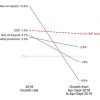
If India Stopped Growing, Would the IMF and World Bank Say So?
Leading economic indicators have slowed or reversed. Criticisms of official statistics are mounting. But the IMF and World Bank continue to forecast 6-percent growth by simple extrapolation.
Mother Earth’s Café Dares Climate Crises in India
The sun has barely risen when Phlida Kharshala shakes her 8-year-old grandson awake. He hoists an empty cone-shaped bamboo basket on his back, sets the woven strap flat across his forehead and off they go into the wilderness.
Nepal and Colombia Struggle With Mental Health Burden of Conflict
Children sit in a circle experimenting with different colours on palettes at a shelter in Godavari one morning this week. Some design flowers in bright colours, others draw homes nestled below mountains. Many of the children are survivors of rape or domestic violence, from rural parts of Nepal. The one thing they have in common is mental trauma.
India has a Groundwater Problem
A majority of India’s water problems are those relating to groundwater—water that is found beneath the earth’s surface. This is because we are the largest user of groundwater in the world, and therefore highly dependent on it.
Solar Tubewells Suck Water out of Sindh Desert
At the southern end of Pakistan’s Sindh-Balochistan border near the Kirthar mountain range, Sindh’s Kachho desert has witnessed an unprecedented surge in the use of solar-powered tubewells for groundwater extraction in agriculture.
Bangladesh’s Climate Change Victims Safeguard the Sundarbans’ Endangered Dolphins
Israfil Boyati lives along the shoreline of the Bay of Bengal. In the past he used to catch fish in the canals and rivers of Bangladesh’s Sundarbans mangrove forest — one of the world’s largest and habitat to many endangered species, including the Bengal tigers and freshwater dolphins.
Beaten and Tortured for a Ransom, Lured by the Promise of a Livelihood
After his father passed away two years ago, the burden of caring for a six-member family rested on the shoulders of the now 19-year-old Farhad Hossain. He had no clue how he would support his family and pay for the education of his four younger siblings.
Why Are So Many Nepali Workers in Korea Committing Suicide?
For many Nepalis, it is dream to find work in Korea where they expect to earn many times more than in Nepal. Yet, there is a dark side to the Korean Dream: between 2009 to 2018, there were 143 deaths of Nepali workers in South Korean soil, and of them 43 were suicides.
For Some in Kashmir Marriage Equates to Sexual Slavery
Haseena Akhtar was only 13 when an agent told her parents that they could earn a good amount of money by letting her marry a Kashmiri man. The man was, however, three times older than Akhtar, the agent said.
The Superfoods of the Andes and the Himalaya
The nutritious grain that mountain peoples of the Americas and high Asia cultivated were displaced by wheat and rice, but they are staging a comeback thanks to growing public consciousness about health.
Global Climate Change Investment Heavily Tilted Towards Mitigation and Low on Adaptation
Good news: the graph depicting climate investments has been steadily increasing. Climbing from the 2012 figure of $360 billion in climate investments across the world to close to $600 billion currently.« Previous Page — Next Page »





The Week with IPS

NEXT STOP - SDGs
Tracking global progress towards a sustainable world
Tracking global progress towards a sustainable world
