Languages
Sunday, November 8, 2026



News and Views from the Global South
Asia-Pacific

Mainstreaming Leprosy-affected People a Big Challenge in Bangladesh
When Feroza Begum was first diagnosed with leprosy in 2006, it felt as though she had been struck by a thunderbolt due to the deep-seated prejudice in her society that the disease is a curse from Allah (God).
Fighting for a Leprosy-Free World
 The Chairman of The Nippon Foundation, Yohei Sasakawa is passionate about ensuring the world does not forget Leprosy and reminding us of the discrimination that people living with Leprosy still face. Sasakawa who is also a WHO Goodwill Ambassador is in Bangladesh where his Foundation held the first-ever meeting of organizations working in the leprosy field.

The Ignoble Fall of a Nobel Peace Prize Winner
Appearing before 17 judges of the International Court of Justice (ICJ) in The Hague, Aung San Suu Kyi, the de facto civilian leader of Myanmar, became a public apologist for the military government of Myanmar which has long been accused of genocide and forcing over 730,000 Rohingya Muslims to flee to neighboring Bangladesh since a 2017 crackdown.
Sasakawa Vows to Continue Support for Fighting Leprosy in Bangladesh
Chairman of The Nippon Foundation, Yohei Sasakawa, has assured Bangladesh of continuing support for the Zero Leprosy Initiative announced by the country's Prime Minister, Sheikh Hasina, aimed at eliminating leprosy by 2030.
Taking Bangladesh to Zero-Leprosy, One New Case at a Time
Sandhya Mandal has never felt so vindicated. For the past four years, the 36-year-old community health worker from Meherpur – a rural district bordering India – has been traveling 50 km every day along dusty roads on an old motorbike, searching for leprosy patients who needed urgent treatment. But in her community, instead of compliments, neighbours and relatives raised questions about her work and her character. “They ask why I come home so late and what is this ‘work’ that I really do. Some even imply that I might be doing something like prostitution,” Mandal tells IPS.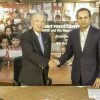
Nippon Foundation Announces US$ 2m Support for the Education of Rohingya Children in Bangladesh
In the light of limited access to education for displaced Rohingya children, the Nippon Foundation has announced US$ 2 million support to BRAC to launch a project to ensure educational facilities to both Rohingya and local community children.
Aung San Suu Kyi Defends Myanmar from Accusations of Genocide, at Top UN Court
Myanmar will have “no tolerance” for human rights abuses committed in Rakhine state and will prosecute the military, if war crimes have been committed there, Aung San Suu Kyi told the International Court of Justice (ICJ), the UN’s main judicial body, on Wednesday.
Bangladesh Can Be Leprosy-Free by 2030 Says Leprosy Activist
 Despite its efforts to eliminate leprosy as a public health threat, Bangladesh's leprosy burden ranks fourth-highest in the world. Four thousand new cases are detected annually – an average of 11 to 12 cases per day over the last 10 years.

Bangladesh Can Be Leprosy-Free Before 2030 Prime Minister Tells National Zero Leprosy Conference
Leprosy is not a curse but should be detected and treated early, Bangladeshi Prime Minister, Sheikh Hasina, has told delegates at a gathering in her country's capital to discuss the elimination of the disease.
Accelerating SDG Progress in Asia – Pacific
“The 2030 Agenda is coming to life”, declared the Secretary General at the opening of the first SDG Summit, a quadrennial event for the follow up and review of the 2030 Agenda for Sustainable Development. As leaders from Asia – Pacific took the floor, they highlighted country progress of SDG implementation and reaffirmed commitment to achieve the 2030 Agenda. Statements reflected different approaches across the region. Yet all converged on one priority: accelerated actions and transformative pathways.
Why Is Growth Slowing in China?
China’s gross domestic product (GDP) grew by 14%. Since then, its growth rate has declined by more than half to 6.6% in 2018. The five-year moving average growth rate is at its lowest since reforms began in 1978, although annual growth briefly fell lower during 1989, the year of the Tian An Men incident.
South-South Cooperation Offers Solutions to Urgent Climate Challenges
Climate change is the defining challenge of our time, and developing countries are recognized as hotspots for climatic risks. Through solidarity, peer-to-peer learning and collective self-reliance, developing countries are collaborating among themselves to address the threat.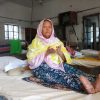
Building a Leprosy Free Bangladesh
Despite having remarkable success in leprosy control in the last decades, the Bangladesh government is now moving forward with a vision to build a leprosy- free country.
The Economic & Humanitarian Catastrophe Threatening Pacific Island Communities
When UN Secretary-General Antonio Guterres addressed the Economic and Social Commission for Asia and the Pacific (ESCAP) last month, he pointed out the dramatic impact of climate change triggering natural disasters around the world--- from glaciers that melt, ice caps that disappear and corals that bleach.
India’s Electric Mobility Needs Enabling Infrastructure to Pick up Speed
Dogged by intractable air pollution debilitating large northern swathes from mainly urban vehicle emissions, India earlier this year announced targets for a 40 percent non-fossil component in its fuel-mix by 2030 as part of its Nationally Determined Commitments (NDC) to the Paris accord on climate change. It aims for full electrification of public transit systems and of one-third private vehicles by 2030.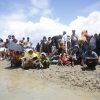
The Story Behind The Gambia’s Lawsuit against Myanmar over the Rohingya Genocide
On Nov. 11, the Gambia filed a lawsuit against Myanmar in the International Court of Justice for the southeast asian country’s atrocities against the Rohingya population.
Did Sri Lanka’s Presidential Election Bring Back a Polarising Wartime Figure?
The Economist proclaimed recently that Gotabaya Rajapaksa, the man who, as secretary of defense, presided over this horrifying episode (the final phase of Sri Lanka’s terrorist inspired internal conflict), has just been elected president of Sri Lanka.
Running from the Storm – How Bangladesh’s Climate Migrants are Becoming Food Secure
It was almost a decade ago when Ruma Begum and her family left their home in Bangladesh’s coastal Tazumuddin upazila or sub-district and travelled some 50 km away to start a new life. They had been driven out of their home by an extreme and changing climate that has continued to ravage the district of Bhola.
Catalysing Change for Gender Equality
Great strides have been taken to empower women and girls in the Asia-Pacific region since the Fourth World Conference on Women in Beijing adopted an ambitious global agenda to achieve gender equality twenty-five years ago. Gender parity has been achieved in primary education. Maternal mortality has been halved. Today, the region’s governments are committed to overcoming the persistent challenges of discrimination, gender-based violence and women’s unequal access to resources and decision-making.
We Shouldn’t Expect Philanthropists to Fund Activism
Since philanthropists are unlikely to fund anything that destabilises their businesses, building independent institutions can be an effective approach to create lasting impact.
Green Steel
How Indonesian craftsmanship is undergoing a revival at the world’s first ‘bamboo university’. It’s fast-growing, flexible and strong. Standing underneath a bamboo canopy, it is easy to understand why people have been using this grass plant for years, in the construction of houses, bridges and scaffolding.« Previous Page — Next Page »





The Week with IPS

NEXT STOP - SDGs
Tracking global progress towards a sustainable world
Tracking global progress towards a sustainable world
