Languages
Sunday, November 8, 2026



News and Views from the Global South
Asia-Pacific
China Ranked World’s Second Largest Arms Producer Trailing Behind US
Donald Trump, the vociferously unpredictable US president, has long chastised China for seeking “unfair” advantage over trade and tariffs, violating intellectual property rights and “manipulating” the country’s currency to its advantage.
Experts laud International Court of Justice Order on Myanmar to Halt all Genocidal Conduct
In a groundbreaking and much anticipated ruling delivered on Thursday, the International Court of Justice demanded that Myanmar halt all measures that contribute to the genocide of the Rohingya community.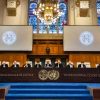
Top UN Court Orders Myanmar to Protect Rohingya from Genocide
Myanmar must take steps to protect its minority Rohingya population, the top UN court unanimously ruled on Thursday.
Leprosy Re-emerges as a Global Health Challenge
Fifteen years ago, Sattamma – a daily labourer in the Rangareddy district of southern India’s Telangana state – was abandoned by her husband after she was diagnosed with Hansen’s Disease.
Tipping Point on Menstrual Banishment in Nepal
It is easy to be cynical about recent reports of actions taken to end chhaupadi, the traditional practice in parts of western Nepal of segregating menstruating women.
UN Special Rapporteur Offers Assistance to Indian Supreme Court in Case of Rohingya Deportation
University of California professor E. Tendayi Achiume, who is a United Nations Special Rapporteur, has recently offered her assistance to the Indian Supreme Court in a long hearing about India deporting Rohingya refugees to Myanmar.
Empowering Women in Poor Communities & Building Resilience Against Climate Pressure
As global temperatures continue to rise, vulnerable populations around the world are facing increasingly complex climate risks – with ongoing droughts in Zimbabwe and floods devastating Indonesia's capital, Jakarta.
BIOGAS: Cow Dung Holds the Key to Nepal’s Green Economy
Nepal’s future may not be in hydropower, as most assume, but actually in the dung heap. A new industrial-scale biogas plant near Pokhara has proved that livestock and farm waste producing flammable methane gas can replace imported LPG and chemical fertiliser.
Human Rights Watch Blasts China for Rights Violations at Home and Abroad
China is currently under heavy scrutiny for its massive human rights violations across different sections, Human Rights Watch (HRW) head Kenneth Roth said on Wednesday.
Bushfires Hasten the Death Knell of many Australian Native Animals and Plants
The chatter of cockatoos and lorikeets has given way to an eerie silence in smoke enveloped charred landscapes across south-eastern Australia. The unrelenting bushfires have driven many native animal and plant species to the brink of extinction and made several fauna more vulnerable with vast swathes of their habitat incinerated.
Was China Manipulating Its Currency?
Many argue that China’s impressive growth for last four decades has been due to deliberate exchange rate undervaluation, promoting exports and discouraging imports. In August last year, the Trump administration accused China of engaging in currency manipulation.
In the Elusive Grip of an Abusive Partner: A Migrant’s Story
To live in a home with family, to have a safe environment, food and basic human necessities, are some of the essentials that most people expect to have without giving it all much thought. When a child is born, parents or caregivers are likely to provide these things. These expectations get renewed whenever someone gets married and moves to a new home, a different neighborhood, or a city. We can hardly find someone who will say that they were not expecting happiness and safety when stepping into a new relationship, or starting a new chapter of life. But these expectations of a better life turn disastrous for millions of people when they step into another country as a dependent.
India and Japan’s MPs Act Quickly to Implement Sexual and Reproductive Health Plans after ICPD25
Parliamentarians from India and Japan have hit the ground running by acting soon after the recent Nairobi Summit on International Conference on Population Development (ICPD25).
Australia’s Bushfires Bring Mounting Pressure to Reduce Greenhouse Gases
As nature's fury wreaked havoc across Australia, reducing to ashes all that came in its way - people, flora, fauna, picturesque historic towns and villages once popular with local and overseas tourists – it was unlike anything the country had witnessed before. The staggering scale and intensity of the devastation could best be summed up as apocalyptic.
India’s Citizenship Law Triggered by Rising Right-Wing Ideology
“Fire bullets at the traitors of the country,” chanted mobs of Bharatiya Janata Party, or BJP, supporters wrapped in Indian flags in Delhi last week.
A Tribute to Sir Fazle Hasan Abed (1936 – 2019)
“When I think about Bangladesh, I think about everybody. Not everybody is enjoying Rabindranath and the great literature and culture that Bangladesh has. But I think everybody has got the right to have this experience”, deeply felt by late Sir Fazle Hasan Abed, founder of BRAC (Building Resources Across Communities), a unique, integrated development organization that many have hailed as the most effective anti-poverty organization in the world; who passed away December 20, 2019at the age of 83.
A Leprosy-Free World Is Possible
 From Dec 11-12 the plight of people with Leprosy took centre stage during the National Conference on Zero Leprosy Initiative 2030 and at the historic and the first-ever the Conference of Organizations of persons affected by Leprosy- in partnership with the Nippon Foundation and Sasakawa Health Foundation.

Q&A: Initiative Starts Mental Health Sessions for Bangladeshi Garment Workers
Nearly seven years ago, garment workers in Bangladesh were victims of one of the gravest man-made disasters in history -- a factory collapse that left more than 1,100 workers dead, and rendered thousands with injuries -- in many cases lifelong ones. For many of the workers from Rana Plaza, the trauma remains real even to this day.
Address Malnutrition, Not Just Food Security
Malnutrition remains a formidable challenge in most societies, with less than a tenth of countries in the world not experiencing at least one major malnutrition problem. In relatively more food secure countries, where almost everyone has enough to eat, and few live in fear of a sudden loss of access to food, micronutrient deficiencies and diet-related non-communicable diseases (NCDs) often still loom large.
AUDIO: If We Are to Achieve Zero-leprosy by 2030, This Is the Best Time and Opportunity
Dr Rahat Chawdhury is the Deputy Program Manager at the National Leprosy Program of Bangladesh. His is the umbrella organization of hundreds of doctors, technical experts, counsellors, strategists, health advocates, field workers and thousands of leprosy-affected people as the beneficiaries.

AUDIO: “We Cannot Achieve Zero-Leprosy by 2030 Without a Vaccine” – WHO Team Leader
 Dr Erwin Cooreman is the Team Leader of WHO's Global Leprosy Programme. This week, he is in Dhaka to attend the National Conference on Leprosy, which was inaugurated by the prime minister of Bangladesh Sheikh Hasina. In her speech, she reiterated her commitment to make the country Zero-Leprosy by 2030.
« Previous Page — Next Page »





The Week with IPS

NEXT STOP - SDGs
Tracking global progress towards a sustainable world
Tracking global progress towards a sustainable world
