Languages
Sunday, November 8, 2026



News and Views from the Global South
Asia-Pacific

The Italian Pyramid: Scientific Observatory at the Top of the World
 Hello! Are you Italian?
No, I’m from Nepal.
Oops.
Kaji Bista is the staff manager of the Ev-K2-CNR’s innovative Pyramid International Laboratory/Observatory (known as the Italian Pyramid) at 5,050 m a.s.l. located in Lobouche.

India’s Orange Farmers Search for Sustainable Agriculture
Hillol Datta, 26, travelled for two days from Kolkata to Jampui Hills – a picturesque hill station in the north eastern province of India – to see its fruit-laden orange orchards. However, after driving for several hours, all the young traveller saw were bald patches along the hill slopes and scattered rows of areca (nut) palm trees.
Women Bear the Burden of India’s Water Crisis
Across cities and villages in India, an impending water crisis is at our doorsteps. India will face a water shortfall of almost 50 percent by 2030, if our water use continues its current pattern. Last year, Chennai and Bangalore showed us what water scarcity looks like; the statistics are no longer just numbers on paper, they have become our reality.
Nepal’s Baby Export
A major discrepancy between Nepal government and foreign records of the number of Nepali children adopted in North America and Europe has exposed a trafficking ring that involves various child welfare agencies in Kathmandu.
What Future for the Rohingyas after the ICJ Ruling?
In a groundbreaking ruling in January 2020, the International Court of Justice demanded that Myanmar halt all measures that contribute to the genocide of the Rohingya community.

Popular Pakistani Singer Pushes for Corporal Punishment to be Made a Crime
"He struck his head, his side, his stomach and went on hitting him. When Hunain said he could not breathe, the teacher slammed him against the wall, saying, 'Being dramatic are we?’" This is the eye witness account from a classmate of 17-year-old Pakistani student, Hunain Bilal, who was allegedly beaten to death by his teacher after he failed to memorise his lessons.
Can Indian Farmers Adapt to Water Loss?
Over the last few decades, groundwater has become the major source of irrigation for Indian agriculture. Pumped by millions of privately-owned tube-wells, it contributes 60 percent of the water used for irrigation, having grown by 105 percent since the 1970s.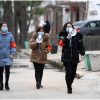
Coronavirus Epidemic Has Implications for Life Expectancy
As efforts to contain the Coronavirus epidemic enter a critical stage, it is important to remember that the costs cannot be measured purely in economic terms, as the measures taken will have implications for life expectancy across the entire nation.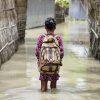
Tackling Climate Change and Preserving the Water Body: A Bangladeshi Perspective
For any riverine country, the state of the water body around big cities and conditions of major rivers hold a leadership position in the overall climate effects and how the water body is protected and preserved impacts the entire economy and living standards of that country. Bangladesh is renowned for the geomorphic features that include massive rivers flowing throughout the country. Within the border of Bangladesh lie the bottom reaches of the Himalayan Range water sources that flow into the Bay of Bengal totaling the number of rivers by a count of 700. The length of river bodies is about 24,140 km. There are predominantly four major river systems: the Brahmaputra-Jamuna, the Ganges-Padma, the Surma-Meghna, and the Chittagong Region river system. The Brahmaputra is the 22nd longest (2,850 km) and the Ganges is the 30th longest (2,510 km) river in the world. (1) The river system works as a backbone for agriculture, communication, drinking water source, energy source, fishing and as the principal arteries of commercial transportation in Bangladesh. During the annual monsoon period between June and October, the rivers flow about 140,000 cubic meters per second and during the dry period, the numbers come down to 7000 cubic meters per second.
Landmark Law Empowers Women Farmers
When Pakistan’s eastern Sindh province passed the ‘Sindh Women Agricultural Workers Bill’ on 20 December, giving women in agriculture, livestock, fisheries and other agro-based work the same rights and benefits enjoyed by workers in the industrial sector, it was a revolutionary step for the whole of South Asia.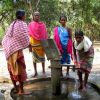
Are Economic Systems Sexist?
Women’s unpaid care work is the hidden engine that keeps the wheels of our economies, businesses, and societies moving, yet it is not accounted for.
How Encroachments, Willows and Silt Ate up Half of Kashmir’s Own Sea
Warming himself with a kangri (a firepot) kept under his pheran (a long winter cloak worn by Kashmiris), 66-year-old Mohammad Subhan Dar sat chatting with a bunch of his fellow villagers on a January afternoon on the edge of the road overlooking Wular Lake in Saderkote-Bandipora, northern India.
India’s Outdoor Workers on the Frontlines of Climate Change
Last June when more than half of India was reeling under daily temperatures topping 40 degrees Celsius, Nursing Behera’s 11-month-old son burned both his legs when a pot of boiling water fell on him.
A Bigger Impact in a Smaller World: The China Situation
We are now living in a hyper communicative world where news does travel faster than lightning. Boundaries, borders, geographical and time differences have become next to obsolete in today’s speed driven world. At any point in time people, news and local occurrences can influence internationally without much local isolation. Along with the advantages of technology, communications and connections world is also facing new challenges that are proportionally evolving with advancement. One region affected today is affecting the global economy and population in frenzy of minutes, hours and days.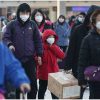
UN Staffers Rattled by Deadly Coronavirus Pandemic
With over 37,500 staffers in its global Secretariat payroll, the United Nations has gone high alert as the deadly coronavirus continues to take a heavy toll worldwide.
WHO Declares Coronavirus a Public Health Emergency, Highlights Need to Support Countries ‘Weaker Health Systems’
Weeks into widespread panic about the “Coronavirus” that has so far killed at least 170 people in China, the World Health Organisation (WHO) on Thursday declared it a public health emergency. As of Friday, the disease had spread to all the regions in Mainland China, with more than 7,500 cases in the country alone, according to the BBC.
India’s Unique Water Purification Wetland Could Soon Become Extinct
Ramkumar Mondal’s farm is awash in a brilliant yellow mustard bloom. A flock of grey cranes peck for food amidst the shallow watergrass. But Mondal’s fishpond digs in there like a do-or-die last sentinel as nearby high-rise buildings, a symbol of development and encroachment, menacingly tower over the fishpond, permanently blocking the eastern sun so essential for the pondwater to convert sewage into fish-feed.
The Role of Sherpas in Nature Conservation as Guardians of the Himalayas
Since I was a kid, I grew up with adventures and stories of famous characters of the books of Jack London: White Fang, Make a Fire… and the incredible ode to perseverance of Martin Eden.
Coronavirus: Why China’s Strategy to Contain the Virus Might Work
On January 23, the authorities of Wuhan City, China, sealed off the motorways and shut down all public transport to stop the coronavirus outbreak from spreading. Shortly afterwards, at least ten other cities in China were under quarantine orders, most of them located in the areas surrounding Wuhan.
‘Organic is the Future’
Vandana Shiva, a pioneer of organic farming in India, is incensed by the 2019 draft law to compulsorily register all seeds used by farmers. On a wintry afternoon, at her farm Navdanya in the Himalayan foothills, the noted ecologist spoke on the future of the organic farming movement in India. Excerpts:
Oil-rich Gulf Turns to Renewable Energy
The increased frequency of climate-induced weather extremes and public opinion pressure are forcing even major fossil fuel exporting countries in West Asia to make a big push towards renewable energy.« Previous Page — Next Page »





The Week with IPS

NEXT STOP - SDGs
Tracking global progress towards a sustainable world
Tracking global progress towards a sustainable world
