Languages
Sunday, November 8, 2026



News and Views from the Global South
Asia-Pacific

Asia-Pacific Response to COVID-19 and Climate Emergency Must Build a Resilient and Sustainable Future
The unprecedented public health emergency triggered by the COVID -19 pandemic and its multi-faceted impact on people’s lives around the world is taking a heavy toll on Asia and the Pacific. Countries in our region are striving to mitigate the massive socioeconomic impact of the pandemic, which is also expected to affect the region’s economic health. In its annual Economic and Social Survey of Asia and the Pacific 2020 launched today, the United Nations Economic and Social Commission for Asia and the Pacific (ESCAP)expectsgrowth in Asia-Pacific developing economies to slow down significantly this year.
Snapshot of Life under Lockdown in Bangladesh
 The Coronavirus pandemic is changing how we live our daily lives. The scale of the COVID-19 and its impact on our lives is unprecedented. When humanity gets past this, the world will be a very different place than the one we have known.

Surviving Domestic Violence in times of Covid19
“I come from Baglung District, a part of Dhawalagiri Zone in Nepal. My house overlooks the river. Do you know, our district is known for the suspension bridges?”, her eyes glimmer for a fraction of a second and then she breathes a heavy sigh! Her right hand is still wrapped in a scarf, while with the other she pats her 17-month-old. “If I ever get a chance I will take you to my village, we have a lot of medicinal plants.” She pauses while tears roll down as she continues our Facetime session. “I was 16 when I had my first child and I was 17 when my arm was broken by my mother-in-law.”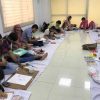
A Story of Triumphs and Tribulations: Implementing Services for Autism in Bangladesh
A few days ago, a friend said to me that my focus on autism, although rather successful, had “sucked out all energy from other critical areas of social need in Bangladesh.” My friend wanted to know if I would be interested in expanding my visibility and successful approach to autism, to other issues that have apparently been left by the wayside due to everyone’s eagerness to work on an issue popular with the Prime Minister’s daughter!
Supporting Informal Workers During the COVID-19 Crisis
Farmers, agricultural labourers, and informal sector workers are the worst hit by COVID-19 and the resulting lockdowns. Here are some steps that the government and banks can take to help them cope financially.
Slums, Camps, Terrorism: Experts Worry about Coronavirus Hitting South Asia
As coronavirus makes its way through different continents, countries, and communities around the world having claimed more than 23,000 lives, experts are ringing alarm bells about the implications of the disease as it hits South Asia, which hosts almost 2 billion of the world’s population.
India’s Trinity of Challenges
The exigencies of combatting the coronavirus pandemic on a war-footing -- Prime Minister Narendra Modi has announced a nationwide stay-at-home lockdown for 21 days to break the chain of transmission -- has certainly deflected attention from equally pressing challenges confronting India. The nation’s capital witnessed horrific communal violence when the US President was visiting India, triggering international outrage, including from the South. The economy also deserves attention as growth has been decelerating since 2016-17. With the virus shock, the pace of expansion will contract as the economy shuts down and slides into recession.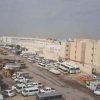
Far From Home During a Pandemic
Nepali workers in Qatar who have been quarantined in a camp that has been closed off for two weeks say that aside from concerns about jobs and health, they are now also worried about their families back home.
East Asian Lessons for Controlling Covid-19
By the third week of March 2020, the number of Covid-19 deaths in Italy had overtaken the number of deaths in China. Authorities all over the world are restricting the movements of their populations as part of efforts to control the spread of Covid-19.
Fisherfolk Fix Both Food and Climate by Closing Fishing Grounds
Samsul sounded very happy last Monday (Mar. 16) when recounting his experience of catching crabs worth more than $60 in a single day.
Air Pollution: A Problem We Can Solve in Our Lifetime
Over the past few years, worsening air quality in India—and in north India specifically—has awakened policy makers and civil society to take urgent action.
State Intervention Necessary to Overcome Covid-19 Threats
It is now clear that most East Asian government responses to novel coronavirus or Covid-19 outbreaks have been effective. In Hong Kong, Japan, Singapore and Taiwan, the number infected have remained relatively low despite their proximity and vulnerability, while containment in China and South Korea has been impressive.
I Am Generation Equality: Storytelling for Equality
When you flip through grade one Bangla school textbooks there is very little written about the progress women have made in Bangladesh since the Beijing Conference for Women in 1995.
Polycephaly* in Afghanistan: Failure of the US or Curse of History
The fourth and last presidential election in Afghanistan on 28 September 2019 was yet another setback to the democratic process. Not only did it take months for the Independent Election Commission to announce the results but they were again marred by allegations of massive fraud that culminated with two candidates declaring themselves as winners.
Changing Weather Patterns Spell Doom for Unprepared Pakistan Farmers
Unpredictable weather patterns in the form of excessive or prolonged rainfall are wreaking havoc for farmers across Pakistan as sowing and harvesting periods are severely affected.
Nepal’s Female Guides Juggle Work and Home
Nepal’s trekking industry has been dominated by male guides, but a growing number of women are entering the profession as their reputation for reliability spreads.
Rural Poverty, Employment and Disability
About 15% of the world's population lives with some form of disability, of whom 2-4% experience significant difficulties in functioning. Disability is part of the human condition, and almost everyone will be temporarily or permanently impaired at some point in life, and those who survive into old age will experience increasing difficulties in functioning. Here the focus is on empirical validation of whether disabilities are associated with economic hardships through loss of employment and consequently impoverishment in rural India. The motivation stems from continuing neglect of health in the budgetary allocations –including the allocations for 2020-21.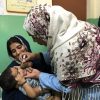
Why Pakistan Isn’t Taking that Final Step towards Polio Eradication
Dr. Rana Muhammad Safdar, the coordinator for Pakistan’s National Emergency Operations Centre for Polio Eradication, has sleepless nights thinking about what needs to be done for his country to eradicate polio.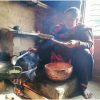
Air Pollution in South Asia: Biomass Burning Emissions & its Impact
A young adult man requires 15 m3 or 15 kg of air, 1.5 liters or 1.5 kg of water and 0.75 kg of solid food every day. This indicates around 87% of our everyday basic requirement is air.
The Future Pacific Island Children Want
For 13-year-old Karen Semens, growing up on Pohnpei -- one of the four main island states in the Federated States of Micronesia, which comprises of more than 600 islands in the western Pacific Ocean -- the main challenge is being a girl. “In our culture, girls don’t have the same rights and opportunities nor do they get credit and recognition for their achievements as boys do. This prevents us from speaking our minds. For example in family meetings, only men make the decisions. I would like all girls to be treated as equals and have a say in decision making,” the 8th grade pupil from the Ohmine Public Elementary school in Pohnpei, tells IPS.
Indonesia’s Laws Ineffective against Human Trafficking
When her uncle offered her an opportunity to work in Jakarta almost a decade ago, the then 15-year-old Afra Burga Ambui immediately agreed and soon she was boarding a two-hour flight to the country’s capital and away from her village on Flores Island in East Nusa Tenggara, southern Indonesia.« Previous Page — Next Page »





The Week with IPS

NEXT STOP - SDGs
Tracking global progress towards a sustainable world
Tracking global progress towards a sustainable world
