Languages
Saturday, November 7, 2026



News and Views from the Global South
Global

Suburban Living the Worst for Carbon Emissions – New Research
Work, education, entertainment, or simply better connectivity all draw people to cities. By the end of this century around 85% of the world population are predicted to live in cities.
Central Banks Must Address Pandemic Challenges
Hopes for an inclusive global economic recovery are fast fading. As rich countries have done little to ensure poor countries’ access to vaccines and fiscal resources, North-South “fault lines” will certainly widen. Enhancing relief, recovery, transformation While the International Monetary Fund (IMF) has revised rich countries’ recovery prospects upward, the United Nations (UN) notes formidable challenges, especially for developing countries, due to the pandemic.
Resumption of China-US Contacts: Use of Protocol as Peacetime Weapon in an Unstable World
It had been four long months since the meeting in Alaska between Chinese and American officials, their first interaction since President Joe Biden assumed office in January this year. That was when the Chinese Foreign policy top mandarins Yang Jiechi (Director, Central Foreign Affairs Commission) and Wang Yi (State Councillor and Foreign Minister) bitterly locked horns with the American top diplomats, Antony Blinken (Secretary of State) and Jake Sullivan (National Security Advisor) in Anchorage in intensely chilly circumstances. Bilateral relations remained pretty much frozen since. Both sides might have come around to the belief that a resumption of some level of contact was overdue. Not so much to bring about a thaw; rather, simply to test the water.
Increasing Revenue & Protecting Public Health During the COVID-19 Pandemic
The COVID-19 pandemic has taken its toll on millions of families and damaged the economy of countries around the globe. Rich countries with higher vaccination rates have opened up their economy ahead of poor countries that are still struggling to fight the pandemic.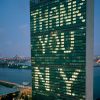
After Vilifying the UN, US Returns to the World Body
Ed Koch, a sharp-tongued Mayor of New York city (1978-89), once stopped short of using a four-letter word to denounce the United Nations. Instead, he opted for a five-letter word dismissing the UN as a “sewer” relegating it to the lower depths of degradation.
WTO Inches Closer To Agreement on Harmful Fishing Subsidies
After more than 20 years of negotiations, the World Trade Organization (WTO) has moved a step closer to an agreement on ending harmful fishing subsidies. The deal would set new rules for the global fishing industry and limit government funding that contributes to unsustainable fishing and the depletion of global fish stocks.
What Public Health Officials Can Learn from a New Long COVID Survey
A new survey on public awareness of long COVID by ‘Resolve to Save Lives” showed that among the 40% of Americans who were not vaccinated, seeing testimonials of those who suffer from long COVID inspired nearly two-thirds to consider the vaccine. A representative sample of nearly 2,000 Americans 18 and older took the survey between May 21 and June 10, 2021.
Are UN’s Sustainable Development Goals in the Doldrums Due to the Corona Virus?
A short answer to this question is yes, but it is obvious and predictable failure was visible for some time. This debate started before 2015, the year in which the Sustainable Development Goals (or SDGs) were adopted as successors to the Millennium Development Goals (MDGs) agreed in 2000. The 8 MDGs were expanded to 17 massive goals and 169 targets.
Revamped UN System Crucial for a Changing World
From an international humanitarian perspective, the first half of 2021 has been disappointing. We’re no further ahead in ending the conflict in Syria and Yemen. From the fledgling democracy that it had become, Myanmar has descended into what most of its people had hoped was a bygone era of military rule. And in Ethiopia, where its Prime Minister, Ably Ahmed, was awarded the Nobel Peace Prize in 2019, armed conflict in Tigray is preventing the 2020 winners of the very same prize, the World Food Programme, from delivering the food needed to stop at least 350,000 Ethiopians from starving to death.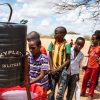
Water Scarcity: Coming Soon
In 1995, a highly-respected water expert in South Africa, Bill Pitman, in very concise terms illustrated that the country, already battling a growing lack of water then, would likely run out in 25 years if it did not increase its supply.
Water Poverty: The Political Connection
The water we drink and the air we breathe are the basis of life. With universal access to clean water and sanitation, we will be healthier, our economies will be stronger, gender equality will be more achievable, and more children will stay in school.
Child Rights’ Experts Warn that Displaced Children and Young People Risk Being Wiped Out of the Education System
The difficulties in accessing education faced by children and young people forcibly displaced from their homes were today laid bare in a virtual high-level roundtable convened by UNHCR, the UN Refugee Agency, Education Cannot Wait (ECW), the UK and Canada.
Stepping Up to Meet Low-Income Countries’ Pandemic Recovery Needs
Low-income countries have been hard hit by the pandemic. Their large financing needs are only likely to grow as they deal with the crisis and its economic aftermath.
UNFPA Calls for Protection & Justice for Women & Girls in Tigray
The 2018 Nobel Laureate, Dr. Denis Mukwege, a gynaecologist celebrated for his work with survivors of sexual assault in the Democratic Republic of the Congo's Panzi Hospital once said: “Rape is a strategy of war – it is meant to destroy women and communities physically and mentally”.
Beware UN Food Systems Summit Trojan Horse
Undoubtedly, the world needs to reform existing food systems to better serve humanity and sustainable development. But the United Nations World Food Systems Summit (UNFSS) must be consistent with UN-led multilateralism. For the first time ever, the World Economic Forum (WEF), a partnership of some of the world’s most powerful corporations, is partnering the UN in launching the Summit, now scheduled for September, with its ‘Pre-Summit’ beginning today.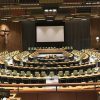
Is it Time to Create a UN Political Body for Climate Change?
As a wisecracking cynic once remarked: “The sun would never set on the British empire because God wouldn’t trust an Englishman in the dark“. Perhaps it was an uncharitable remark because most of the British colonies have long gone.
We Can Prevent the Bankruptcy of the Sacred – Dare we Try?
The UN High Level Political Forum (HLPF) came to a conclusion on July 15th. Another HLPF, another series of declaration, and commitments and concerns articulated by governments.
Vaccines Delayed are Vaccines Denied
“Vaccine equity is the challenge of our time,” Tedros Adhanom Ghebreyesus, Director-General of the World Health Organization (WHO), told the gathering in opening remarks. “And we are failing”at a special ministerial meeting of the Economic and Social Council.
Conceptual Advances for United Nations 2.0
The UN Secretary-General’s forthcoming “Our Common Agenda” report, to be released before this year’s UN General Assembly High-Level Week, is expected to offer ambitious recommendations to accelerate the realization of the UN75 Declaration as the world comes to grips with the COVID-19 pandemic.
European Duplicity Undermines Anti-Pandemic Efforts
Despite facing the world’s worst pandemic of the last century, rich countries in the World Trade Organization (WTO) have blocked efforts to enable more affordable access to the means to fight the pandemic.
US Holds UNICEF Monopoly for 74 Years – in a World Body Where Money Talks
With Henrietta Fore's decision last week to step down as UNICEF Executive Director, her successor is most likely to be another American since that post has been held-- uninterruptedly -- by US nationals for almost 74 years, an unprecedented all-time record for a high-ranking job in the UN system.« Previous Page — Next Page »





The Week with IPS

NEXT STOP - SDGs
Tracking global progress towards a sustainable world
Tracking global progress towards a sustainable world
