Languages
Sunday, November 8, 2026



News and Views from the Global South
Global

A Vaccine That Was Hijacked by the Rich
There is a longstanding belief that virtually everything in this world is stacked up against the poor and the downtrodden. The Covid-19 vaccine is no exception because some of world’s richest nations, including the US, Canada and UK, seem to have cornered most of the supplies -- whilst marginalizing the world’s poorer nations.
If Your Civic Space is Closed, your Human Rights Dissolve
On Human Rights Day, civil society calls for the protection of civic space as a fundamental freedom, as more than 80% of the world’s population live in countries where civic space is closed, repressed or obstructed.
Reduce Military Spending – the Much-Needed Response to Violence Against Women
The COVID-19 pandemic is NOT the biggest pandemic the world confronts at the moment, despite over 69 million cases and 1.5 million deaths worldwide.1 If it’s not COVID, what is it then? It is violence against women!
Education Is a Fundamental Human Right and the Priority of the 21st Century
Education is not a privilege. It is a fundamental human right. Yet, education is undervalued even at the best of times. We often fail to connect the dots between the right to education and the realization of all human rights. As noted by the Nobel-winning economist Amartya Sen, we have failed to give ‘this massive potential in transforming human lives’ the attention it deserves.
Drop in Remittances – a Financial Lifeline for 800 Million People – Could Impact Financial Stability of Numerous Countries
On Dec. 2 Gabriel Arias, 42, left a Washington Heights, New York, money transfer agency after sending money home to the Dominican Republic. For the past eight years, every fortnight he would come to this branch at 171st street after getting paid from his construction job. But things are different this year and he worries about his family back home. Arias lost his job in May, amid heightened COVID-19 restrictions in the state. He told IPS he has tried to work some odd jobs, but has barely earned enough for his monthly apartment rental. This early December visit to send money home was only his second since June.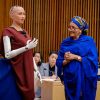
How Artificial Intelligence Could Widen Gap Between Rich & Poor Nations
New technologies like artificial intelligence (AI), machine learning, robotics, big data, and networks are expected to revolutionize production processes, but they could also have a major impact on developing economies.
Urgently Needed Deficit Financing No Excuse for More Fiscal Abuse
Fiscal and monetary measures needed to fight the economic downturn, largely due to COVID-19 policy responses, require more government accountability and discipline to minimise abuse. Such measures should ensure relief for the vulnerable, prevent recessions from becoming depressions, and restore progress.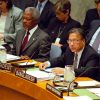
A UN Power Monopoly That Cries Out for a Break
Will four strong contenders for permanent seats in the UN Security Council (UNSC)-- Germany, India, Japan and Brazil—help break the monopoly now being held by the big five, namely the US, UK, France, China and Russia?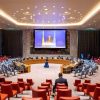
When Big Powers Clash, the UN’s Most Powerful Body Disappears
At the height of the Cold War back in the 1960s, a Peruvian diplomat, Dr. Victor Andres Belaunde, characterized the United Nations as a politically wobbly institution that survives only at the will-- and pleasure-- of the five big powers.
Misinformation on Social Media Fuels Vaccine Hesitancy: a Global Study Shows the Link
Vaccine hesitancy is a severe threat to global health, according to the World Health Organisation (WHO). The term refers to the delay in acceptance or the refusal of vaccines, despite the availability of vaccination services. It’s a serious risk to the people who aren’t getting vaccinated as well as the wider community.
Nigerian Focus Group Reveals Why Ending Gender-Based Violence is Necessary
Every year, the global 16 Days of Activism against Gender-Based Violence begins on November 25 and ends December 10. The theme of this year’s activism is "Orange the World: Fund, Respond, Prevent, Collect!"
Persons With Disabilities Among Worst Affected by Coronavirus
The 13th session of the Conference of States Parties (COSP) that was initially supposed to be held in New York back in June recently wrapped up with the final session coinciding with the International Day of People with Disabilities, whose theme, this year was on the issue of building back better inclusively.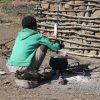
Fixing the Food System to Produce Healthy Diets
As the world accelerates towards achieving the targets of the Sustainable Development Goals by 2030, it is time to replace the current broken food system. With only a decade left to reach the deadline, evidence shows that the way food is produced, processed and transported is not only destructive to the environment but it is also leaving millions behind.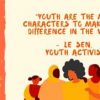
Lost in Translation? Understanding Relevance of Women, Peace & Security in Arms Control & Disarmament
“What does the Women, Peace and Security Agenda have to do with arms control and disarmament?”. Under varying formulations, this question keeps coming up whenever someone refers to the Women, Peace and Security (WPS) Agenda as a basis for ensuring that women’s voices and their specific security needs were taken into account in multilateral arms control discussions.
Keeping Climate Ambition Alive: Challenges Remain but Signs of Progress Abound
For those of us in the international climate action community, 2020 isn’t ending the way we expected when we rang in the new year. Even before 2020 dawned, countries were hard at work planning for their first updated Nationally Determined Contributions (NDCs), in line with the Paris Agreement’s five-year NDC revision cycle. NDCs are official statements, prepared by countries themselves, outlining the commitments they are making to reduce national emissions and adapt to climate change’s impacts. They are at the heart of putting the Paris Agreement into practice and pursuing action on a global scale.
How to Reap the Benefits of Food as Medicine
COVID-19 has magnified global food insecurity and is driving unhealthy eating and worsening malnutrition, food experts say. They have called for deliberate global investment in food as medicine on the back of growing diet-related illnesses.
How the Rich Get Richer
Wealth begets wealth. This simple concept of privilege has added to growing discontent with inequality that has escalated under the shadow of the COVID-19 pandemic.
COVID-19 an Opportunity to Build Resilience around Food Systems
The Barilla Centre for Food and Nutrition (BCFN) has appealed to the United Nations to educate citizens to use their roles as consumers to create a momentum for change. This was ahead of the 2021 Food Systems Summit which the United Nations Secretary-General, António Guterres, will host on November 25 next year.
Securing Freedom to Eat
For Zimbabwean organic farmer, Elizabeth Mpofu, access to healthy food is liberation.Millions of people across the world go to bed hungry. Scores do not have access to nutritious food owing to an inequitable global food system focused on industrial mass food production. The food from this system is less nutritious, more expensive and less friendly to the environment.

Will the New Fiscal Crises Improve International Tax Cooperation?
COVID-19 recessions have hit most countries, requiring massive fiscal responses. While most developing countries struggled with mounting debt even before the pandemic, many developed countries also face unprecedented macroeconomic pressures despite earlier spending cuts due to ‘fiscal consolidation’ policies.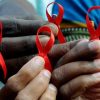
Battles Won – and Lost – Against AIDS Hold Valuable Lessons for Managing COVID-19
World AIDS Day this year finds us still deep amid another pandemic – COVID-19. The highly infectious novel coronavirus has swept across the world, devastating health systems and laying waste to economies as governments introduced drastic measures to contain the spread. Not since the HIV/AIDS pandemic of the 1990s have countries faced such a common health threat.« Previous Page — Next Page »





The Week with IPS

NEXT STOP - SDGs
Tracking global progress towards a sustainable world
Tracking global progress towards a sustainable world
