Languages
Tuesday, November 10, 2026



News and Views from the Global South
Global
Women as Forerunners of Change: When Financial Inclusion Meets Digital Transformation
Imagine a world where women fully participate in society, and enjoy equal access to resources and opportunities. Most probably, the 2030 Agenda would be nearing its fulfillment and we would be closer to achieving the better planet we wish to build.
Break the Menstrual Taboo
It is time to rise up and fight a long neglected taboo: menstruation. Marking International Women’s Day, United Nations human rights experts called on the international community to break taboos around menstruation, noting its impacts on women and girls’ human rights.
Smart Tech Will Only Work for Women When the Fundamentals for Its Uptake Are in Place
Science and technology offer exciting pathways for rural women to tackle the challenges they face daily. Innovative solutions for rural women can, for example, reduce their workload, raise food production and increase their participation in the paid labour market. But even the very best innovative, gender-appropriate technology makes no sense without access to other critical resources, especially secure land rights, which women in rural areas need to flourish.
Was Slavery the World’s First Human Rights Violation?
The United Nations, which diligently monitors human rights violations worldwide, believes that centuries-old slavery still exists worldwide.
The Future Women Want: Free of Violence
Bakera excelled in school. As a girl who grew up in a rural, poor community, she had, against all odds, realized her education goals and was elated to go to the capital city, Kampala where she would now work.
How Cultural & Creative Industries Can Power Human Development in 21st Century
Cultural and creative industries, which include arts and crafts, advertising, design, entertainment, architecture, books, media and software, have become a vital force in accelerating human development. They empower people to take ownership of their own development and stimulate the innovation that can drive inclusive sustainable growth.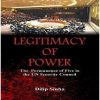
Veteran Diplomat Challenges Security Council’s Imbalance of Power, Offers Solutions for Reforms
A reexamination of the role of the United Nations and a tallying of its successes and failure get underway as it prepares for the 75th anniversary next year in the world of the 21st century while its core entity, the Security Council, is trapped in the time warp of 1945, its founding year.
INTERNATIONAL WOMEN’S DAY – Think Equal, Build Smart, Innovate for Change
 In an increasingly connected world, innovation and technology should provide unprecedented opportunity. But the truth is alarming, as trends indicate a growing divide.

International Women’s Day Needs to Return to its Radical Roots
The theme for International Women’s Day this year doesn’t resonate with us. #BalanceForBetter brings to mind slow gradual change, and assumes that if you provide women and girls with equal access then the society will automatically be better. We know that’s false.
Industrial Jobs in Danger When the Climate is to be Saved
The trade unions' solution for a greener world is new jobs with good working conditions. The critics argue that there's not enough time. ”We can either protect industrial jobs in the global north or save the climate”, says political scientist Tadzio Müller.
International Women’s Day: Don’t Let Anyone Tell You How Far You Can Go
The data – with its sexism and its gaps – shows us that many of the barriers girls experience are determined merely by their gender. This inequality, present in all societies, is by far the most widespread bias. At Educo we are determined, like the women and girls we work with, to put a stop to this injustice. And not just on International Women’s Day March 8, but every day.
Criminality, School Dropout and Gender Equality
I assume it was the Swedish author Stieg Larsson´s Millenium trilogy (2005-2007) that generated the popularity of Scandinavian Crime Fiction, as well numerous movies and TV-series that followed in its wake. A typical Nordic Noir novel takes place within a gloomy landscape of dreary towns, or a semi-deserted countryside, where under the thin surface of an apparently well-ordered society, murder, misogyny, rape, racism and international crime syndicates are thriving.
Three Ex-UN Leaders Form Women’s Group to Save Multilateralism
As multilateralism takes a beating from President Trump amid the “new world disorder,” as one European diplomat put it, three women who know the United Nations inside and out through previous top leadership jobs have originated a Group of Women Leaders for Change and Inclusion.
Doing Business with Nature
As the environment continues to degrade and natural resources deplete at unprecedented rates, spelling disastrous consequences for societies, a new tool aims to bring financial institutions into the fight to protect nature.
Leprosy Remains a Stubborn, Unseen Problem in the Philippines
The stubborn challenge of diagnosis and treatment of leprosy among difficult to reach populations in the Philippines should soon become easier with the rollout of a mobile app connecting field health workers with physicians and clinics.
A Global Imperative: Empowering Women is Critical for World’s Economy & People
March 8 marks International Women’s Day, which provides a chance to reflect on the struggle for greater gender equality. The roots of this annual event reach back more than a century, yet its focus on respect and opportunities for women remains strikingly relevant today—from sexual harassment and violence to unequal laws and unfairness in the workplace, where women are too often underemployed, underpaid, and underpromoted.
Education Key to Gender Equality in Asia & the Pacific
Equal rights have been demanded and promised for generations, but last year a shift occurred in the women’s movement. Across Asia and the Pacific and around the world, women demonstrated to condemn a status quo which continues to deprive too many women and girls of respect and equal opportunity.
The Misconceptions of Contraception
In light of rates of sexually transmitted infections (STIs) and unintended pregnancies, governments are exploring ways to tackle taboos around condoms. In a new study, the UN Population Fund (UNFPA) reviews the availability and accessibility of condoms, hoping to dismantle potentially harmful misconceptions.
Slavery is Not a Thing of the Past, It Still Exists Today Affecting Millions
While natural hazards like hurricanes, exacerbated by climate change, are causing people to migrate, it’s conflict, violence and persecution that have forced more than 68.5 million people from their homes today, exposing them to higher risks and increased vulnerability, especially women and children.
Mauritius Scores Win over Britain in Diego Garcia Decolonisation
Mauritius has scored a victory over Britain at the International Court of Justice (ICJ) in a case involving the decolonisation of the strategically important island of Diego Garcia that is home to a United States military base.
“A Year of Shame” for Middle East and North Africa
Human rights violations are at an all-time high in the Middle East and North Africa, and global indifference is only making it worse.« Previous Page — Next Page »





The Week with IPS

NEXT STOP - SDGs
Tracking global progress towards a sustainable world
Tracking global progress towards a sustainable world
