Languages
Wednesday, November 11, 2026



News and Views from the Global South
Global

Tourism Should Be Regulated, Before It Is Too Late…
This year, we will have 3 million tourists each day wandering the world. This massive phenomenon is without precedent in human history and is happening (as usual), with only one consideration in mind: money. We should pause and take a look at its social, cultural and environmental impact and take remedial measures, because they are becoming seriously negative if things are left as they are.
2017 Was a Year of Record-Breaking Climate Events
Parts of the United States are experiencing blizzard and record low temperatures, with sharks freezing in the Atlantic and cold-snapped iguanas falling from trees in Florida.
‘Red Alert’ 2018 – Global Unity, Media & Humanitarian Action
“Unity is the path. Our future depends on it,” said UN Secretary-General Antonio Guterres, as he issued an unequivocal global ‘Red Alert’ in his New Year message on December 31, 2017.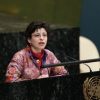
Religion: Between ‘Power’ and ‘Force’
In 1994, Dr. David R. Hawkins wrote a book positing the difference between power and force (Power vs. Force: The Hidden Determinants of Human Behavior - the latest revised version came out in 2014).
Trade Multilateralism Set Back yet Again
As feared, the Eleventh Ministerial Conference (MC11) of the World Trade Organization (WTO) in Buenos Aires, Argentina, on 10-13 December 2017, ended in failure. It failed to even produce the customary ministerial declaration reiterating the centrality of the global trading system and the importance of trade as a driver of development.
Billionaires, Fiscal Paradise, the World’s Debt, and the Victims
Among Bloomberg's many profitable activities is a convenient Bloomberg Billionaires Index that has just published its findings for 2017. It covers only the 500 richest people, and it proudly announces that they have increased their wealth by 1 trillion dollars in just one year. Their fortunes went up by 23% to top comfortable 5 trillion dollars (to put this in perspective, the US budget is now at 3.7 trillion). That obviously means an equivalent reduction for the rest of the population, which lost those trillion dollars. What is not widely known is that the amount of the circulation of money stays the same; no new money is printed to accommodate the 500 richest billionaires!
Critical Issues to Watch in 2018
Another new year has dawned, and on a world facing serious disruption on many fronts. What are the trends and issues to watch out for in 2018?
The Political Responsibility in the Collapse of Our Planet
On 20 December, Europe’s 28 Ministers of Environment met in Brussels, to discuss the plan for reducing emissions prepared by the Commission, to comply with the Paris Agreement on climate change. Well, it is now clear that we have lost the battle in keeping the planet as we have known it. Now, of course, this can be considered a personal opinion of mine, devoid of objectivity.
“Only Our Youth Can Save the Planet” – Kumi Naidoo
"Today’s youth should think of new solutions for old problems like climate change and social injustice." That's the strong message of the South African activist Kumi Naidoo. The former executive director of Greenpeace says young people need to be more innovative and visionary, "because the solutions of my generation have failed."
Key Facts You Should Know About Global Migration Trends
The UN International Organization for Migration --IOM’s Global Migration Trends Factsheet presents a snapshot of the major migration trends worldwide for the year 2015 based on statistics from a variety of sources.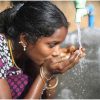
Water, Water Everywhere, Costs More Than You Might Think
Without reliable access to water, human beings cannot survive. Yet 3 out of 10 people do not have a safely managed water supply, and 6 out of 10 lack safely managed sanitation. Over 2 billion people drank water that was fecally contaminated in 2015, and the World Bank estimates that the annual cost of poor sanitation is in excess of $260 billion annually.
Our Right of Passage Should be Safe Migration, Not Leaky Boats
“I’m a migrant, but didn't have to risk my life on a leaky boat or pay traffickers. Safe migration cannot be limited to the global elite.” Thus spoke United Nations Secretary General Antonio Guterres in September 2017.
No Health Protection for Migrant-Women Healthcare Givers
While the media may be attracted by images of migrants drowning or sold as slaves, another flagrant but lesser-known drama is that of care workers, who are overwhelmingly women, often migrants, and who make a very large contribution to global public health, but are exposed to great health risks themselves with little or no protection, let alone basic labour rights.
Civil Society Meeting Calls for Solidarity, Radical Change to Deal with Global Crises
Our strategies have failed us. We can no longer respond to the crises facing us in the same way. We have to be more radical, more creative — together — to build the future we want. This was one of the resounding messages to emerge from a key global gathering of more than 700 leading thinkers, influencers and doers from more than 100 countries in Suva, Fiji in early December.
“We Need to Be Strong” – Award Spotlights Courageous Journalists
As press freedom becomes increasingly limited, journalists are frequently finding themselves in more dangerous predicaments than ever before.
Civil Society Activists Speak Out– Despite Threats
They are young, smart and willing to take the rough road. Victor, Jubilanté and Khaled are independent fighters who speak out with a force that could possibly change the appearances of their countries, and beyond.
Money Talks at One Planet Summit in Paris
As funding to combat climate change has lagged behind lofty words, the One Planet Summit in France this week invited governments and business leaders to put money on the table.
Shedding Diplomacy, Roberto Savio Speaks about Fear as a Tool to Gain Power
At the outset my thanks to Dr Hanif Hassan Ali Al Kassim, and Ambassador Idriss Jazairy who lead the Centre for Human Rights Advancement and Global Dialogue for organizing this panel discussion at a critical moment in history. The Centre, is one of the few actors for peace and cooperation between the Arab world and Europe. As a representative of global civil society, I think it will be more meaningful if I speak without the constraints of diplomacy, and I make frank and unfettered reflections.
In Defense of Uganda’s Imprisoned Journalists
The Committee to Protect Journalists (CPJ) has included eight staffers of the controversial Ugandan tabloid Red Pepper in its 2017 global census of imprisoned journalists. Some may disagree with that decision.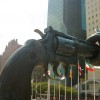
Arming Poor Countries Enriches Rich Countries
Although the Cold War came to an end over a quarter century ago, international arms sales only declined temporarily at the end of the last century. Instead, the United States under President Trump is extending its arms superiority over the rest of the world.
Bangladesh Aims at Middle-Income Status by 2021
The environmental challenges facing Bangladesh, described by the United Nations as one of the world’s “least developed countries” (LDCs), are monumental, including recurrent cyclones, perennial floods, widespread riverbank erosion and a potential sea level rise predicted to put about 27 million people at risk over the next two decades.« Previous Page — Next Page »





The Week with IPS

NEXT STOP - SDGs
Tracking global progress towards a sustainable world
Tracking global progress towards a sustainable world
