Languages
Friday, October 23, 2026



News and Views from the Global South
Global

Women Lead Record Number of Central Banks, but More Progress is Needed
Women are leading more central banks than ever before, thanks to appointments in the past year, but recent gains still leave the share of female governors far short of parity.
60 Years After Lyndon Johnson’s “Daisy Ad,” the Silence on Nuclear War Is Dangerous
One evening in early September 1964, a frightening commercial jolted 50 million Americans who were partway through watching “Monday Night at the Movies” on NBC. The ad began with an adorable three-year-old girl counting petals as she pulled them from a daisy. Then came a man’s somber voiceover, counting down from ten to zero. Then an ominous roar and a mushroom cloud from a nuclear bomb explosion.
The Time to End Nuclear Tests is Now
Today, the General Assembly convenes – for the fifteenth consecutive occasion – to observe the International Day Against Nuclear Tests, which is commemorated annually on 29 August.
Preventing a Measles Outbreak—the Shared Responsibility of Vaccination
Measles infections are surging right now, with epidemiologists reporting that the number of large or disruptive outbreaks has tripled over the past three years. It is one of the most infectious diseases that we know. The virus spreads through respiratory droplets; when an infected person coughs or sneezes, it can linger in the air for up to two hours and infect 10 others who are not immune.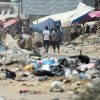
UN Expert Says Impunity for Israel Must End as ‘Genocidal Violence’ Spreads to West Bank
An independent United Nations expert has warned that "Israel's genocidal violence risks leaking out of Gaza and into the occupied Palestinian territory as a whole" as Western governments, corporations, and other institutions keep up their support for the Israeli military, which stands accused of grave war crimes in the Gaza Strip and West Bank.
Tackling Climate Change Will Be a Pyrrhic Victory If We Lose Sight of the Poor
Last July, we were confronted with alarming statistics: 733 million people experienced hunger in 2023, equivalent to one in eleven people globally. In Africa it was even higher, with one in five people going hungry. Climate change is a significant driver of this crisis.
World Leaders Who Opted to Skip the United Nations
When the high-level segment of the UN General Assembly took place last September, there were several key world leaders missing in action (MIAs)—including, most importantly, leaders of the four of the five permanent members of the Security Council, the most powerful political body at the United Nations.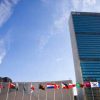
US Support of UN Organizations Must Remain Unabated
During Donald Trump's presidency, the United States withdrew from several international organizations. These include the United Nations Relief and Works Agency for Palestine Refugees (UNRWA), the World Health Organization (WHO), the United Nations Educational, Scientific and Cultural Organization (UNESCO), and the United Nations Human Rights Council (UNHRC).
Enough is Enough: End Nuclear Testing Once and For All
In 2009 the United Nations General Assembly proclaimed 29 August the International Day Against Nuclear Tests. This date recalled the official closing of the Semipalatinsk nuclear weapons testing site in today’s Kazakhstan on 29 August 1991; that one site alone having seen 456 nuclear test explosions between 1949 and 1989.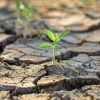
Signs of Progress on Peace-Positive Climate Adaptation
The consequences of climate change are disproportionately impacting fragile and conflict-affected settings (FCS). Climate shocks can exacerbate security risks in FCS, conflict and instability compromise a region’s ability to adapt to climate change, leaving its population ever more vulnerable to future climate shocks.
Is the UN Ready for a Second Trump Presidency?
The Communist Manifesto of a bygone era, authored by Karl Marx and Friedrich Engels, begins with an implicit warning: "A specter is haunting Europe—the specter of Communism." And today another specter is haunting-- this time at the United Nations — the specter of a second Trump presidency.
Global Poverty Grows as Super-Rich Get Richer Faster
Oxfam expects the world’s first trillionaire within a decade and poverty to end in 229 years! The wealth of the world’s five richest men has more than doubled from 2020, as 4.8 billion people became poorer.
Nicaragua, China, India among 55 Nations Restricting Freedom of Movement
At least 55 governments in the past decade have restricted the freedom of movement for people they deem as threats, including journalists, according to a Freedom House report published last Thursday.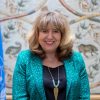
Biodiversity: Roll Up the Sleeves and Do Something, says Astrid Schomaker, New UNCBD Head
“We are living in a time where nature is regularly raising its hand and saying, 'Look, I'm here and I'm in trouble,' and then bringing us all sorts of natural disasters to the table," says Astrid Schomaker, Executive Secretary of the United Nations Convention on Biological Diversity (UNCBD), in an exclusive interview with IPS.
Explainer: COP16—What’s It About and What Does It Need to Achieve?
‘Peace with Nature’ is the theme for the 16th meeting of the Conference of the Parties (COP16) to the Convention on Biological Diversity (CBD), which will take place in Cali, Colombia, between October 21 and November 1, 2024.
Climate Activists Target Culture Greenwashing
Civil society is working on all fronts to tackle the climate crisis. Activists are protesting in numbers to pressure governments and corporations to cut greenhouse gas emissions. They’re using non-violent direct action and high-profile stunts, paying a heavy price as numerous states criminalise climate protest.
Tackling the World’s Planetary Emergency
The world is facing a triple planetary crisis of climate change, pollution, and biodiversity loss. Climate change continues to pose an existential threat to humanity, with recent science estimating that we have possibly less than six years left to change course and rapidly reduce greenhouse gas emissions to have a chance of avoiding the worst of the climate crisis.
In Samoa, Protecting the Ocean is Our Way of Life
In Samoa, we use a simple phrase to capture our way of life: Fa’asamoa. At the core of this concept is respect for others, devotion to family and a deep appreciation for the preservation of our natural resources. Importantly, Fa'asamoa has enabled us to sustainably fish our vibrant coral reefs for millennia, in a way that provides good health and prosperity for everyone in our communities.
UK: ‘Many in the Climate Justice Movement Are Finding Creative and Imaginative Ways to Protest’
CIVICUS speaks with Chris Garrard, co-founder and co-director of Culture Unstained, about the campaign to end fossil fuel sponsorship of cultural institutions, which oil companies use to try to present a positive public image.

Bridging the Gap: How Self-Awareness Can Unleash Youth Potential
Imagine a world where every young person has the tools they need to succeed, regardless of their age, area of residence, ethnicity, college name, or the title on their resume. It’s a world where dreams are limitless, and potential knows no bounds.
Kazakhstan Takes Lead in Global Push for Nuclear Disarmament Amid Heightened Tensions
In a world increasingly shadowed by the threat of nuclear conflict, Kazakhstan is stepping up its efforts in the global disarmament movement. On August 27-28, 2024, in collaboration with the United Nations Office for Disarmament Affairs (UNODA), Kazakhstan will host a critical workshop in Astana. This gathering, the first of its kind in five years, is set to reinvigorate the five existing Nuclear-Weapon-Free Zones (NWFZs) and enhance cooperation and consultation among them.« Previous Page — Next Page »





The Week with IPS

NEXT STOP - SDGs
Tracking global progress towards a sustainable world
Tracking global progress towards a sustainable world
