Languages
Saturday, November 28, 2026



News and Views from the Global South
Latin America & the Caribbean
MERCOSUR: Asymmetry Sets the Agenda
While they wait for the right time to resume negotiations with the European Union, the member countries of Mercosur are focusing on mechanisms to counterbalance the comparative disadvantages experienced by its smaller economies with respect to its two largest ones.ARGENTINA: Poverty Bites Deeper in the Northeast
"It just crushes you: children here, aged eight or nine, are sniffing glue to dull their hunger," says a rural medical doctor in Corrientes, 1,000 kilometres north of the capital and the province with the highest childhood poverty indicators in Argentina.MEXICO: Uprising Rekindled in Oaxaca?
Hundreds of delegates of social movements in the southern Mexican state of Oaxaca have once again occupied the central square of the state capital for the past week, threatening to take more radical actions if their demands are not addressed.BRAZIL: Journalist Wages Solitary Battle in Amazon
Death threats, physical assaults and 32 lawsuits - this is what freelance journalist Lucio Flavio Pinto has faced as a result of the one-man battle he is waging in this northern Brazilian city, the main gateway to the Amazon jungle.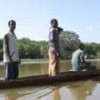
COLOMBIA: Civil Resistance Aimed at Recuperating Biodiverse Lands
Indigenous and black communities of Colombia's north-western department of Chocó are trying to recover their lands and food sources, lost to the decades-long civil war that has taken its toll on this area of vast biological diversity.
Q&A: Nicaragua Is Not Likely to Meet the MDGs
Managua Mayor Dionisio Marenco does not believe that Nicaragua can meet the Millennium Development Goals (MDGs), which he describes as a wish list rather than an action plan, and underlines that his country is in need of enormous foreign investment in order to overcome its high levels of poverty.ARGENTINA: Incentive for Eliminating Slave Labour
A public institute in Argentina is offering "certificates of quality" to firms that do not use slave labour in the textile industry, where 80 percent of workers operate in the informal sector of the economy.VENEZUELA: Afro-descendants Seek Visibility in Numbers
As their counterparts in other countries of Latin America have begun to do, Afro-Venezuelans want to stop being statistically invisible, and are seeking more precise figures to help them in their struggle against racism and marginalisation.BRAZIL: Floating House Made of Garbage – Art or Eyesore?
In a fetid canal filled with garbage from this Brazilian city, a bricklayer built a floating house and turned it into a symbol of recycling, leaving the authorities by turns applauding or frowning.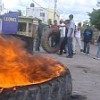
HAITI-DOMINICAN REPUBLIC: Neighbours, But Not Friends
On a recent trip from Pedernales, the most southern province on the border with Haiti, Dominican officials boarded the bus 12 separate times.ENVIRONMENT-CHILE: Public-Private Partnership Defends Biodiversity
The rich biodiversity of the Altos de Cantillana mountain chain two hours from the Chilean capital has received attention in the past two years through a unique and ambitious conservation model based on a public-private partnership.COSTA RICA: Sanctuary for Colombian Refugees
People fleeing Colombia receive protection and assistance in Costa Rica. But integration is difficult, and the refugees continue to face threats from paid killers sent from the war-torn country they fled.ENVIRONMENT-CHILE: Town of Alhue Goes Green
Time seems to have stopped in Alhué. The dirt roads, colonial history and low-key activity in this sleepy Chilean farming town of 4,500 make it hard to remember that downtown Santiago is just two hours away.ARGENTINA: Psychiatric Patients’ Radio Station Up in the Air
La Colifata was the first radio station in the world to broadcast live from a psychiatric hospital, and has played a key role in the reinsertion of patients in the community. But now the Argentine station, which has inspired the creation of around 40 similar stations in Latin America and Europe, has run out of financing.COLOMBIA-ECUADOR: Studies Find DNA Damage from Anti-Coca Herbicide
U.S.-funded aerial spraying of coca plantations in Colombia near the Ecuador border has severely damaged the DNA of local residents, a new study has found.DISARMAMENT-ARGENTINA: Gun Swap Takes Aim at Violence
With strong support from peace and disarmament groups and the families of shooting victims, the Argentine government launched a programme Friday that encourages people to voluntarily swap their legal or illegal firearms for cash.BOLIVIA: Disenfranchised 2.5 Million Soon to Have the Vote
Bolivia's lower house of Congress is working hard to approve a draft law that would grant citizens living abroad the right to vote in time for next year's referendum on the new constitution being drafted by a constituent assembly.RIGHTS-CHILE: General in Hiding a ‘Coward’, Say Activists
Human rights groups in Chile described General Raúl Iturriaga Neumann as "cowardly" for fleeing the justice system, which sentenced him to five years in prison for the 1974 forced disappearance of a leftwing activist.AGRICULTURE-BRAZIL: David, Goliath and Land Reform
The largest movement fighting for the distribution of unproductive rural property to landless peasant farmers in Brazil complains that the "euphoria" over the production of biofuels from sugar cane and other crops is aggravating the concentration of land ownership and driving up land prices.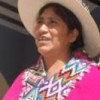
BOLIVIA: Not Another 500 Years of Marginalisation, Say Indigenous Leaders
"We prefer to defend our rights with bloodshed and die rather than wait another 500 years," says Esperanza Huanca, a Quechua Indian who is one of the 84 women in the constituent assembly that is rewriting Bolivia's constitution.LABOUR-ARGENTINA: Informal Economy Just Won’t Shrink
The Argentine economy has been growing steadily for over four years, and unemployment has fallen 14 percent in that period. However, experts say that nearly half of all jobs are precarious and/or of poor quality.« Previous Page — Next Page »


The Week with IPS

NEXT STOP - SDGs
Tracking global progress towards a sustainable world

