Languages
Saturday, November 28, 2026



News and Views from the Global South
Latin America & the Caribbean
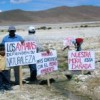
CHILE: Aymaras Don’t Want to Disappear
Twenty years ago, close to 100 indigenous Aymara people lived in the village of Cancosa, but today only 10 remain. The same is true of many indigenous communities in the Chilean Altiplano, as their members have moved out in search of jobs and educational opportunities.LABOUR-PERU: National Strike Called in Solidarity with Casapalca Miners
Peru's National Federation of Miners, Metalworkers and Steelworkers has called a nation-wide strike for Tuesday and Wednesday, in solidarity with more than 1,500 workers at the Casapalca mine who walked out in May. The conflict has resulted in five deaths so far.BRAZIL: Steel and Eucalyptus Heat Up Eastern Amazon
Brazil's Environment Ministry entered a minefield when it proposed a sustainable forest district to contain deforestation in the steel-making centre of Carajás, one of the most devastated and violent areas in the Amazon.RIGHTS-ARGENTINA: Priest Faces Judgement Day
The Argentine justice system is prosecuting Christian von Wernich, a Catholic priest, for "aberrant, atrocious and massive" crimes. He exemplifies the collaboration of part of the Catholic Church with state terrorism during the military dictatorship that was in power from 1976 to 1983.
Q&A: Science Ignores AIDS in Women, Says Nobel Nominee
Science has yet to provide rigorous studies of how HIV/AIDS or the impacts of antiretroviral medications affect women's bodies in particular, Argentine activist Patricia Pérez, nominated for the 2007 Nobel Peace Prize, told Tierramérica.MERCOSUR-VENEZUELA: Integration by Ultimatum
Venezuela has lost patience with delays in Paraguay and Brazil's congressional ratifications of its entry into the Southern Common Market (Mercosur), while it is being urged to speed up its adoption of the common external tariff and other bloc regulations.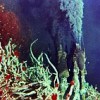
SCIENCE: 350 Degrees Is Bathwater to These Animals
Marine scientists returned to the Galapagos Islands this week to celebrate a discovery that Charles Darwin never dreamt of: bizarre animals that live in total darkness around active deep-sea volcanoes.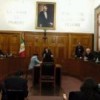
MEXICO: Supreme Court Earns New Respect
In July 2006, the opposition in Mexico accused the Supreme Court of Justice, in theory the chief upholder of the constitution, of committing one of the worst possible felonies: colluding with corruption and acting as an accomplice to electoral fraud.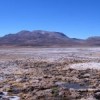
CHILE: Aymaras Vow Mining Co. Will Restore Wetland
The Aymara community of Cancosa on the Chilean Altiplano region of Tarapacá, bordering Bolivia, will spare no effort in its struggle to rehabilitate a wetland dried out by the Cerro Colorado Mining Company (CMCC), an affiliate of the Anglo-Australian BHP Billiton company.HEALTH-EL SALVADOR: Free AIDS Testing, But Then What?
While health authorities in El Salvador have launched a campaign under the slogan "Take the test: positive or negative, we are all human beings in the face of AIDS", people living with HIV complain of a lack of medicines and of discrimination, even at the hands of public health doctors.LABOUR-COLOMBIA: Foreign Firms Urged to Help Prevent Rights Abuses
Amnesty International is calling on foreign companies operating in Colombia to use their influence on the government "to end and prevent human rights abuses against trade unionists."
BRAZIL: New Lives for Victims of Slave Labour
José Alves has held on, for memory’s sake, to what is left of the old bicycle that took him hundreds of kilometres throughout Brazil’s eastern Amazon jungle region as he "hunted for work to improve my life." His need for a job led him to fall victim to slave labour - not once, but several times.EL SALVADOR: Progress in Fight on Poverty Called into Question
Although the government of El Salvador triumphantly holds out statistics reflecting a reduction of chronic poverty in this Central American country, local and international experts have joined their voices with those of common citizens to cast into doubt the validity of the official figures.DEVELOPMENT: Latin America Ahead on MDGs – Except for Poverty
Latin America is leading the developing world in terms of statistical progress towards most of the Millennium Development Goals (MDGs). However, it is failing on the main goal: halving the proportion of people living in poverty.
RIGHTS-BRAZIL: Freeing Modern-Day Slaves
A young man with burns to his hands and feet which have become evil-smelling open wounds arrives, assisted by a co-worker. He suffered an electric shock on the hacienda (estate) where he works, when a metal rod he was carrying made contact with a high-tension cable.NICARAGUA: Plant Trees, Harvest Water
More than six years ago, the residents of the rural community of Lomas del Viento, on Nicaragua's Pacific coast, took up the task of recuperating the 10 flowing springs that were drying up as a result of logging in the surrounding forests. And they succeeded.
COLOMBIA: Possible ELN Ceasefire, 11 FARC Hostages Killed
While there appears to be progress in ongoing talks here towards a ceasefire between the Colombian government and the insurgent National Liberation Army (ELN), it was confirmed Thursday that 11 lawmakers taken hostage in 2002 by Colombia's largest guerrilla group, the Revolutionary Armed Forces of Colombia (FARC), had recently been killed.
GRENADA: Bishop’s Killers in Emotional Resentencing
The ghost of Maurice Bishop continues to haunt Grenada 24 years after he was placed against a wall and executed along with members of his cabinet.
SOUTH AMERICA: AIDS Meds for All, But at Higher Prices
In under a decade, programmes providing universal free access to antiretroviral medicines have greatly decreased AIDS mortality in countries like Argentina and Brazil, but this progress is now threatened by the rising prices of new formulas patented by the big pharmaceutical companies.MEDIA-CARIBBEAN: A Chill in the Air
At a Caribbean media conference to mark World Press Freedom Day last month, Patrick Cozier, the general secretary of the Barbados-based Caribbean Broadcasting Union, issued a grim warning.
DRUGS-BOLIVIA: More Cocaine, More Political Tension?
An eight percent rise in Bolivian coca cultivation documented by the United Nations, equaling an annual supply of 94 tonnes of cocaine, could cause tensions with Brazil and European Union (EU) countries where the illegal product is marketed, political observers say.« Previous Page — Next Page »


The Week with IPS

NEXT STOP - SDGs
Tracking global progress towards a sustainable world

