Languages
Thursday, October 15, 2026



News and Views from the Global South
Latin America & the Caribbean

Solar Energy Brings Water to Iconic Salvadoran Village of El Mozote
The worst massacre of civilians in Latin America occurred in the Salvadoran village of El Mozote, where environmental projects are beginning to emerge, slowly fostering awareness about protecting the natural resources of this deeply symbolic site, embedded in the country's historical memory.
Abundance of Renewable Energy Attracts Major Data Centers to Brazil
Brazil hopes to soon reap benefits of its largely renewable energy matrix. Data centers, whose demand is growing with the strides made by artificial intelligence, are the new frontier for these still-uncertain investments.[pullquote]3[/pullquote]
Funding Shortfalls Threaten Haiti’s Future
The humanitarian situation in Haiti has deteriorated significantly in the recent weeks as rates of violence, hunger, and displacement soar amid a severe lack of funding. As armed gangs continue to seize more territory in the capital, Port-Au-Prince, as well as in areas in the Artibonite and Centre Department, humanitarian organizations have found themselves unable to keep up with the growing scale of needs.
Can Money Change the World?
While headlines often focus on crises, inequality, or instability, they rarely highlight one of the most powerful tools for transformation: development finance. Can money change the world? Yes—if mobilized with strategic vision, sustainability, and equity.
Energy Storage Has Yet to Take Off in Mexico
Researcher Edilso Reguera and his team began studying electric battery manufacturing in 2016, but in 2023, they ramped up efforts to develop a lithium-based prototype for motorcycles.
Using AI as an Ally: What the latest UNDP Human Development Report Means for Latin America, Caribbean
The United Nations Development Programme’s 2025 Human Development Report (HDR) says crises such as the Covid-19 pandemic have contributed to ‘the flatlining of decades of progress in the Human Development Index,’ with Latin America and the Caribbean facing unique challenges and opportunities.
Former Energy Ministers from Saint Lucia and Uruguay Named REN21 Renewable Energy Champions
The Renewable Energy Policy Network for the 21st Century (REN21), a global network that advances renewable energy through collaboration and knowledge sharing, has named Dr James Fletcher of Saint Lucia and Dr Ramón Méndez Galain of Uruguay as its first Renewable Energy Champions.
Armed Gangs Expand Their Control in the Centre Department of Haiti
Following a series of brutal altercations in the communes of Mirebalais and Saut d’Eau in Haiti back in late March, local gangs have taken over both communes, spurring heightened displacement and insecurity. This is indicative of the continuing deterioration of the humanitarian situation in Haiti as these armed gangs expand their control beyond Port-au-Prince.
Lawyer-Turned-Activist Bhuwan Ribhu Honored for Leading a Campaign to End Child Marriage
Bhuwan Ribhu didn’t plan to become a child rights activist. But when he saw how many children in India were being trafficked, abused, and forced into marriage, he knew he couldn’t stay silent.
To Save Our Planet, We Must Protect Its Defenders
The most powerful court in Latin America and the Caribbean, the Inter-American Court of Human Rights, is preparing to clarify the obligations of States in relation to climate change. In its upcoming Advisory Opinion, the Court must articulate ambitious standards for respecting and protecting the human rights of environmental defenders in the context of the climate crisis.
Mexico Bans GM Corn Cultivation in Constitutional Reform: Action Follows Trade Ruling That Ignored Evidence of Genetic Contamination
On March 17, Mexican President Claudia Scheinbaum signed into law a constitutional reform banning the cultivation of genetically modified (GM) corn. The action followed a December ruling by a trade tribunal, under the U.S.-Mexico-Canada (USMCA) trade agreement, in favor of a U.S. complaint that Mexico's 2023 presidential decree, with broader restrictions on the consumption of GM corn, constituted an unfair trade practice by prohibiting the use of GM corn in tortillas.
The Disappeared: Mexico’s Industrial-Scale Human Rights Crisis
They found shoes, hundreds of them, scattered across the dirt floor of an extermination camp in Jalisco state. These abandoned shoes, once belonging to someone’s child, parent or spouse, stand as silent witnesses to Mexico’s deepest national trauma. Alongside charred human remains and makeshift crematoria meant to erase all evidence of humanity, they tell the story of a crisis that has reached industrial-scale proportions.
Venezuela’s Oil trapped in Hurricane Trump’s Onslaught
Reduced to a marginal oil producer over the past decade, Venezuela has suffered another blow as United States president Donald Trump ordered punitive measures to blockade and further restrict the country’s oil exports.
‘Noboa Did Not Receive a Blank Cheque: He Will Have to Show Tangible Results’
CIVICUS discusses Ecuador’s presidential election with Jorge Tapia de los Reyes, Coordinator of the Democracy and Politics Department and the Political Funding Observatory of the Citizenship and Development Foundation (FCD). FCD is an Ecuadorian civil society organisation that promotes participation, citizen monitoring and open government.
UN Warns of an Imminent Collapse in Haiti
As gang violence in Haiti continues to target civilians and critical infrastructures, humanitarian organizations and the Haitian National Police (HNP) have found it increasingly difficult to manage the growing scale of needs. The United Nations (UN) and its partners fear that Haiti will approach a nationwide collapse due to numerous shortfalls in funding, a widespread lack of essential resources, and rampant insecurity.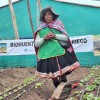
Andean Women Farmers in Peru Face Climate Crisis with Green Practices
"Up here in the highlands, there’s a lot of frost, and everything seems bleak. But I’m so happy since I got my greenhouse and started growing vegetables in a healthy way. I feel like we’re overcoming the challenges of the weather," Anacleta Mamani, a Quechua farmer from the community of Poques (about an hour’s drive from Cusco, the former imperial capital of Peru), told IPS.
Lessons from the Global South on Transforming AgriFood Systems
The state of food and nutrition security in the Global South masks the great strides and investments made to increase agricultural yields to feed a rapidly growing population. As discussions deepen at the ongoing CGIAR Science Week, plenary discussions on Wednesday (April 9) explored transformative strategies and innovations driving agricultural resilience across Africa, the Caribbean, and Latin America.
The Current Plight of Haitians: Interview with a Mason in the Dominican Republic
On March 18, the first plane with deportees from the US landed in Cap-Haïtien. Of the 46 passengers, 25 were convicted felons. Taking effect on April 24 the US Department of Homeland Security will revoke the temporary legal status of more than 210,000 Haitians. They had by the Biden administration been granted a safe haven, but all these Haitians are now expected to be deported back to a country immersed in a humanitarian crisis.
A Long and Winding Path to Revitalize Passenger Trains in Mexico
Retired blacksmith and mechanic José Hernández nostalgically recalls the passenger trains that once passed through his hometown of Huamantla in the state of Tlaxcala, southeastern Mexico.
In Central America’s Dry Corridor, Farmers Find Ways to Harvest Water and Food – VIDEO
 In Central America’s Dry Corridor, climatic conditions hinder water and food production because rainfall in this ecoregion—from May to December—is less predictable than in the rest of the isthmus.
Latin America & the Caribbean in 2024: Renewable Energy and Early Warning Systems Offer Hope Amid Climate Extremes
Hope in the face of climate extremes. That is the overarching message about the State of the Climate in Latin America and the Caribbean in 2024.« Previous Page — Next Page »





The Week with IPS

NEXT STOP - SDGs
Tracking global progress towards a sustainable world
Tracking global progress towards a sustainable world

