Languages
Wednesday, November 11, 2026



News and Views from the Global South
IPS UN Bureau

Breaking Down Barriers to Women’s Land Rights Starts in Our Homes
At the opening of the 68th session of the Commission on the Status of Women (CSW) on March 11, UN Secretary-General António Guterres said, “Your gathering this year is focused on how tackling poverty and strengthening institutions and financing with a gender perspective are critical to accelerate gender equality. The reason is simple: globally, poverty has a female face. Women have less access to land, natural resources and financial assets. They suffer the impacts of climate change more than men. And they are more likely to be food insecure. Many women and girls are also facing a war on their fundamental rights at home and in their communities.”
Reimagining Cooperation in a Polarized World in the Context of Zimbabwe?
This year’s UNDP Global Human Development Report (HDR) marks a dramatic shift away from the cautious optimism espoused in the HDR just four years ago: despite reaching a new high, the Global Human Development Index now evolves meaningfully below the 2019 trend – threatening to make global development losses permanent.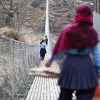
New Report Examines Progress on Global Sustainable Development Goals
At the half-way point of the 2030 Agenda, the Sustainable Development Goals (SDGs) “are in deep trouble.” The need to accelerate progress towards the Sustainable Development Goals has never been more urgent as only approximately 12% of targets are currently on track. “Planet” is equally at risk as “people”.
Fueling Future: Dabaa Nuclear Project Offers Light in Egypt’s Economic Gloom
Egypt’s economy continues to face significant challenges, but amidst these, the Dabaa Nuclear Power Plant project emerges as a beacon of hope.
Women’s Land Rights in Farming Need Further Recognition
In the developing world, land rights for women remain tenuous in the agricultural sector. But if women farmers are recognized as landowners in their own right, it can lead to greater economic empowerment and be a positive step towards eradicating poverty. This formed part of the wider discussions that are being hosted during the 68th session of the Commission for the Status of Women (CSW68) in New York. The leading theme of CSW68 and its side events is the effort to accelerate gender equality by addressing poverty and strengthening institutions.
In Pakistan, Death Can Be Just a WhatsApp Share Away
Justice Zafar Yab Chadhar's March 6 order sentencing 22-year-old Junaid Munir to ‘be hanged by his neck till he is dead’ on charges of sharing blasphemous material over WhatsApp was devastating for his family. “The earth moved from underneath my feet,” is how 57-year-old Chaudhry Munir Hussain, Munir’s father, described his feelings as he heard the judge read out the judgment that day in a court in Gujranwala, a city in Punjab province.
Indigenous Women Fight for Their Future, Their Land, Rights & Self-Determination
Throughout history, Indigenous Women have made remarkable contributions to forwarding the aspirations of their communities for self-determination. Amid the compounded burdens they face as Indigenous Peoples, as women and an oppressed class, let us recognize and celebrate the bravery of Indigenous Women as they strive and inspire with their courage, heritage, leadership and knowledge.
Industrial Policy, East or West, for Development or War?
Developing countries wanting to pursue industrial policy were severely reprimanded by advocates of the ‘neoliberal’ Washington Consensus. Now, it is being deployed as a weapon in the new Cold War.
Democracy’s Contested Territory
This year more than half the world’s population has the chance to go to the polls. That might make it look like the most democratic year ever, but the reality is more troubling. Too many of those elections won’t give people a real say and won’t offer any opportunity for change.
Education Cannot Wait Interviews Professor Mohammed Belhocine, Commissioner for Education, Science, Technology and Innovation within the African Union
Professor Mohammed Belhocine is an Algerian national. Former Head of the Department of Internal Medicine, he held various positions in Algeria, at the Faculty of Medicine and the Ministry of Health, before joining the international civil service in 1997. Former Director of the Division of Non-Communicable Diseases at the WHO Regional Office for Africa (in Harare, then in Brazzaville), he was also WHO Representative in Nigeria and Tanzania. He ended his career as UN System Coordinator and UNDP Resident Representative in Tunisia from 2009 to 2013. From June 2015 to February 2016, at the request of the WHO Regional Director, he returned to duty as WHO Representative in Guinea, playing an active role in providing technical support and expertise to the country's response to the Ebola epidemic. In October 2021, supported by his country, he was elected to the position of Commissioner for Education, Science, Technology and Innovation within the African Union. Professor Belhocine is the father of three children and has six grandchildren.

How A Program in Ghana to Create Green Jobs Can Be a Lesson for US Mayors & Across the Globe
For the past eight years, Chiso has collected waste as part of Accra’s informal waste management sector. Since arriving in Ghana from Nigeria, he has earned enough to allow him and his family to survive, but saving money has been nearly impossible.
Exploring New Depths: NF-POGO Centre of Excellence Driving Innovative, Diverse Ocean Observation
Picture yourself as an early-career ocean researcher. You have the opportunity to be at sea in addition to learning on campus. Through cutting-edge technology and immersive facilities, you experience the most realistic ocean exploration scenarios, including braving extreme cold and harsh environments. That’s the experience at the Launch, a 'living lab' at the Marine Institute of Memorial University in Newfoundland and Labrador, located on the east coast of Canada. It’s an experience meant to prepare you for the real-world complexities of the type of ocean research needed to tackle urgent global issues like climate change.
How Women in Ahmedabad Slums Are Beating Back Climate’s Deadly Heat
Seema Mali is desperate. She has no defences against this changing climate’s brutal heat. Mali makes fresh flower garland the whole year, but her summer income has been plummeting by 30 percent over the last 8–10 years due to the extreme heat.
Gender Rights: Resistance Against Regression
Global progress on gender rights has slowed almost to a halt. After decades of steady progress, demands for the rights of women and LGBTQI+ people now play out on bitterly contested territory. Over the course of several decades, global movements for rights won profound changes in consciences, customs and institutions. They elevated over half of humanity, excluded for centuries, to the status of holders of rights.
Countering Growing Authoritarianism Requires a Robust Civil Society, Media & Academia
Putin’s regime has made it abundantly clear that it will violently repress and punish political opposition. Even as protestors chanted "Russia will be free!" at Nalvalny's funeral, dozens were arrested simply for honoring his memory.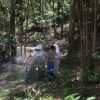
Beekeeping Offers Opportunity to Zimbabwean Farming Communities
Honeybees quickly react with a sharp and loud buzz sound as beekeeper Tanyaradzwa Kanangira opens one of the wooden horizontal Kenyan top bar hives near a stream in a thick forest in Chimanimani, 412 kilometres from Zimbabwe’s capital, Harare. The 26-year-old puffs some smoke, a safety measure, as he holds and inspects a honeycomb built from hexagons by the honey bees.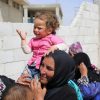
After 13 years in Conflict & Displacement, Syrian Women & Girls Must not be Forgotten
“I don’t think the world understands what it means to be a woman living in Syria today,” explains Shatha, a woman from Deir-ez-Zor, Syria, who is a survivor of gender-based violence. “It is a life filled with danger, grief, and daily struggle.”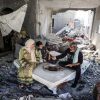
Biden’s Balancing Act: Israel’s National Security vs Palestinian’s Humanitarian Crisis
In recent weeks, the Biden administration has found itself facing a serious dilemma as to how to balance its commitment to Israel’s national security along with the humanitarian crisis facing the Palestinians in Gaza.
US Delivers Both Life –and Death– to a Devastated Gaza
The Biden administration’s sheer hypocrisy is reflected in its policy of dropping food packages into a devastated Gaza, while at the same time, it continues to arm Israel with missiles and heavy artillery to kill Palestinian civilians suffering hunger and starvation. As US Congressman Ro Khanna (Democrat of California) said last week: "You can't have a policy of giving aid (to Palestinians) and giving Israel the weapons to bomb the food trucks at the same time"
US Senators Say Biden Must End Arms Sales if Israel Keeps Blocking Aid
A group of senators said Tuesday that under U.S. law, the Biden administratio must cut off American military assistance to Israel unless the Netanyahu government immediately stops impeding aid deliveries to the Gaza Strip, where children are dying of starvation after months of incessant Israeli bombing and attacks on humanitarian convoys.
ECW Announces New Grant Funding for Ukraine’s Education Programs for Children Impacted by War
Education Cannot Wait and the government of Ukraine launch new multi-year program to support education for children impacted by the conflict in Ukraine.« Previous Page — Next Page »





The Week with IPS

NEXT STOP - SDGs
Tracking global progress towards a sustainable world
Tracking global progress towards a sustainable world
