Languages
Wednesday, November 11, 2026



News and Views from the Global South
IPS UN Bureau
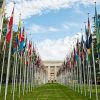
UN in Geneva to Partially Shut Down— for Second Time— Due to Cash Flow Crisis
Faced with a continued cash flow crisis, the United Nations in Geneva (UNOG) will partially close down – for the second time since December last year— as it scales back its operations, including building closures, official travel restrictions, and budgetary cuts on spending. The UN is studying plans to close the Palais des Nations beginning 22 April. Only conferences would run, but some of the offices would shut.
Made in Africa: Africa’s Fashion Redefining Narratives About the Continent
It is a new dawn as Africa’s high fashion industry enters an era defined and driven by young African fashion designers. As they take to the global stage, the young creatives are showcasing the continent in all its majesty through unique weaving techniques and patterns that combine their rich African heritage with contemporary styles.
WHO Calls for More Data on Violence Against Older Women and Women With Disabilities
Older women and women with disabilities experience abuse that is unique to their demographics, yet they are underrepresented in national and global databases, according to findings shared by the World Health Organization (WHO).
Why Farmers in India and Pakistan Are Shifting to Natural or Regenerative Farming
Nine years ago, farmer Sultan Ahmed Bhatti gave up tilling the soil and using most fertilizers and pesticides on his farm in Doober Bhattian, Pakistan. His brothers at first derided him. But soon, his first experiment with growing wheat on raised beds was a runaway success. “We produced more wheat than what we grew on ploughed, flat land,” he said.
The Impact of Climate Change on a Biodiversity Hot Spot
If there is a place where the interlinkages and dependencies between the effects of climate warming and biodiversity loss are clearly at display, it’s Nepal. There is clear evidence on the impact of climate change on the country’s ecosystem considering the fact that Nepal is an important biodiversity hotspot.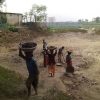
Revival of Hope: How a Remote Indian Village Overcame Water Scarcity
The people of Patqapara Village, a hamlet in India's West Bengal State, were until recently reeling under absolute distress due to water scarcity. The lack of irrigation facilities in this far-flung and inaccessible hamlet had resulted in a steady decline in agricultural activities. With a population of around 7,000, as per government estimates, the village primarily depends on agriculture for its livelihood. However, in recent years, drastic changes in weather patterns, including unseasonal rainfall, delayed monsoons, and soaring temperatures above normal levels, led to the drying up of irrigation canals and wells in the village. This left the local population in chaos, as their cultivable fields were bereft of any irrigation facilities.
Ahead of UN Summit of the Future, Mobilizing Youth for Change
In a significant precursor to the United Nations Summit of the Future slated for September, the "Future Action Festival" convened at Tokyo's National Stadium on March 24, drawing a crowd of approximately 66,000 attendees and reaching over half a million viewers via live streaming. The event, a collaborative effort by youth and citizen groups, aimed to foster a deeper understanding and proactive stance among young people on nuclear disarmament and climate change solutions.
The Gambia Must Not Repeal FGM Ban
Earlier this month, a UNICEF report on the prevalence of female genital mutilation (FGM) showed that while some success is taking place, the pace of progress remains slow - lagging behind population growth, especially in places where FGM is most common.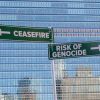
Global Governance: Time for Reform
At last the UN Security Council has passed a resolution calling for an immediate ceasefire in Gaza. While stopping short of demanding a permanent end to the violence, it goes further than the world’s peak peace and security body had so far managed since the start of the current brutal phase of conflict in October. But the time it’s taken to get to this point signals an ongoing failure of global institutions to uphold human rights.
Abandoned Children Growing Problem in Northern Syria
Wael Al-Hassan was returning from work in the Syrian city of Harim when he heard the sound of a baby crying. He was returning from work on December 10, 2023. He stopped momentarily, turned on his mobile phone flashlight to investigate, and spotted a baby girl, around one month old, wrapped in a white blanket, lying by the roadside.
IMF Urges Non-alignment in Second Cold War
The IMF no. 2 recommends non-alignment as the best option for developing countries in the second Cold War as geopolitics threatens already dismal prospects for the world economy and wellbeing.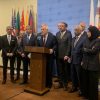
UN Security Council’s Ceasefire Resolution in Gaza Welcomed
After nearly six months of a devastating war in Gaza, the UN Security Council has at last adopted a resolution calling for an immediate humanitarian ceasefire. The resolution calls for the ceasefire to come into effect for the month of Ramadan, demands the unconditional release of all hostages and ensures humanitarian access.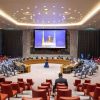
Will Israel Defy Another Security Council Resolution?
The UN Security Council (UNSC) resolution for a temporary cease-fire in the ongoing conflict in Gaza— adopted by a 14-0 vote with the US abstaining –- marks a significant step forward in momentarily halting the five-month-old fighting which has claimed the lives of over 32,000 Palestinians and 1,200 inside Israel. But a lingering question remains: how will Israel respond? Clearly, Israel has had a longstanding notoriety for flouting UNSC resolutions ---and still never having to pay a price for such violations—primarily because of the unyielding support of the United States.
South Asian Network on Human Rights Calls on Bhutan to Free Political Prisoners
South Asians for Human Rights (SAHR), a regional network of human rights defenders, has called on the Government of Bhutan to release the political prisoners it has detained for decades.
Building Resilience and Mental Health Capacity of Youth
Sri Lankan lawmaker Hector Appuhamy, in conversation with IPS ahead of a two-day conference aimed at educating and involving university students in mental health issues, said parliamentarians were concerned about gaps in the programmes and financing for youth mental health. They were looking beyond the country's health budget for support in ensuring that youth were able to access mental health facilities in a supportive environment.
Defending Human Rights is Increasingly Dangerous: US Congress & Companies Must Act
Human rights defenders are under fire. At a time when the climate crisis is deepening and threats to democracy are on the rise, activists working to protect people and the environment are facing deadly threats. Front Line Defenders documented more than 400 murders of defenders in 2022—the highest number ever recorded.
World’s Democracies Threatened by Disinformation Generated by Artificial Intelligence
Speaking at the third Summit for Democracy in South Korea last week, US Secretary of State Antony Blinken warned that a malicious "flood" of disinformation is threatening the world's democracies—triggered in part by the rise of artificial intelligence (AI). But AI is also a critical arena in which democracy is being challenged. “So, while we seek to harness the power of AI and other digital technologies for good, some governments are abusing those same technologies to do just the opposite,” he said.
Conservation Efforts by Ethnic Communities in Bangladesh Bolster Water Security
Just a few years ago, Sudarshana Chakma (35), a resident of the remote Digholchari Debarmatha village under Bilaichari upazila in the Rangamati Hill District, had to traverse a long hilly path to fetch water for her household because there were no local water sources. "Unchecked deforestation and degradation of village common forests (VCFs) led to the drying up of all-natural water sources in our village. We struggled to collect drinking and household water," Chakma explained to IPS.
Fall-out from Ecuador’s Crises Highlights Need to Invest in Grassroots Resilience
Shocking and ongoing levels of violence in Ecuador since the New Year followed by flooding caused by El Niño landed a double blow for those in the country who live day to day and are most vulnerable to instability.
Written in Memory of Alexei Navalny and Osip Mandelstam
The devastation of Ukraine and Gaza might seem to be beyond belief. Let us thus turn to fairy tales to find descriptions of the stony indifference of warlords.
Breaking Down Barriers to Women’s Land Rights Starts in Our Homes
At the opening of the 68th session of the Commission on the Status of Women (CSW) on March 11, UN Secretary-General António Guterres said, “Your gathering this year is focused on how tackling poverty and strengthening institutions and financing with a gender perspective are critical to accelerate gender equality. The reason is simple: globally, poverty has a female face. Women have less access to land, natural resources and financial assets. They suffer the impacts of climate change more than men. And they are more likely to be food insecure. Many women and girls are also facing a war on their fundamental rights at home and in their communities.”« Previous Page — Next Page »





The Week with IPS

NEXT STOP - SDGs
Tracking global progress towards a sustainable world
Tracking global progress towards a sustainable world
